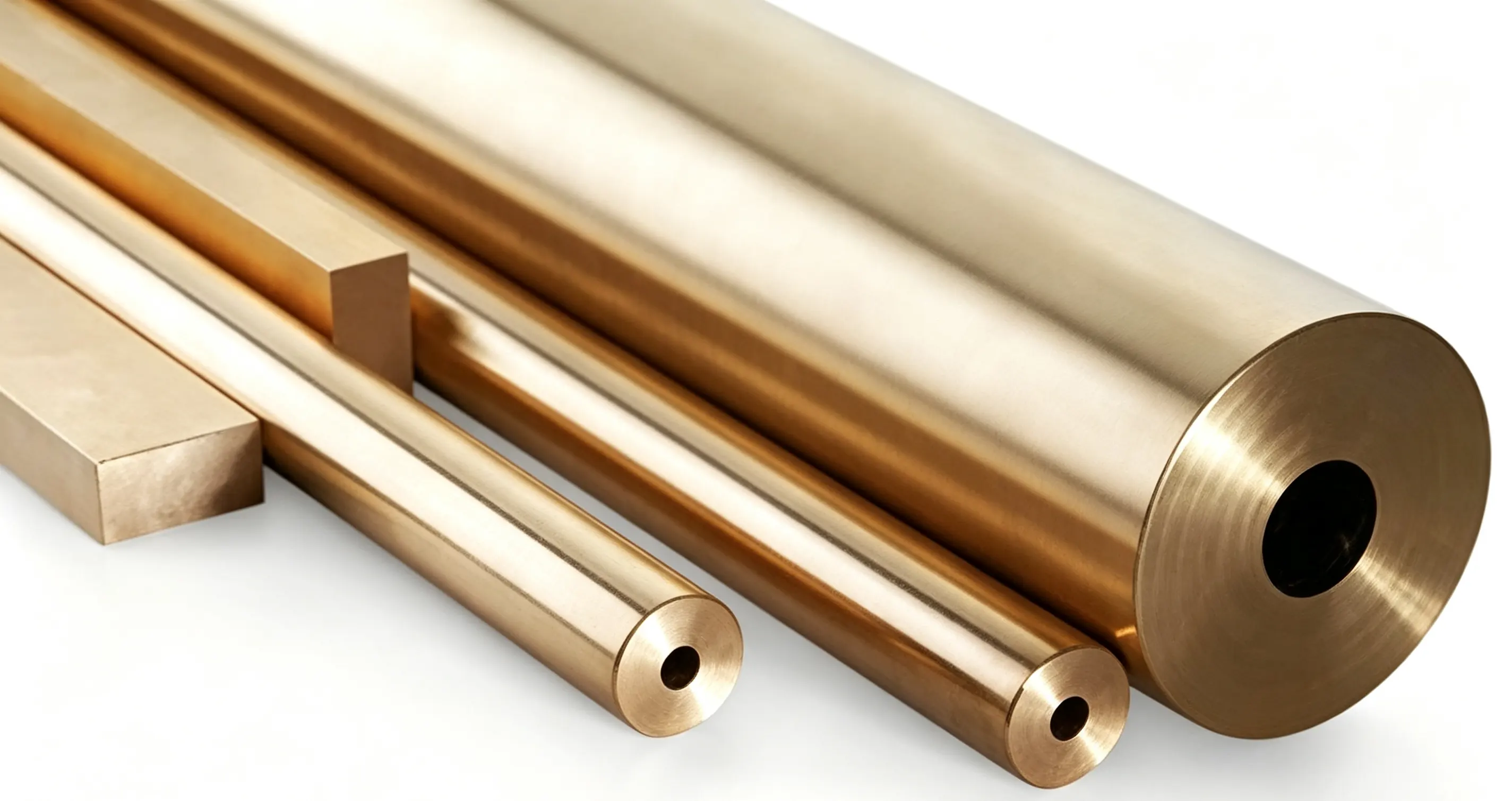
Iron Copper Alloy
Iron copper alloy materials combining high strength of iron with conductivity and thermal performance of copper.
High Strength Corrosion Resistant Copper Alloy
Aluminum bronze offers superior mechanical strength, corrosion resistance and wear performance, making it an ideal copper alloy material for demanding industrial applications.
Aluminum bronze is a group of copper-based alloys in which aluminum is the main alloying element, usually combined with iron, nickel, manganese and other elements to improve strength, corrosion resistance and wear performance.
Compared with traditional copper alloys such as brass and tin bronze, aluminum bronze provides higher mechanical strength, better resistance to seawater corrosion and excellent resistance to abrasion under heavy-duty working conditions.
Due to its outstanding combination of strength, toughness and corrosion resistance, aluminum bronze is widely used in marine equipment, chemical processing equipment, pumps, valves, bearings, heat exchangers and engineering components.
Aluminum bronze grades vary according to application requirements. Typical aluminum bronze alloys contain aluminum as the primary strengthening element with additional alloying elements to improve performance.
| Element | Typical Content (%) | Function |
|---|---|---|
| Aluminum (Al) | 5 - 12 | Main strengthening element, improves hardness and corrosion resistance |
| Iron (Fe) | 0 - 5 | Improves strength and wear resistance |
| Nickel (Ni) | 0 - 6 | Improves corrosion resistance and toughness |
| Manganese (Mn) | 0 - 3 | Enhances mechanical properties |
| Copper (Cu) | Balance | Provides conductivity and corrosion resistance |
The mechanical properties of aluminum bronze depend on alloy grade, heat treatment condition and product form. Typical values are shown below.
| Property | Typical Value | Unit |
|---|---|---|
| Tensile Strength | 600 - 900 | MPa |
| Yield Strength | 250 - 550 | MPa |
| Elongation | 10 - 25 | % |
| Hardness | 150 - 250 | HB |
| Density | 7.5 - 8.0 | g/cm³ |
Different aluminum bronze grades are selected according to strength requirements, corrosion conditions and application environments.
| Region / System | Standard Codes |
|---|---|
| China National (GB/T) | GB/T 5231-2012, GB/T 4423-2007, GB/T 1527-2006, GB/T 2040-2002 |
| China Industry (YS/T) | YS/T 584-2006, YS/T 649-2007, YS/T 662-2007 |
| USA (ASTM) | ASTM Series (e.g., B148, B150 for Aluminum Bronze) |
| Europe (DIN) | DIN Series |
Compliant with national, regional, and industry standards for quality assurance.
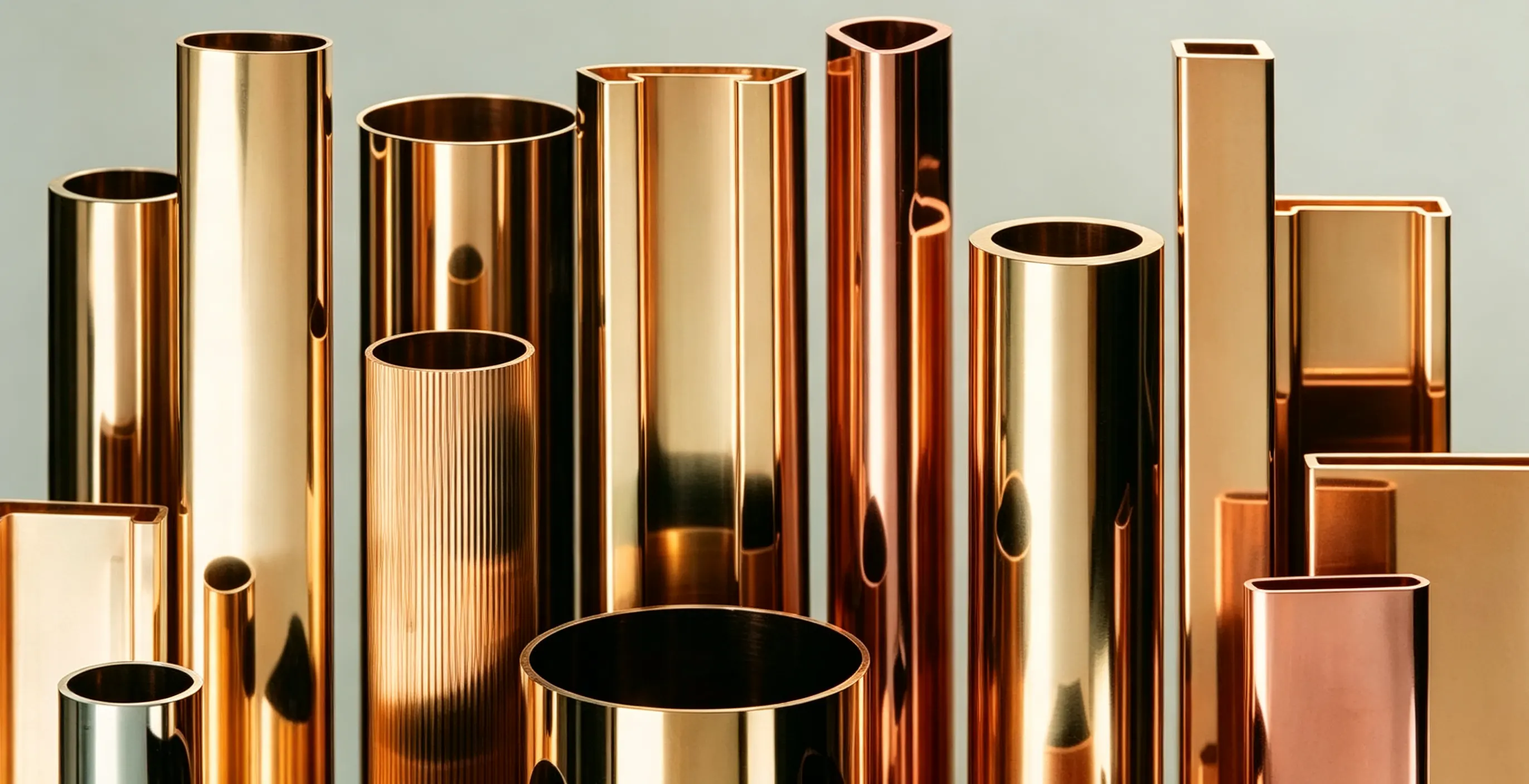
Aluminum bronze can be supplied in various product forms according to different industrial requirements. Sunny Steel provides aluminum bronze materials in customized dimensions and conditions for engineering applications.
| Product Form | Typical Size Range | Main Applications |
|---|---|---|
| Aluminum Bronze Plate | Thickness 3 - 200 mm | Marine structures, wear plates, engineering components |
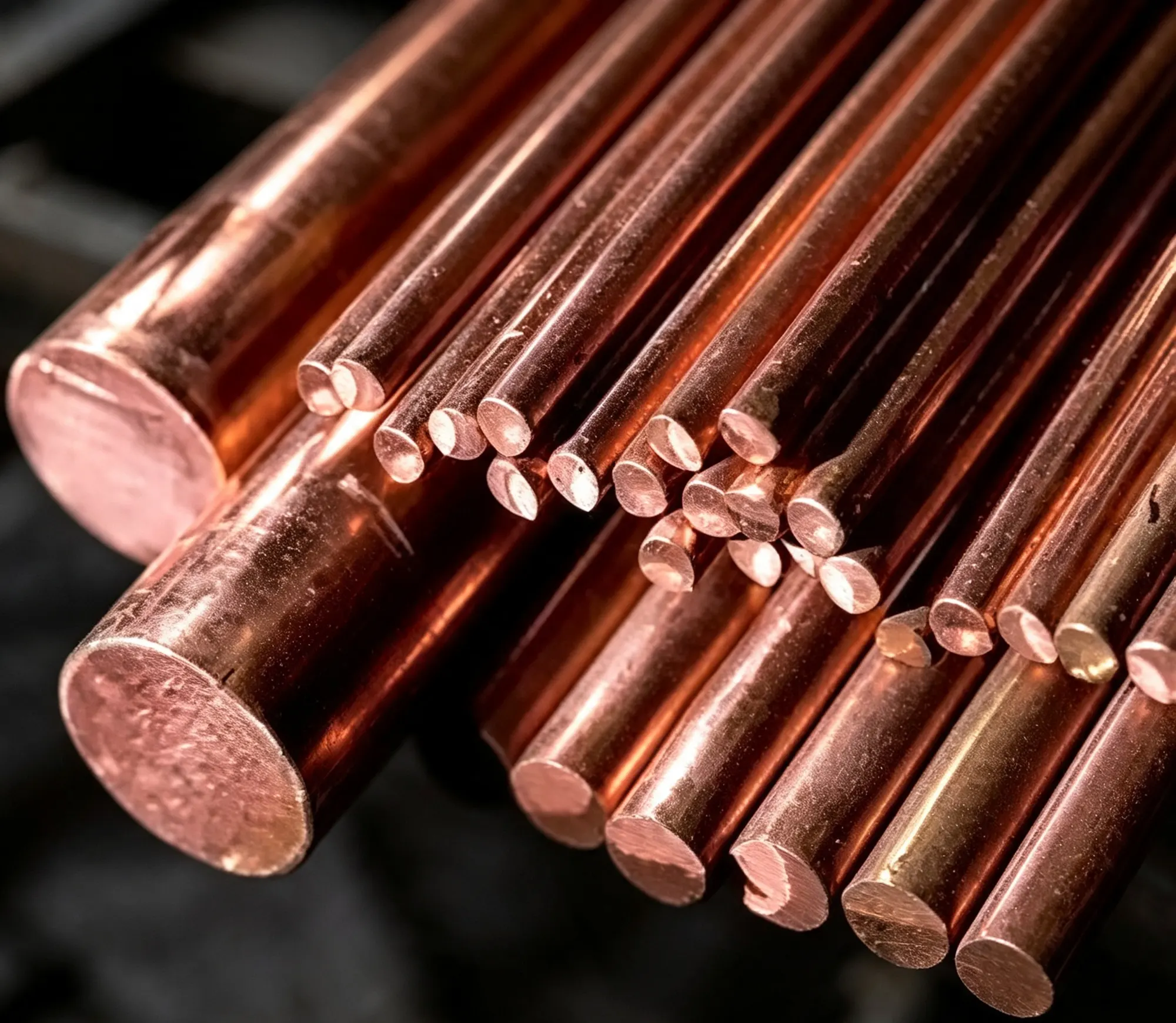
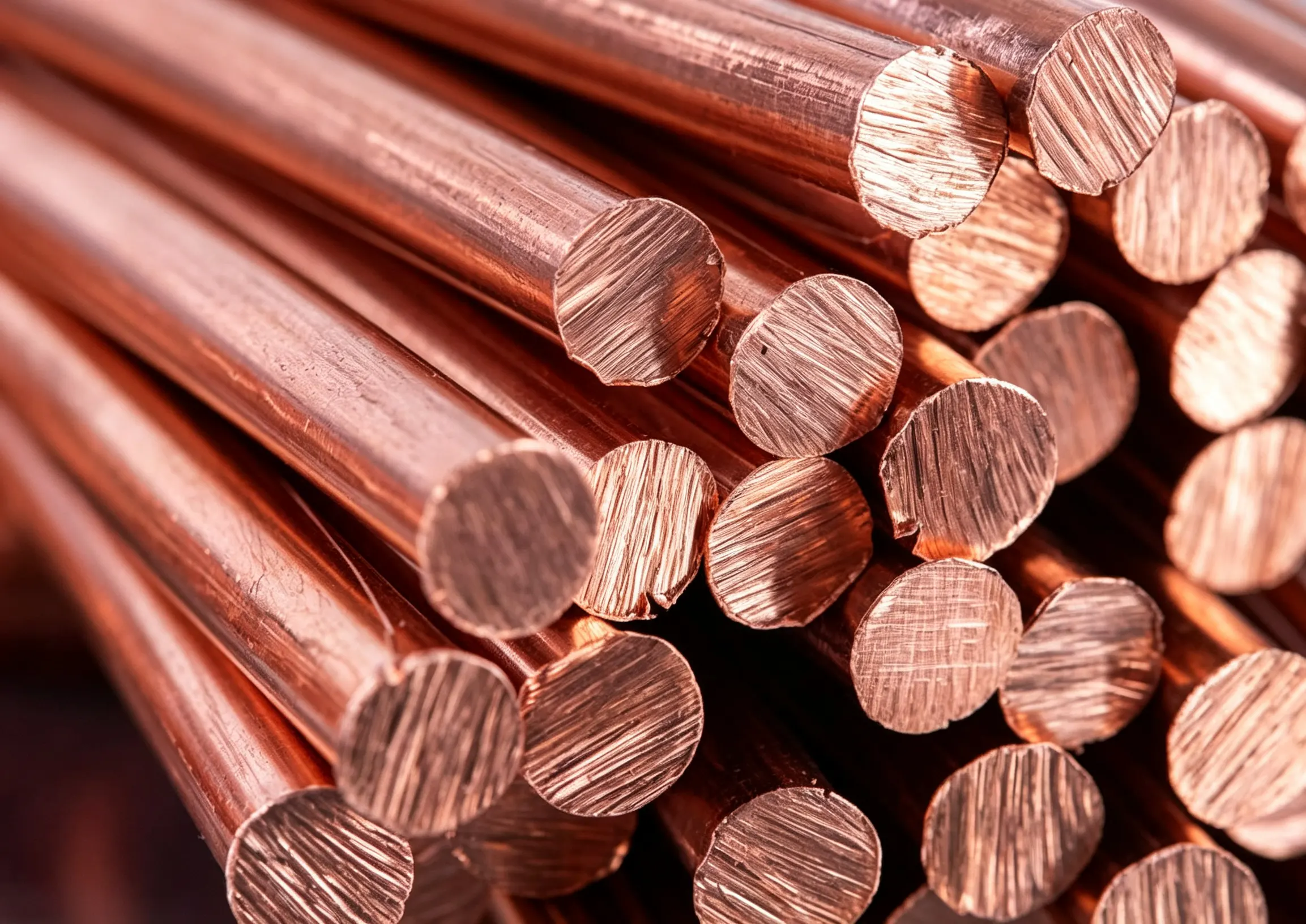
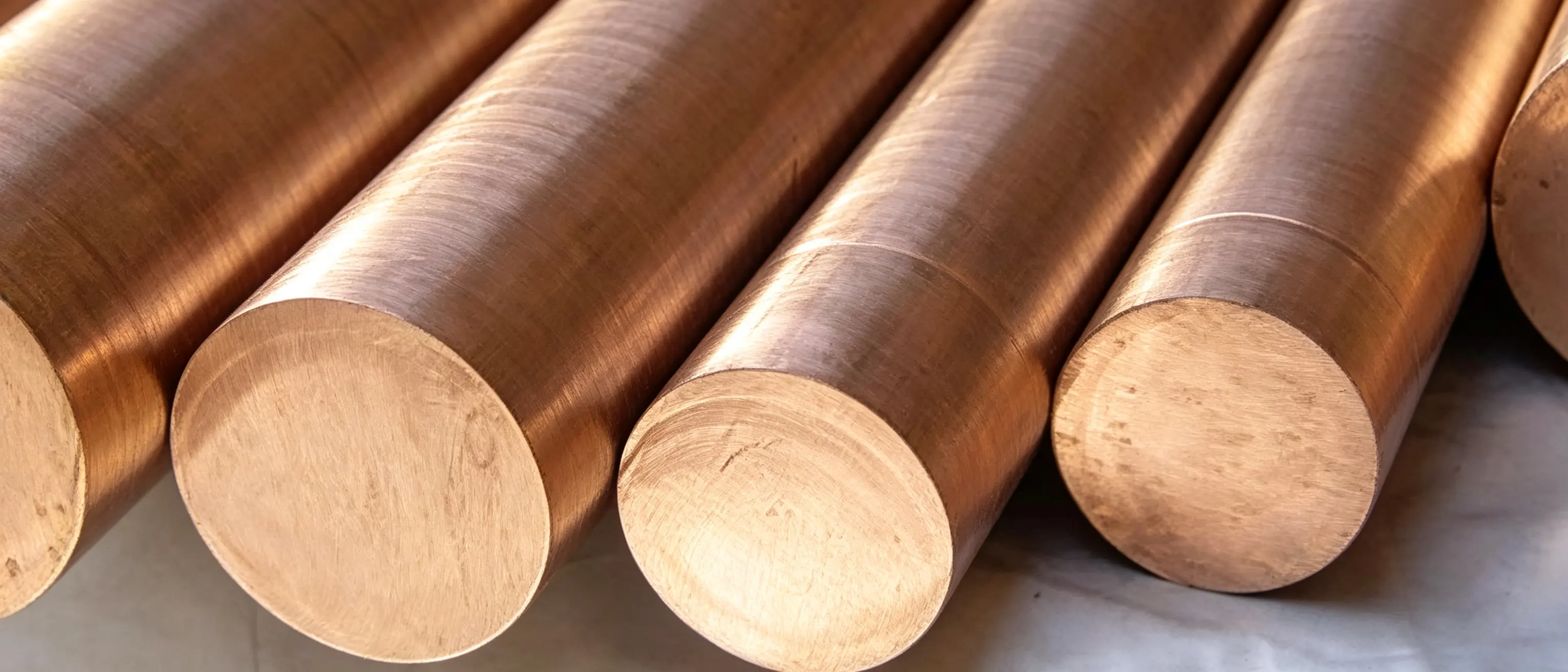
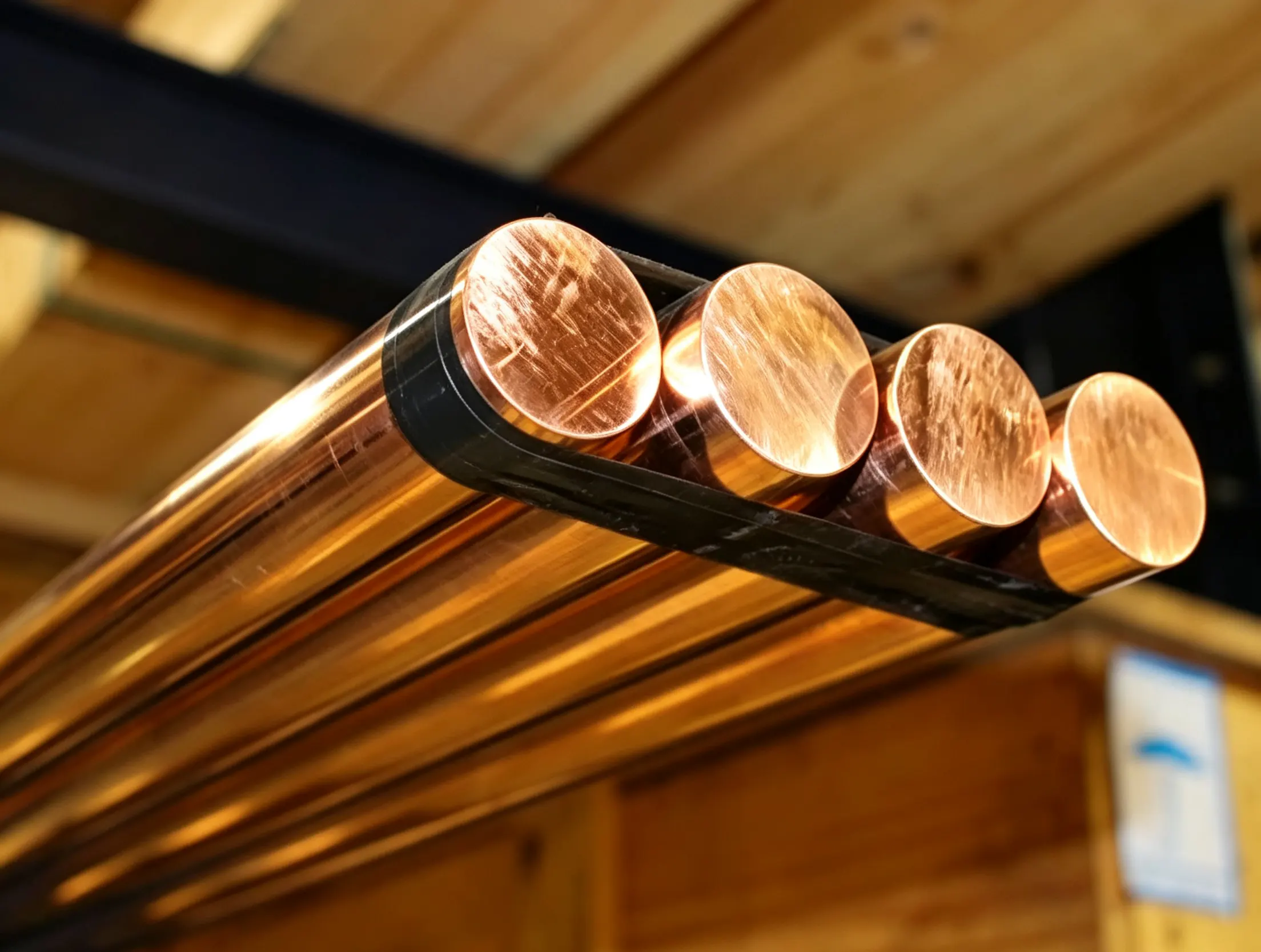
| Aluminum Bronze Bar | Diameter 10 - 500 mm | Shafts, bushings, gears and machining parts |
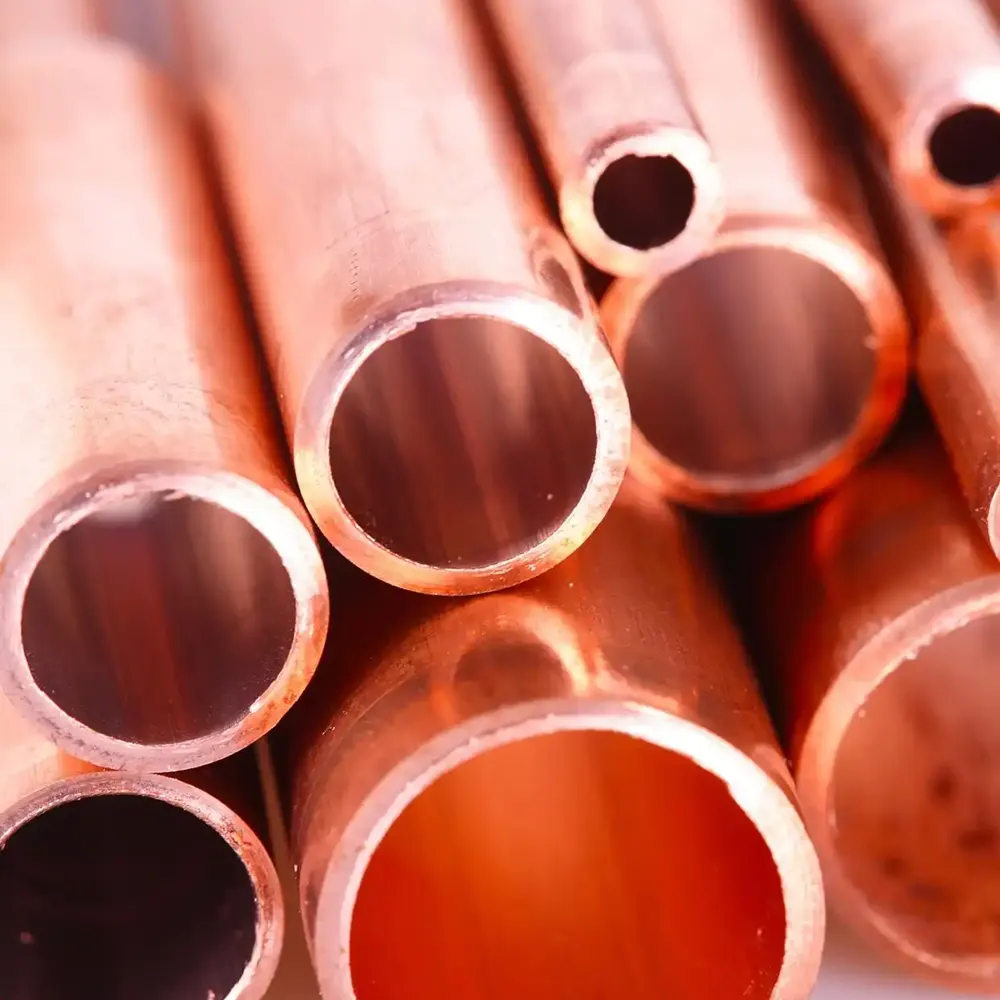
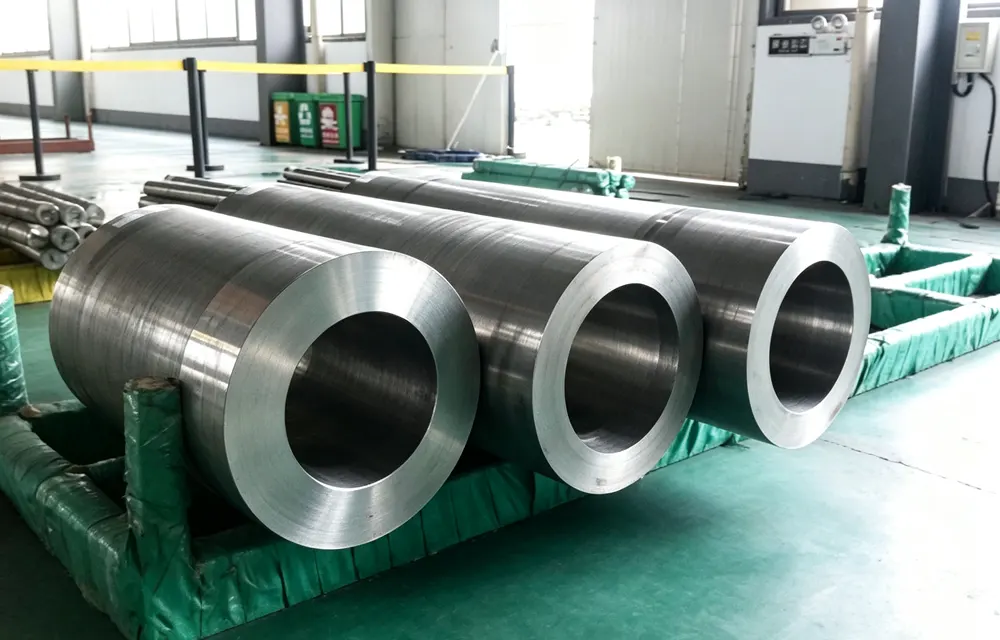
| Aluminum Bronze Tube | Customized OD and thickness | Heat exchangers, condensers and corrosion resistant systems |
| Aluminum Bronze Forging | According to drawings | High-load mechanical components |
| Aluminum Bronze Casting | Customized | Valves, pumps, marine components |
Aluminum bronze products require precise alloy control and processing technology to achieve stable mechanical properties and corrosion resistance.
One of the most important advantages of aluminum bronze is its outstanding resistance to corrosion. The aluminum oxide protective film formed on the alloy surface provides excellent protection in aggressive environments.
Aluminum bronze combines high hardness with excellent toughness, making it suitable for components exposed to friction, impact and sliding conditions.
| Material | Wear Performance | Typical Application |
|---|---|---|
| Pure Copper | Low wear resistance | Electrical applications |
| Brass | Medium wear resistance | General mechanical parts |
| Tin Bronze | Good wear resistance | Bearing applications |
| Aluminum Bronze | Excellent wear resistance | Heavy-duty bearings, pumps, valves |
Comparison of common Chinese (GB) and equivalent US (ASTM) aluminium bronze grades, with principal alloying elements expressed as wt.%. Copper (Cu) is the balance.
| China Grade (GB) |
US Equivalent (ASTM) |
Nominal Composition (wt.%) | |||
|---|---|---|---|---|---|
| Al | Fe | Ni | Mn | ||
| QAl9-2 | — | 8.0–10.0 | — | — | 1.5–2.5 |
| QAl9-4 | C62300 | 8.0–10.0 | 2.0–4.0 | — | — |
| QAl10-3-1.5 | C61600 | 8.5–10.0 | 2.0–4.0 | — | 1.0–2.0 |
| QAl10-4-4 | C63000 | 9.5–11.0 | 3.5–5.5 | 3.5–5.5 | — |
| QAl11-6-6 | C63200 | 10.0–12.0 | 5.0–7.0 | 5.0–7.0 | — |
| Note: Cu = balance. "—" indicates not specified or not applicable. Composition ranges are indicative; refer to the applicable standard for exact limits. | |||||
Engineering Note: Higher Al + Ni + Fe content generally increases strength and seawater corrosion resistance. C63000 / QAl10-4-4 and C63200 / QAl11-6-6 are preferred for marine propeller shafts, pump housings and high-load bearing applications.
| Material | Strength | Corrosion Resistance | Wear Resistance |
|---|---|---|---|
| Pure Copper | Low | Good | Low |
| Brass | Medium | Medium | Medium |
| Tin Bronze | Good | Good | Good |
| Aluminum Bronze | Excellent | Excellent | Excellent |
Aluminum bronze provides excellent comprehensive properties for applications requiring long service life and stable performance in harsh environments.
| Property | Typical Value |
|---|---|
| Density | Approx. 8.9 g/cm³ |
| Melting Range | Approx. 1080–1085°C |
| Electrical Conductivity | High conductivity copper alloy |
| Thermal Conductivity | Excellent |
| Hardness | Higher than pure copper |
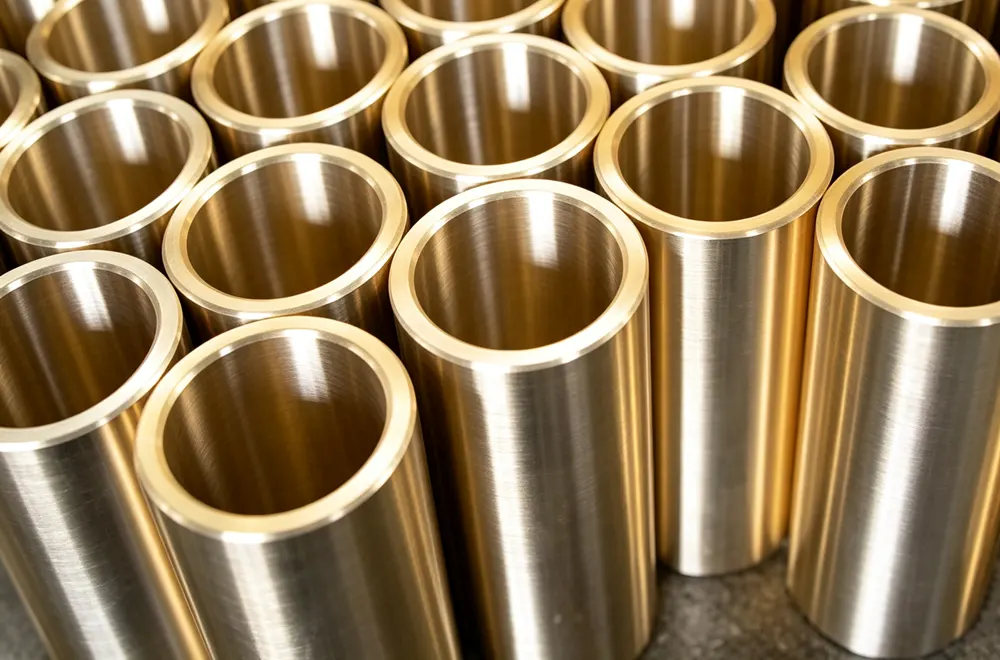
Mechanical properties of commonly supplied aluminium bronze grades in bar and tube form. Values are typical minimums unless otherwise noted.
| Grade | Form | Condition | Size Range (mm) | Tensile Strength | Elongation A (%) min |
Brinell Hardness (HB) |
|
|---|---|---|---|---|---|---|---|
| ksi (min) | MPa (min) | ||||||
| QAl9-2 | Bar | R | ≤ 40 | ≥ 71 | ≥ 490 | 15 | — |
| QAl9-4 | Bar | R | ≤ 40 | ≥ 78 | ≥ 540 | 15 | 110–190 |
| QAl10-3-1.5 | Bar | R | ≤ 40 | ≥ 85 | ≥ 590 | 12 | 140–200 |
| QAl10-4-4 | Bar | R | ≤ 40 | ≥ 99 | ≥ 685 | 10 | 170–230 |
| QAl10-5-5 | Bar | R | ≤ 40 | ≥ 99 | ≥ 685 | 10 | 180–240 |
| QAl11-6-6 | Bar | R | ≤ 40 | ≥ 107 | ≥ 740 | 8 | 200–260 |
| C62400 | Tube | R | OD ≤ 200, WT 5–25 | ≥ 92 | ≥ 635 | 10 | — |
| Notes: Condition "R" = as-rolled / hot-worked. "—" indicates not specified. Size = diameter for bar, OD/WT for tube. Values are indicative; refer to the applicable standard for exact limits. | |||||||
Engineering Note: As Al + Ni + Fe content increases, both strength and hardness rise while elongation decreases. For seawater service, C63000 / QAl10-4-4 and C63200 / QAl11-6-6 are preferred due to superior cavitation and corrosion resistance.
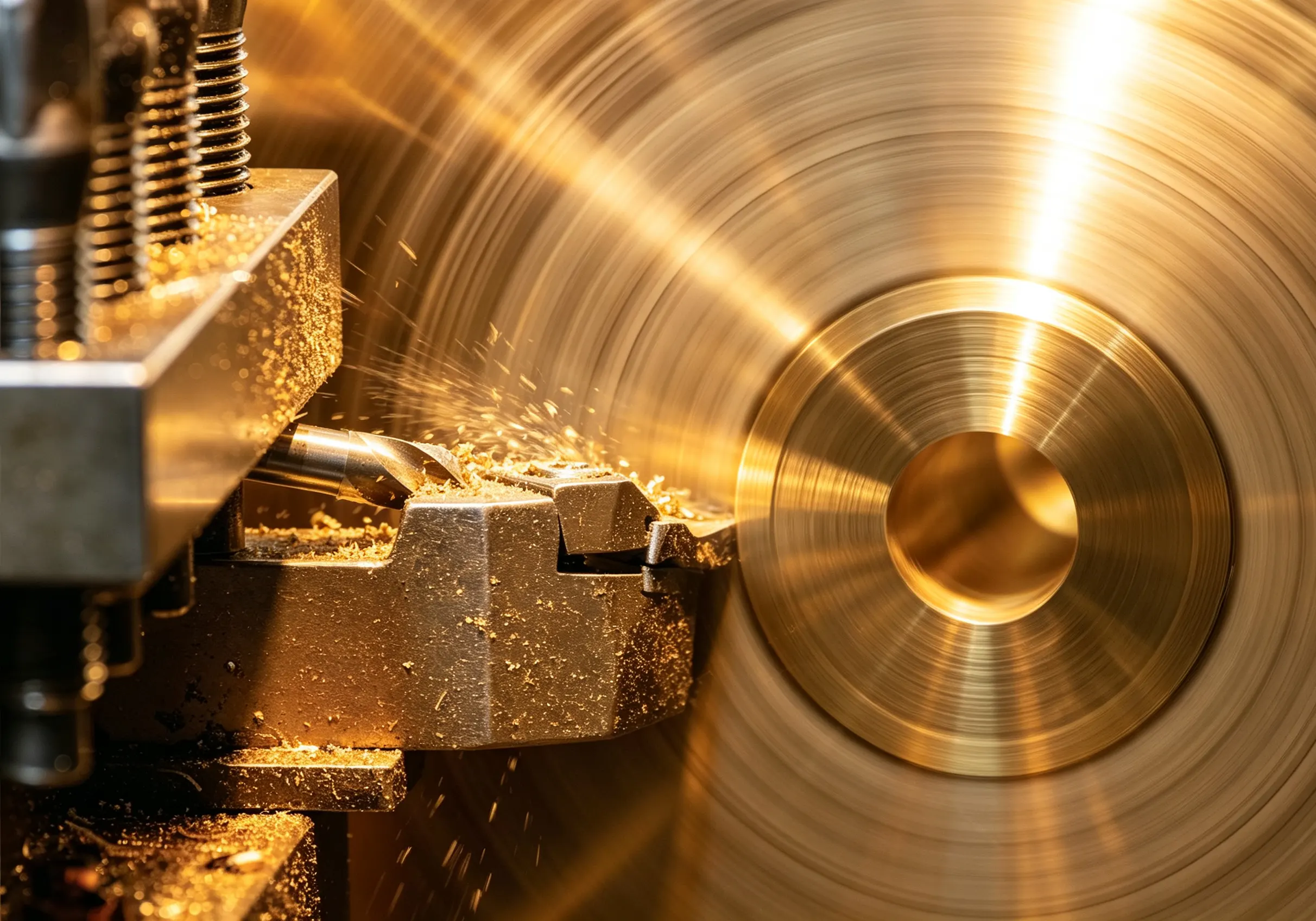
Aluminum bronze can be machined using conventional methods. Proper cutting parameters and tooling selection are recommended because of its high strength and hardness.
Every aluminum bronze product should undergo strict inspection to ensure chemical composition, mechanical performance and dimensional accuracy.
| Inspection Item | Testing Method | Purpose |
|---|---|---|
| Chemical Composition | Spectrometer Analysis | Confirm alloy grade |
| Tensile Test | Mechanical Testing | Verify strength requirements |
| Hardness Test | Brinell Hardness | Check wear performance |
| Dimensional Inspection | Precision Measurement | Ensure machining accuracy |
Aluminum bronze products are carefully packed to prevent surface damage, deformation and contamination during transportation.
Plates, bars and tubes are normally protected with moisture-proof wrapping, wooden cases or steel frames according to product dimensions and shipping requirements.
Complete material certificates, inspection reports and packing lists can be provided together with the shipment to support customer quality control procedures.

Due to its excellent combination of strength, corrosion resistance and wear performance, aluminum bronze is widely used in demanding industrial fields.
Ship propellers, marine valves, seawater pumps and offshore components.
Valve components, pump parts and corrosion resistant equipment.
Corrosion resistant mechanical components and processing equipment.
Heat exchanger components, bushings and special fittings.
Wear resistant parts operating under impact and friction conditions.
Bearings, gears, shafts and precision components.
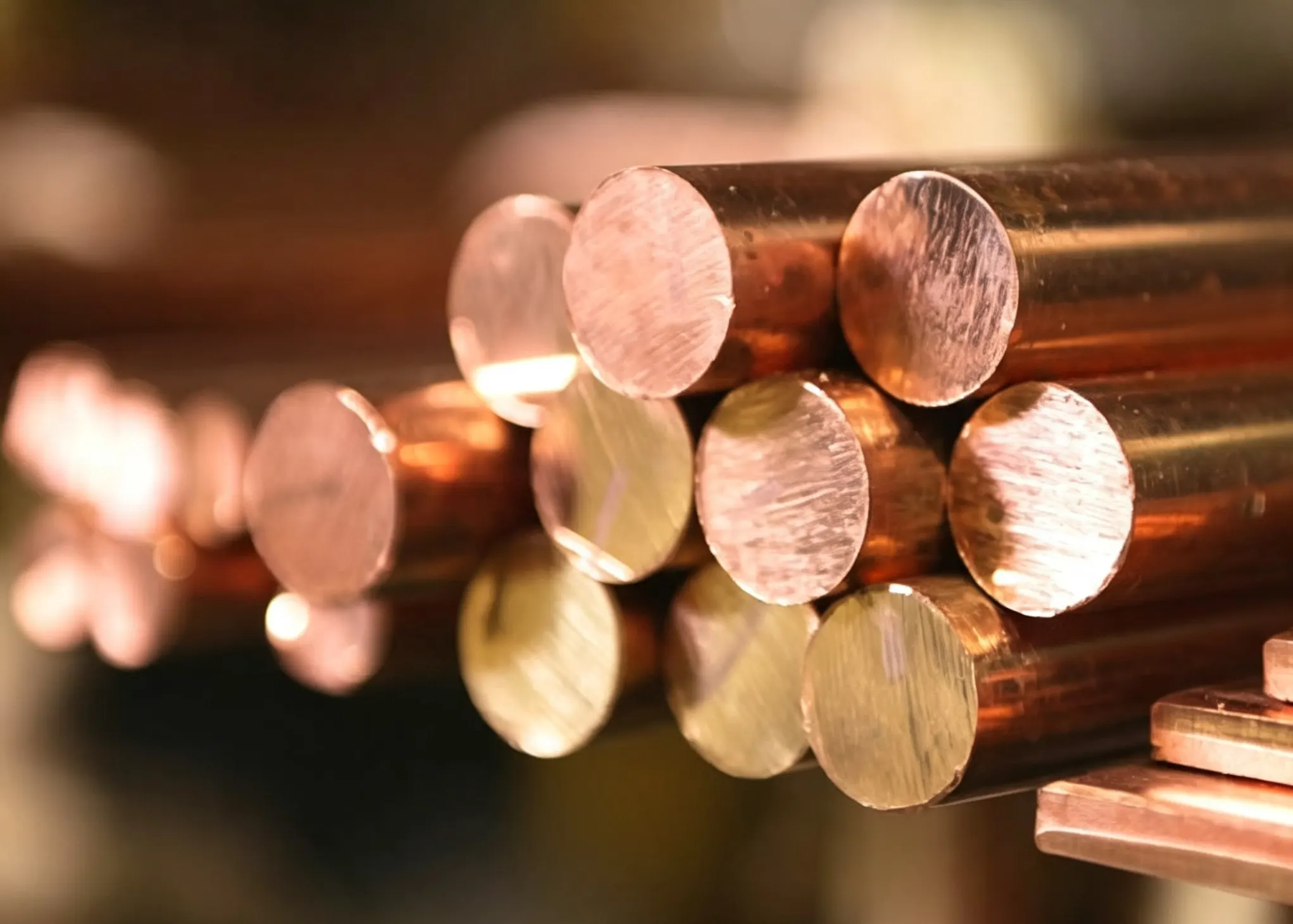
Sunny Steel supplies Aluminum Bronze materials in various forms to meet different industrial manufacturing requirements.

Precision machining and forging of copper alloys, brass and bronze, built on a certified quality management system.
Precision round parts
Internal machining
Complex profiles
Die & open-die
High-precision cutting
Full capability list

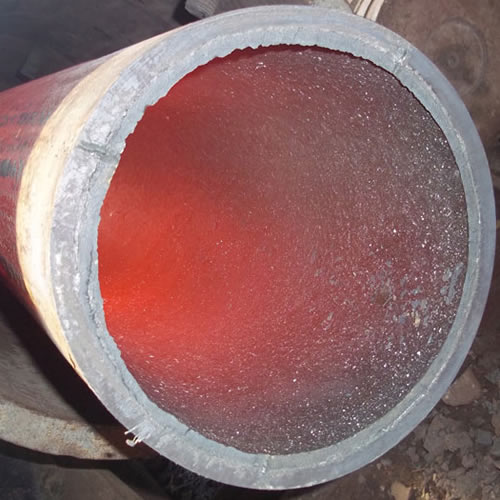
Ceramic lined pipe is made through self-propagating high-temperature synthesis (SHS) technique.
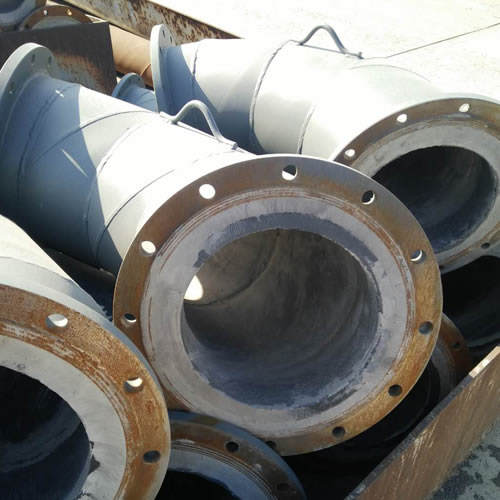
Cast basalt lined steel pipe is composed by lined with cast basalt pipe, outside steel pipe and cement mortar filling between the two layers.
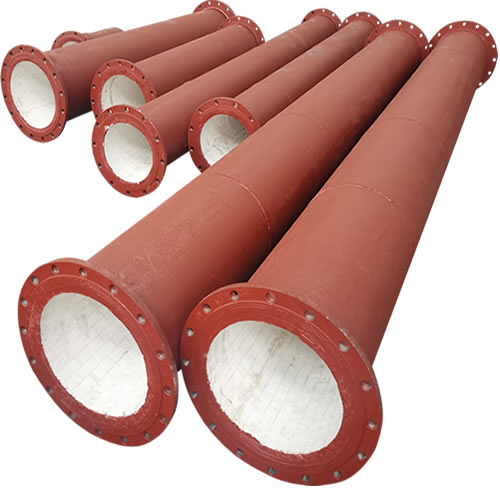
Ceramic tile lined pipes have very uniform coating of specially formulated ceramic material that is affixed to the inner of the pipe.
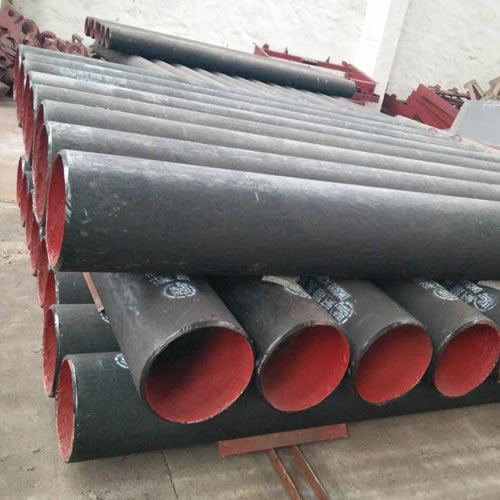
The material of the rare earth alloy wear-resistant pipe is ZG40CrMnMoNiSiRe, which is also the grade of rare earth alloy steel.
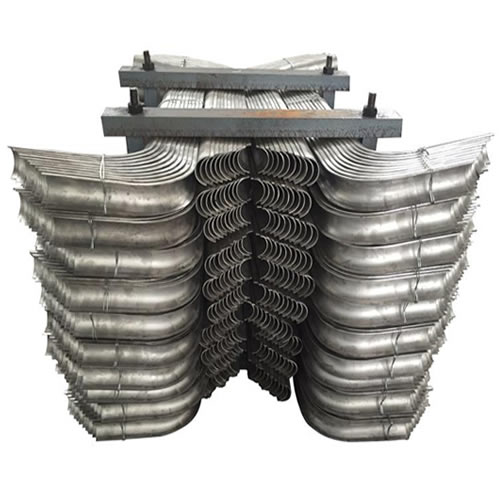
Tubes Erosion Shields are used to protect boiler tubing from the highly erosive effects of high temperatures and pressures thereby greatly extending tube life.
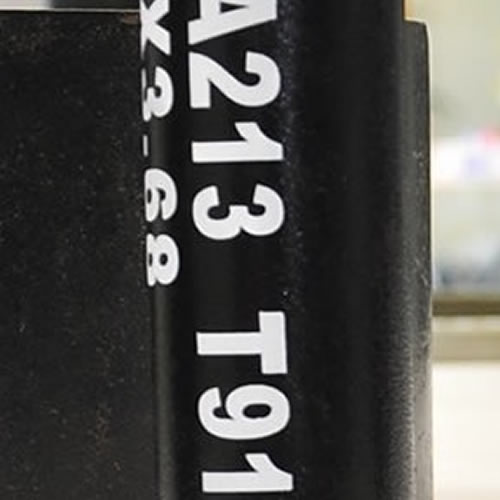
The ASTM A213 T91 seamless tubes are primarily used for boiler, superheater, and heat-exchanger.

When you partner with Sunny Steel, you can stop worrying about meeting deadlines thanks to our responsive and timely service. You'll also say goodbye to unnecessary shopping around. Instead, you'll get white glove service from an expert who understands your needs and can get you the materials you need quickly.