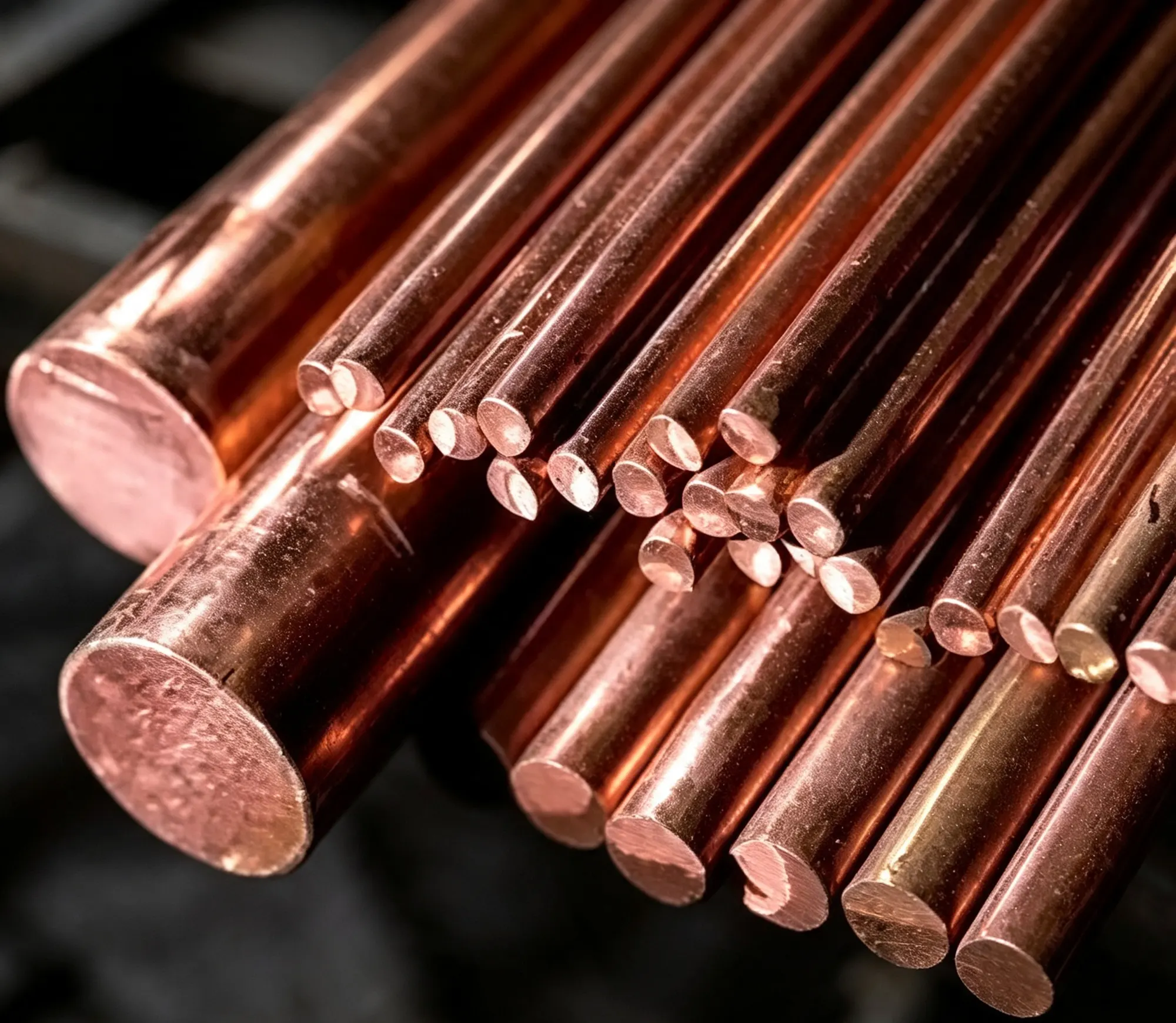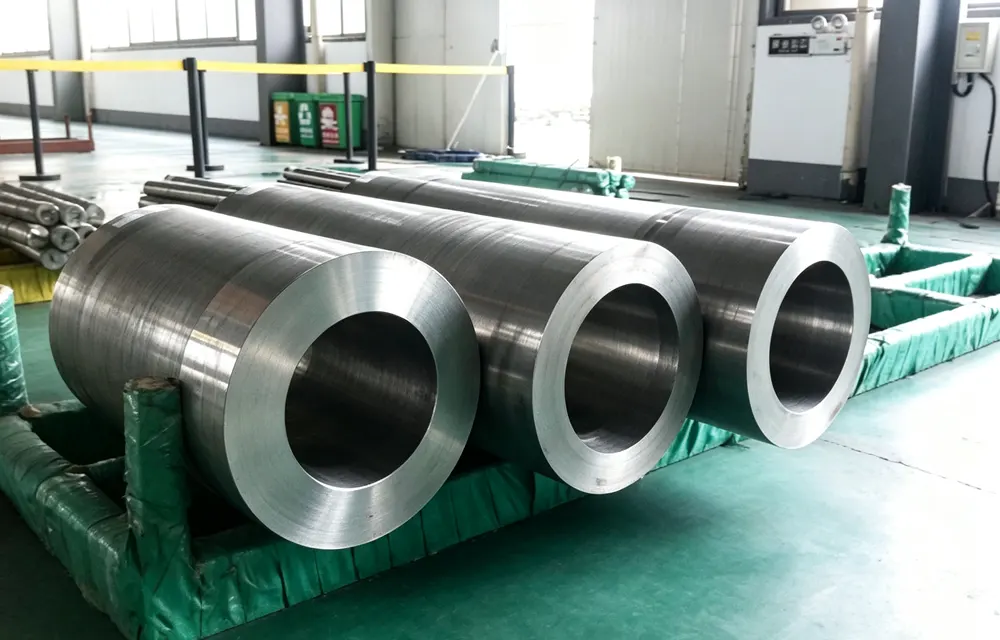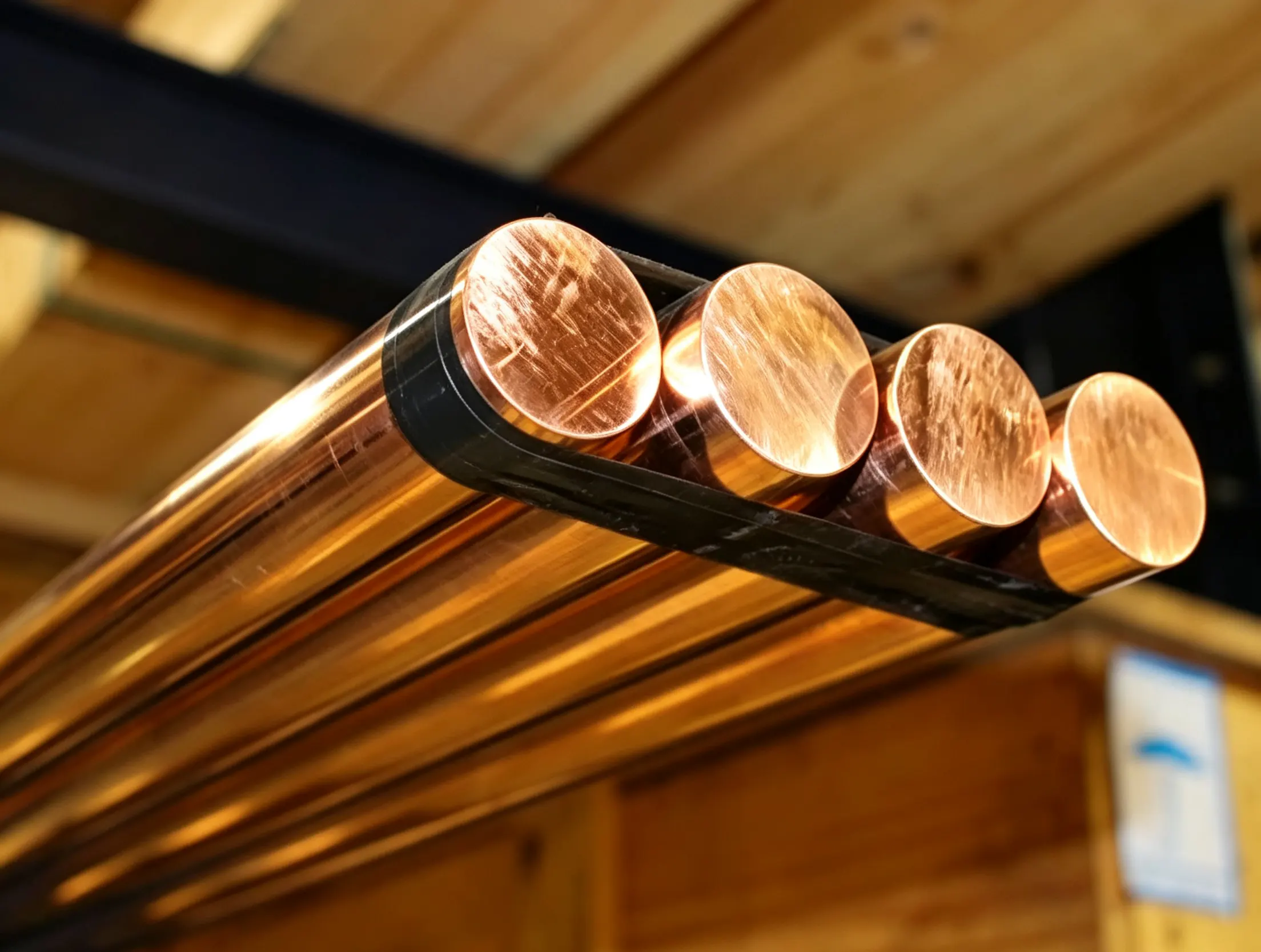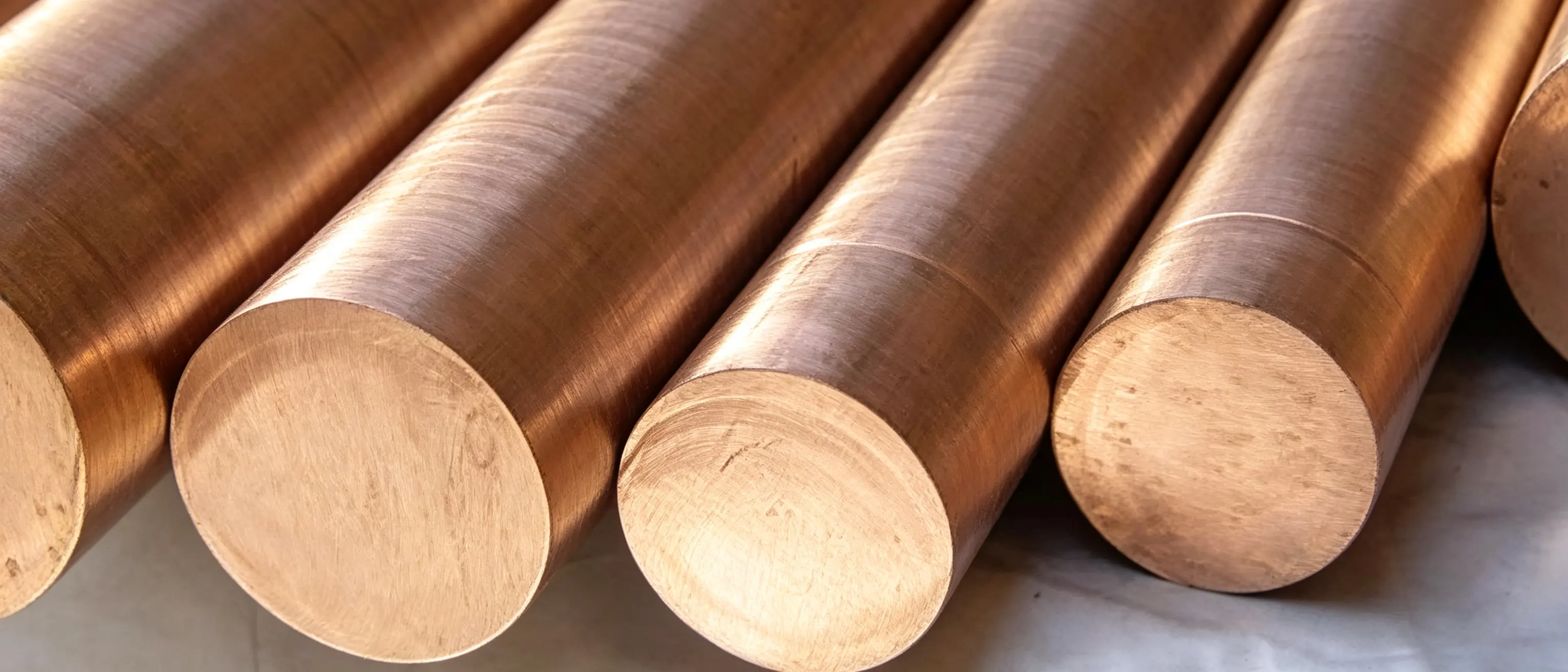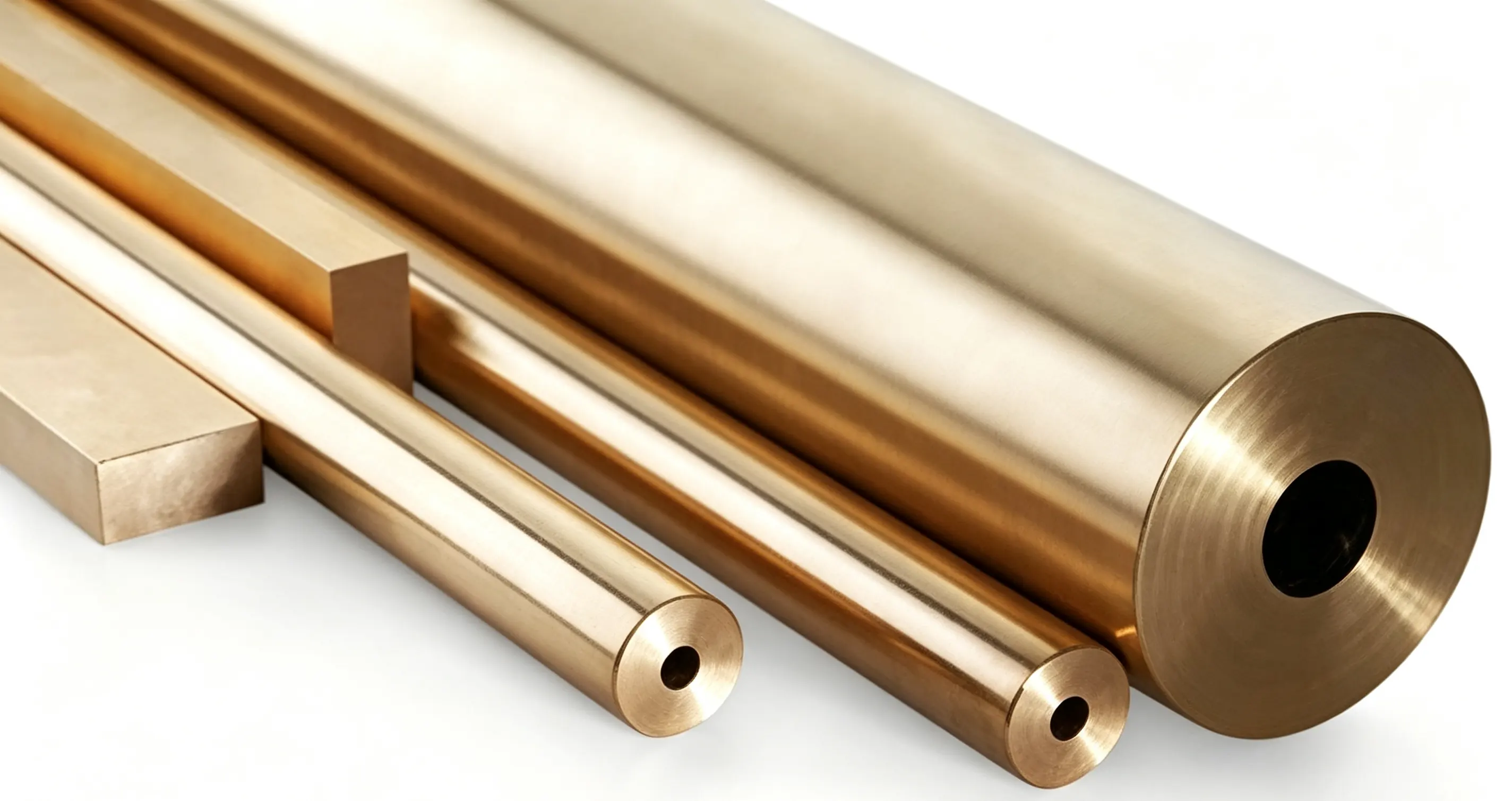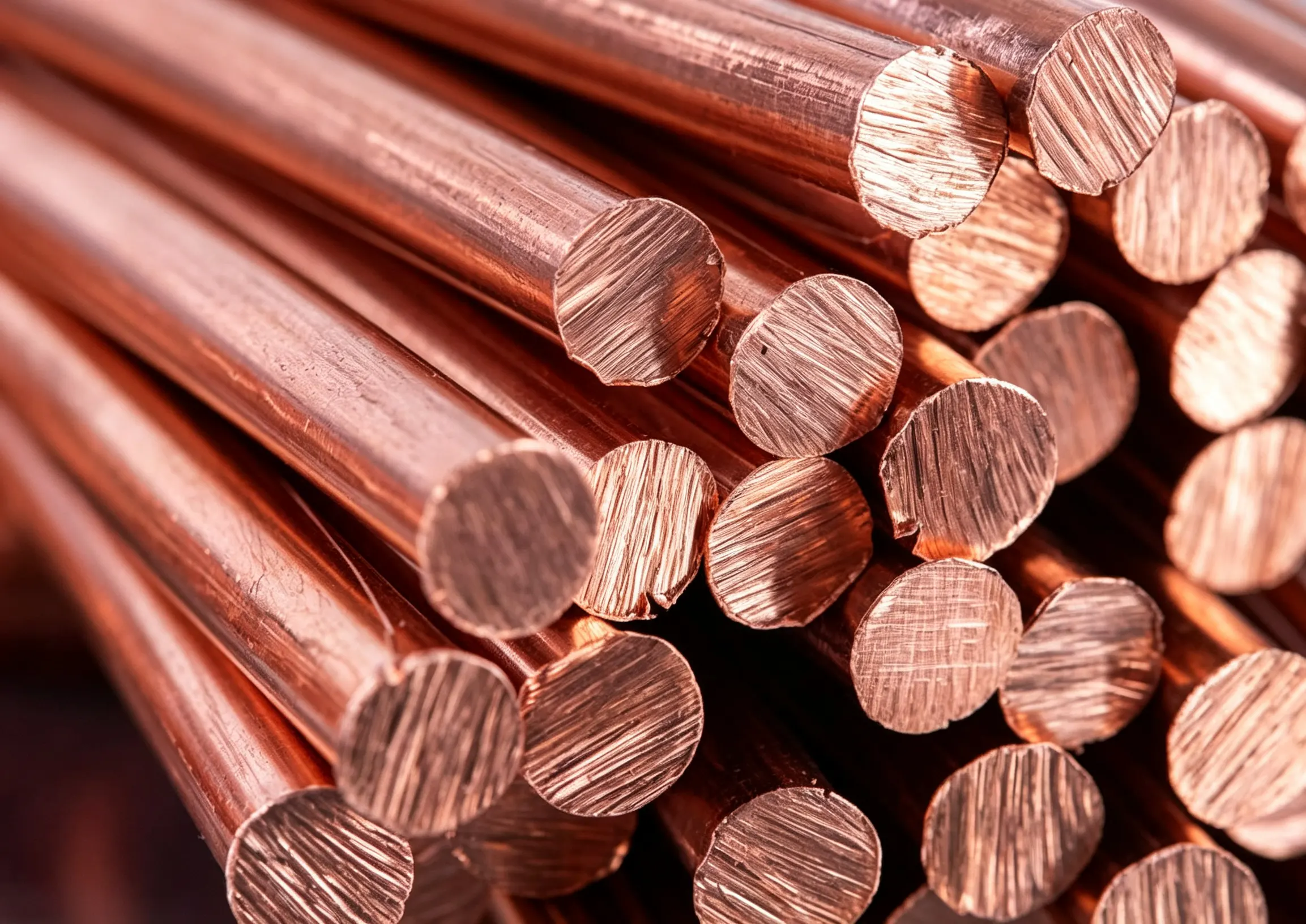
Beryllium Copper Bar
Beryllium copper bar materials combining high strength of beryllium with conductivity and thermal performance of copper.
High Performance Brass Material Supplier
High-performance brass alloy materials combining excellent machinability, corrosion resistance and mechanical properties for industrial applications.
A copper-zinc alloy specified for its balance of strength, corrosion resistance and workability.
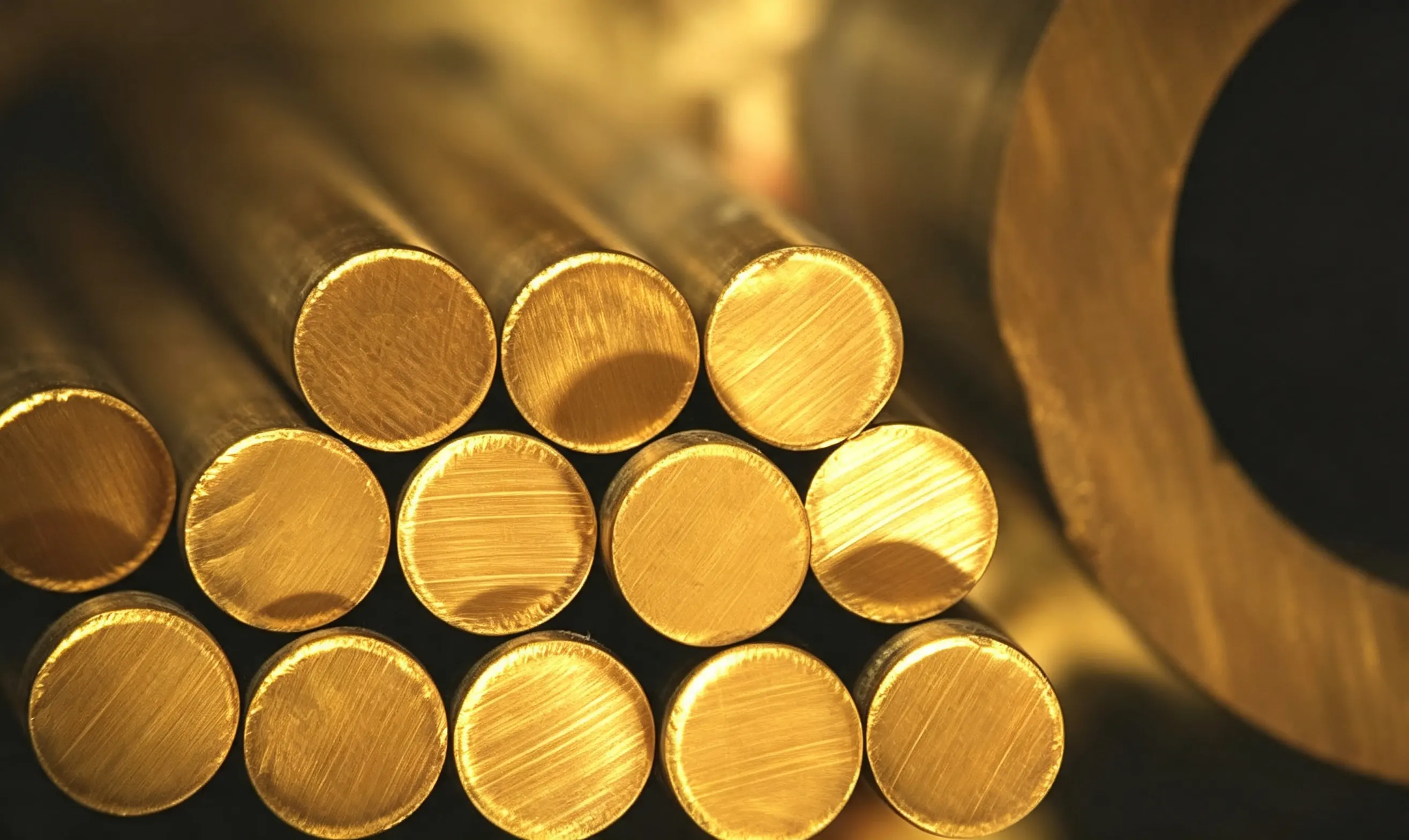
Brass typically contains 60–70% copper and 30–40% zinc. The high copper content gives the alloy its characteristic golden color.
| Item | Specification |
|---|---|
| Material | Brass Alloy |
| Main Elements | Copper (Cu) + Zinc (Zn) |
| Product Forms | Tube, Rod, Bar, Plate, Sheet, Custom Components |
| Manufacturing Process | Casting, Extrusion, Rolling, Drawing, Machining |
| Surface | Mill Finish, Polished, Customized |
| Condition | Annealed / Cold Worked |
Brass is a copper-based alloy mainly composed of copper and zinc. The addition of zinc improves strength, hardness and machinability while maintaining good corrosion resistance and conductivity.
| Element | Typical Content (%) |
|---|---|
| Copper (Cu) | 55 - 90 |
| Zinc (Zn) | Balance |
| Lead (Pb) | 0 - 3 (depending on machining requirements) |
| Other Elements | Small amounts of Fe, Sn, Ni or other alloying elements |
| Property | Brass Alloy | Pure Copper |
|---|---|---|
| Main Alloy Element | Copper + Zinc | High purity Copper |
| Strength | Higher mechanical strength | Lower strength |
| Machinability | Excellent | Moderate |
| Electrical Conductivity | Lower than pure copper | Excellent |
| Corrosion Resistance | Good | Excellent |
| Typical Applications | Valves, fittings, connectors, precision parts | Conductors, heat exchangers, electrical systems |
Brass (Cu-Zn alloy) offers a balanced combination of strength, corrosion resistance and machinability.
High tensile strength suitable for load-bearing components in construction, automotive and plumbing systems.
Forms a stable protective oxide layer; performs well in atmospheric and freshwater environments.
Excellent cold-workability for bending, deep drawing and forming without fracture.
Leaded grades (e.g., C36000) offer superior machinability for high-precision components.
Moderate thermal conductivity, ideal for heat exchangers, radiator cores and plumbing fittings.
The mechanical properties of brass depend on alloy composition, manufacturing process and heat treatment condition. Brass provides an excellent balance between strength, ductility and machinability.
| Property | Typical Value |
|---|---|
| Tensile Strength | 300 - 600 MPa |
| Yield Strength | 100 - 400 MPa |
| Hardness | 60 - 180 HB |
| Elongation | 10 - 50% |
| Electrical Conductivity | 20 - 60% IACS |
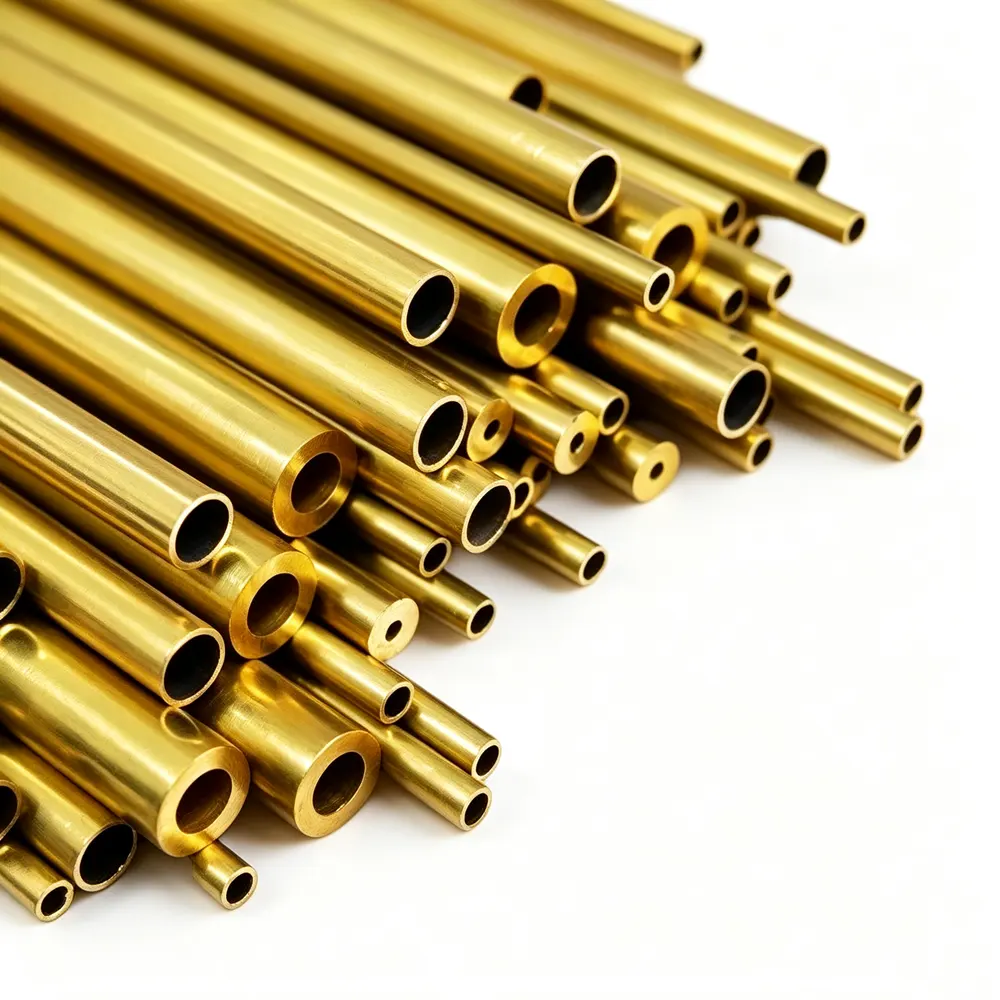
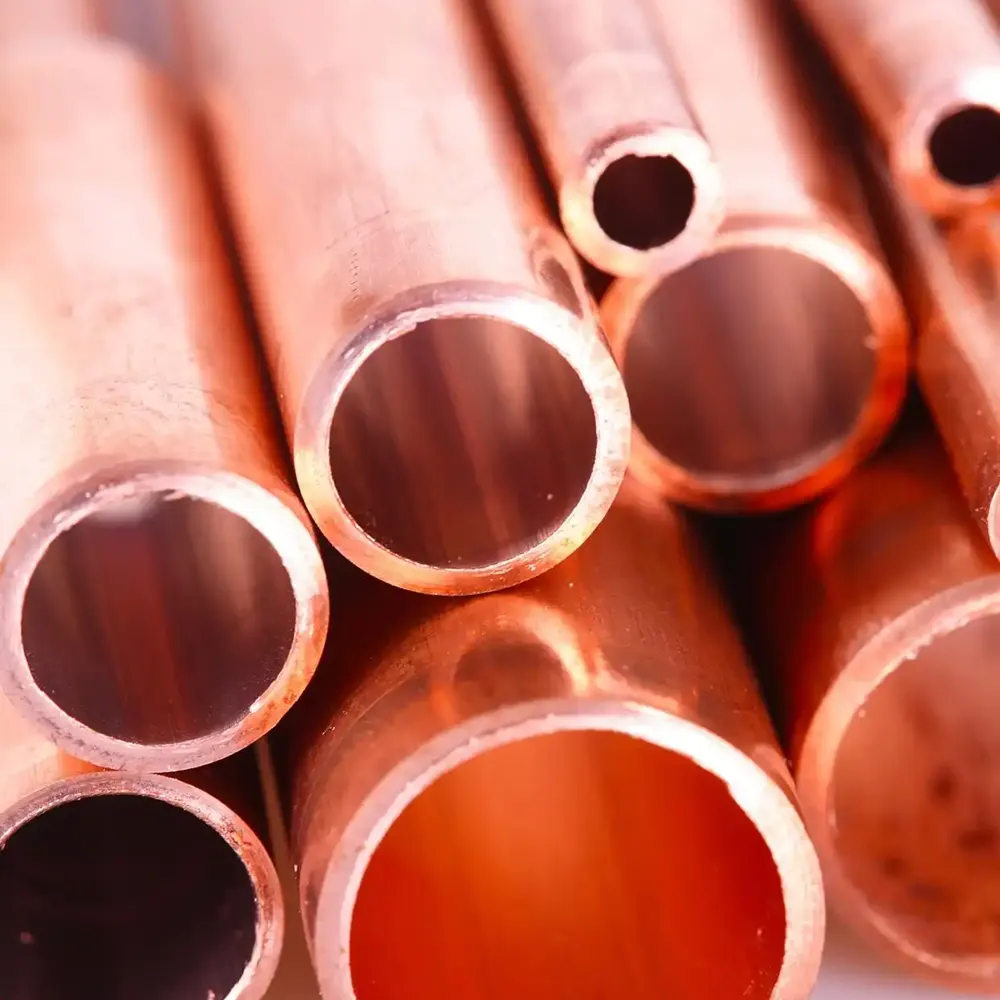
Our Copper maintains inventory of C27200, C33000, and C44300 brass tubing, covering general-purpose, free-machining, and marine-grade applications.
Composition: ~64% Cu, balance Zn
Key Feature: Excellent cold workability
Ideal for deep drawing, bending and complex forming operations. Not recommended for hot working due to low elevated-temperature strength.
Typical applications: Ammunition casings, musical instruments, radiator cores.
Composition: Cu-Zn-Pb alloy
Key Feature: Free-machining grade
Lead addition significantly improves machinability. Not weldable. Typically specified for mild corrosive environments.
Typical applications: Plumbing fittings, valve stems, screw machine parts.
Composition: Cu-Zn + 1% Sn + Trace As
Key Feature: Dezincification resistant
Tin and arsenic additions provide excellent resistance to dezincification and general corrosion in freshwater and mildly aggressive environments.
Typical applications: Condenser tubes, heat exchangers, seawater cooling systems.
| Outside Diameter (in) | 1" | 3/4" | 1/2" | 3/8" | 1/4" | 3/16" | 10SWG | 13SWG | 16SWG | 18SWG | 20SWG | 22SWG | 24SWG | 26SWG |
|---|---|---|---|---|---|---|---|---|---|---|---|---|---|---|
| 3/16 | .14 | .121 | .098 | .080 | .06 | .05 | ||||||||
| 1/4 | .220 | .18 | .15 | .111 | .09 | .07 | ||||||||
| 5/16 | .28 | .24 | .20 | .14 | .11 | .09 | ||||||||
| 3/8 | .54 | .45 | .351 | .290 | .215 | .180 | .13 | .11 | ||||||
| 7/16 | .551 | .42 | .32 | .270 | .230 | .16 | .13 | |||||||
| 1/2 | 1.01 | .823 | .652 | .493 | .38 | .30 | .233 | .18 | .15 | |||||
| 9/16 | 1.21 | .95 | .74 | .528 | .42 | .345 | .26 | .20 | .17 | |||||
| 5/8 | 1.41 | 1.160 | .84 | .495 | .500 | .390 | .29 | .23 | .19 | |||||
| 11/16 | 1.61 | 1.236 | .94 | .68 | .53 | .40 | .32 | .25 | .21 | |||||
| 3/4 | 2.15 | 1.81 | 1.443 | 1.049 | .800 | .56 | .47 | .35 | .27 | .23 | ||||
| 13/16 | 2.41 | 2.01 | 1.520 | 1.14 | .82 | .59 | .48 | .38 | .30 | .25 | ||||
| 7/8 | 2.68 | 2.21 | 1.74 | 1.24 | .910 | .68 | .52 | .41 | .32 | .26 | ||||
| 15/16 | 2.95 | 2.41 | 1.78 | 1.44 | .96 | .73 | .56 | .44 | .35 | .28 | ||||
| 1 | 3.22 | 2.61 | 1.92 | 1.43 | 1.03 | .800 | .630 | .47 | .37 | .30 | ||||
| 1.1/16 | 3.49 | 2.82 | 2.05 | 1.53 | 1.10 | .84 | .640 | .50 | .440 | |||||
| 1.1/8 | 3.75 | 3.02 | 2.19 | 1.63 | 1.17 | .89 | .67 | .53 | .42 | |||||
| 1.1/4 | 4.30 | 3.38 | 2.55 | 1.83 | 1.325 | 1.050 | .800 | .59 | .46 | |||||
| 1.3/8 | 4.83 | 3.82 | 2.890 | 2.03 | 1.45 | 1.09 | .848 | .65 | .51 | |||||
| 1.1/2 | 5.36 | 4.22 | 3.030 | 2.22 | 1.59 | 1.27 | .950 | .71 | .56 | |||||
| 1.5/8 | 5.90 | 4.63 | 3.29 | 2.42 | 1.702 | 1.310 | .980 | .77 | .61 | |||||
| 1.3/4 | 6.44 | 5.03 | 3.760 | 2.62 | 1.850 2.120 |
1.40 | 1.06 | .83 | .65 | |||||
| 1.7/8 | 6.97 | 5.43 | 3.84 | 2.81 | 2.25 | 1.50 | 1.14 | .89 | .70 | |||||
| 2 | 12.87 | 10.46 | 7.51 | 5.83 | 4.20 | 3.01 | 2.26 | 1.71 | 1.28 | .95 | .75 | |||
| 2.1/8 | 12.07 | 8.04 | 6.23 | 4.39 | 3.21 | 2.40 | 1.72 | 1.29 | 1.01 | |||||
| 2.1/4 | 15.02 | 13.67 | 8.58 | 6.64 | 4.66 | 3.41 | 2.56 | 1.81 | 1.37 | 1.07 | ||||
| 2.3/8 | 9.12 | 7.04 | 4.94 | 3.60 | 2.67 | 1.92 | 1.44 | 1.13 | ||||||
| 2.1/2 | 22.52 | 17.16 | 9.65 | 7.80 | 5.21 | 3.80 | 2.81 | 2.04 | 1.52 | 1.19 | ||||
| 2.5/8 | 10.19 | 7.84 | 5.48 | 4.00 | 2.95 | 2.12 | 1.60 | 1.25 | ||||||
| 2.3/4 | 10.73 | 8.24 | 5.76 | 4.20 | 3.09 | 2.23 | 1.68 | 1.31 | ||||||
| 2.7/8 | 11.26 | 8.65 | 6.03 | 4.39 | 3.258 | 2.33 | 1.75 | 1.37 | ||||||
| 3 | 34.00 | 28.96 | 21.45 | 12.20 | 9.05 | 6.63 | 4.59 | 3.47 | 2.43 | 1.83 | 1.43 | |||
| 3.1/8 | 20.11 | 12.33 | 9.45 | 6.63 | 4.79 | 3.50 | 2.53 | |||||||
| 3.1/4 | 12.87 | 9.85 | 6.86 | 4.99 | 3.64 | 2.64 | ||||||||
| 3.3/8 | 13.41 | 10.26 | 7.13 | 5.18 | 4.10 | 2.74 | ||||||||
| 3.1/2 | 42.90 | 35.39 | 25.74 | 23.33 26.54 |
13.94 | 10.66 | 7.45 | 5.38 | 3.91 | 2.84 | ||||
| 3.5/8 | 29.70 | 14.48 | 11.06 | 7.68 | 5.58 | 4.05 | 2.95 | |||||||
| 3.3/4 | 15.02 | 11.46 | 7.96 | 5.77 | 4.32 | 3.05 | ||||||||
| 4 | 51.48 | 41.83 | 30.03 | 16.09 | 12.27 | 8.70 | ||||||||
| 4.1/2 | 34.32 | 18.23 | 13.38 | 9.60 | ||||||||||
| 5 | 68.64 | 54.70 | 38.61 | 20.38 | 15.48 | 10.70 |
Note: All weights are in KG/MTR. Wall thicknesses correspond to standard fractions and SWG (Standard Wire Gauge).
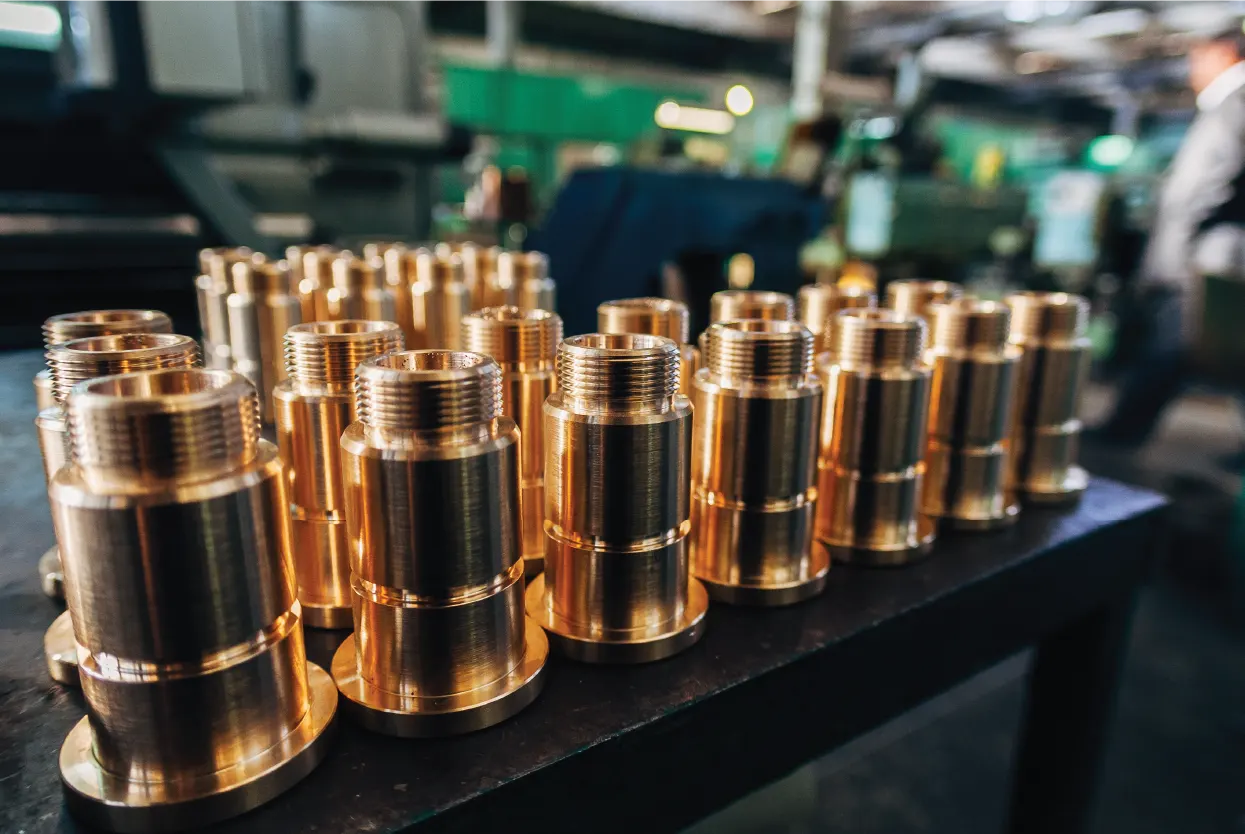
Brass alloys are categorized by their secondary alloying elements. Each type offers a distinct balance of machinability, corrosion resistance, and strength.
| Alloy Family | Common Name | Key Alloying Element | Cu (%) | Primary Characteristic |
|---|---|---|---|---|
| Cu-Zn | Cartridge Brass | Zinc | ~70 | Excellent cold workability & deep drawing |
| Cu-Zn-Pb | Free-Cutting Brass | Lead | ~60 | Superior machinability (industry benchmark) |
| Cu-Zn-Sn | Admiralty Brass / Red Brass | Tin | ~85 | High corrosion resistance (especially seawater) |
| Cu-Zn-Al | Aluminum Brass | Aluminum | ~76 | Enhanced strength & dezincification resistance |
Typically contains 70% Copper and 30% Zinc (ASTM C26000 / CW505L). Its bright, gold-like appearance makes it a common choice for decorative applications.
Contains a higher copper content (~85% Cu) with additions of Tin (approx. 1%). Often referred to as Admiralty Brass in marine contexts.
Based on the yellow brass composition but with 1.8% to 3.7% Lead added (e.g., C36000 / C3604). Note: While often associated with 360 brass, "Yellow Brass" typically refers to the unleaded C26000 grade.
Contains 2–3% Aluminum along with trace Arsenic (e.g., C68700). The aluminum forms a protective oxide layer on the surface.
Engineering Note: When specifying brass, distinguish between "Formability" (Cartridge Brass) and "Machinability" (Leaded Brass). For potable water systems, ensure compliance with local lead-content regulations (e.g., NSF/ANSI 61).
Brass offers corrosion resistance, formability and machinability, making it suitable for a wide range of industries.
Plumbing fixtures, door hardware, architectural trim and outdoor fittings.
Radiator cores, fuel fittings, bushings, hydraulic connectors and instrument parts.
Circuit board contacts, RF connectors, cable shielding and EMI enclosures.
Seawater condenser tubes, heat exchanger fins, gear blanks and bearing cages.

Copper-zinc alloy with excellent machinability, wear resistance and corrosion resistance. Widely used for valves, fittings, plumbing and heat exchangers.
| China Grade (GB) |
JIS Grade | ASTM / CDA | Cu (%) | Zn | Pb (%) |
|---|---|---|---|---|---|
| H59 | C2800 | C28000 | 57.0–60.0 | Remainder | ≤ 0.5 |
| H62 | C2800 | C27400 | 60.5–63.5 | ≤ 0.08 | |
| H65 | C2680 | C26800 | 63.5–68.0 | ≤ 0.03 | |
| H68 | C2600 | C26200 | 67.0–70.0 | ≤ 0.03 | |
| H70 | C2600 | C26000 | 68.5–71.5 | ≤ 0.03 | |
| HPb59-1 | C3604 | C37700 | 57.0–60.0 | 0.8–1.9 |
The C3600 series are leaded, free-cutting brasses optimized for high-speed automatic machining:
| JIS Grade | Cu (%) | Pb (%) | Fe+Sn (≤ %) | Tensile Strength (MPa, min) |
Hardness HV (min) |
|---|---|---|---|---|---|
| C3600 | 59.0–63.0 | 1.8–3.7 | 1.0 | 315 | 75 |
| C3602 | 59.0–63.0 | 1.8–3.7 | 1.2 | 315 | 75 |
| C3604 | 57.0–61.0 | 1.8–3.7 | 1.2 | 335 | 80 |
Typical uses: screws, nuts, bolts, gears, valve bodies, connectors, watch & camera parts.
Engineering Note: Higher Cu content (H68/H70) offers better cold-forming and deep-drawing properties. Lower Cu grades (H59/H62) are more economical and stronger, preferred for hot stamping and machining. For automatic CNC machining, specify leaded free-cutting grades (C3602 / C3604).
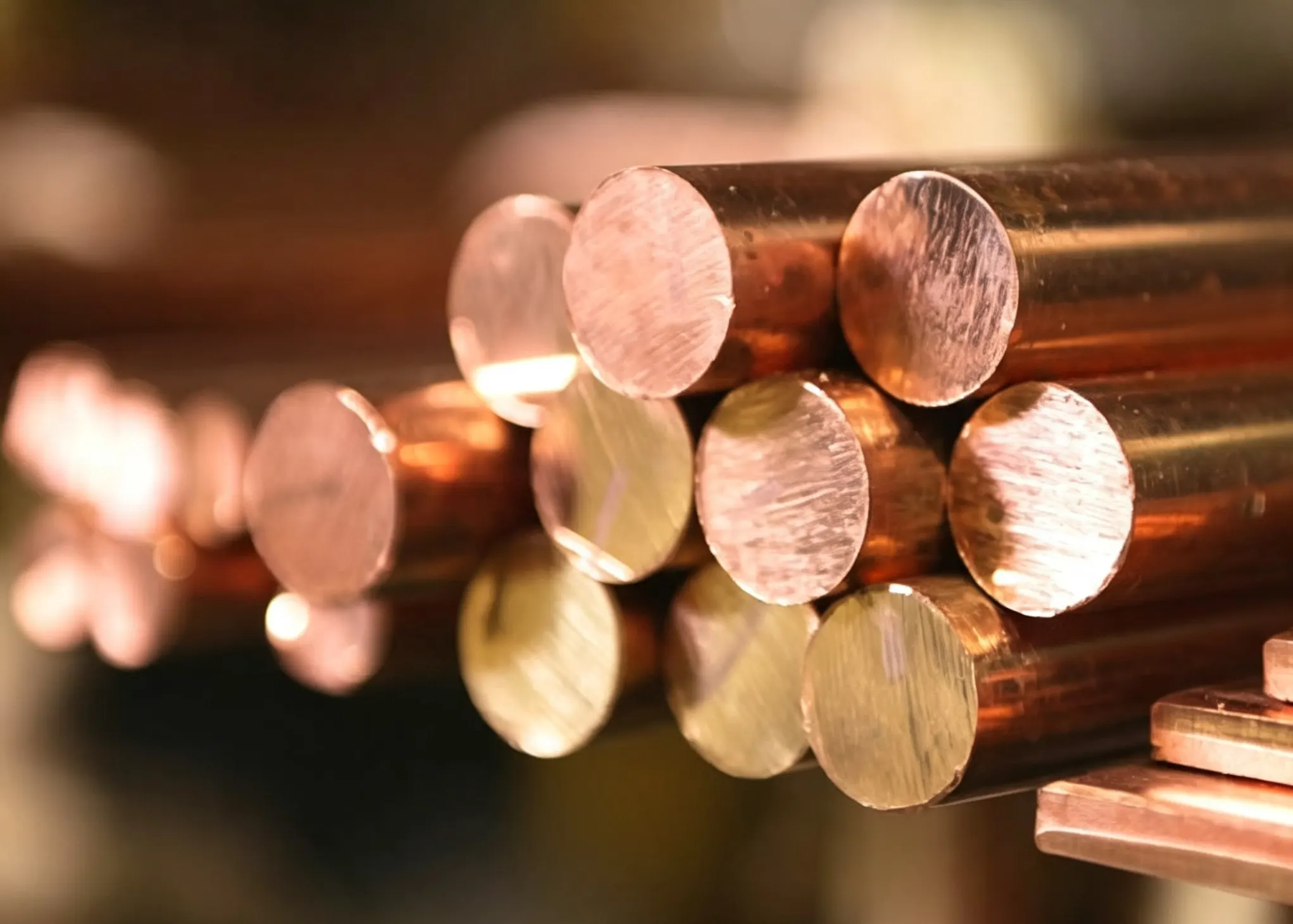
Sunny Steel supplies Brass Alloy materials in various forms to meet different industrial manufacturing requirements.

Precision machining and forging of copper alloys, brass and bronze, built on a certified quality management system.
Precision round parts
Internal machining
Complex profiles
Die & open-die
High-precision cutting
Full capability list

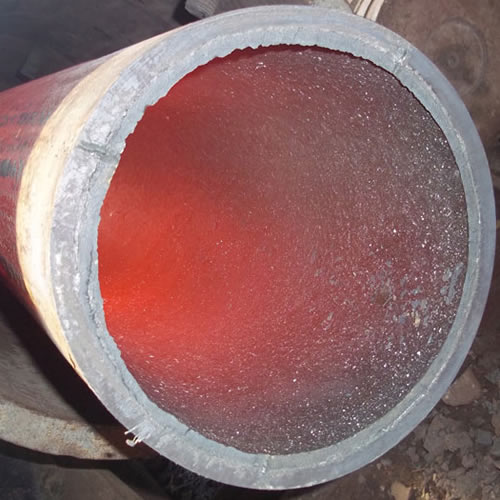
Ceramic lined pipe is made through self-propagating high-temperature synthesis (SHS) technique.
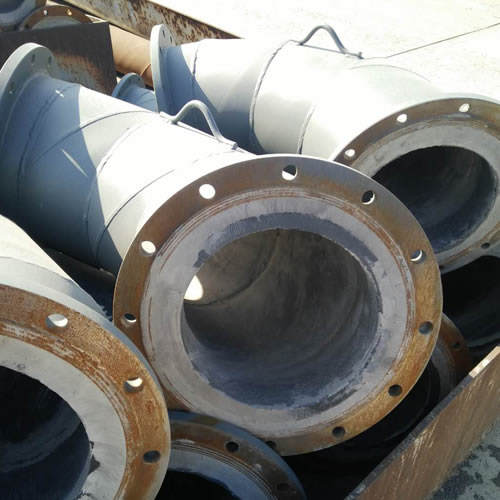
Cast basalt lined steel pipe is composed by lined with cast basalt pipe, outside steel pipe and cement mortar filling between the two layers.
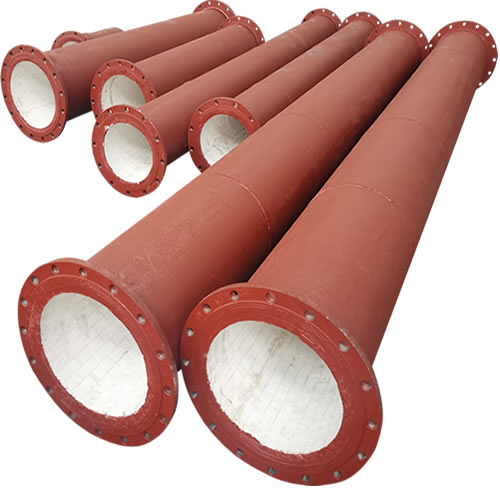
Ceramic tile lined pipes have very uniform coating of specially formulated ceramic material that is affixed to the inner of the pipe.
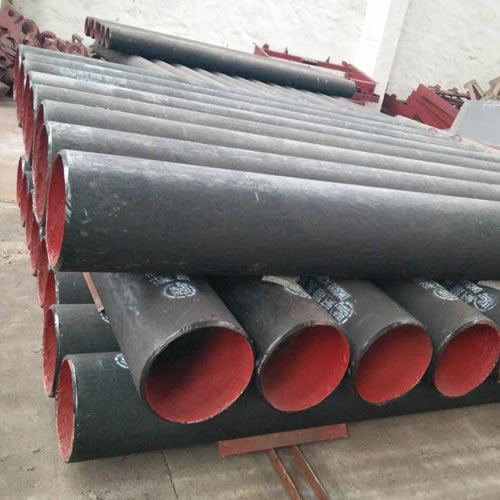
The material of the rare earth alloy wear-resistant pipe is ZG40CrMnMoNiSiRe, which is also the grade of rare earth alloy steel.
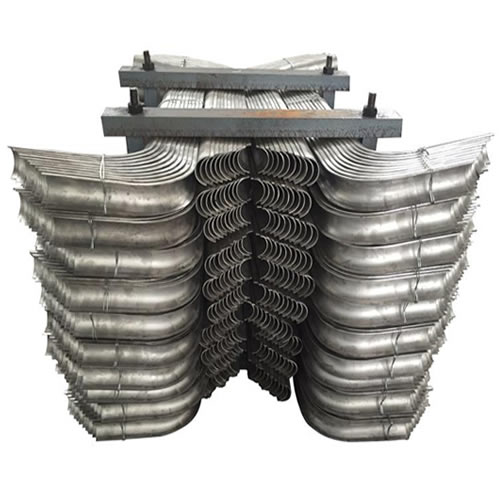
Tubes Erosion Shields are used to protect boiler tubing from the highly erosive effects of high temperatures and pressures thereby greatly extending tube life.
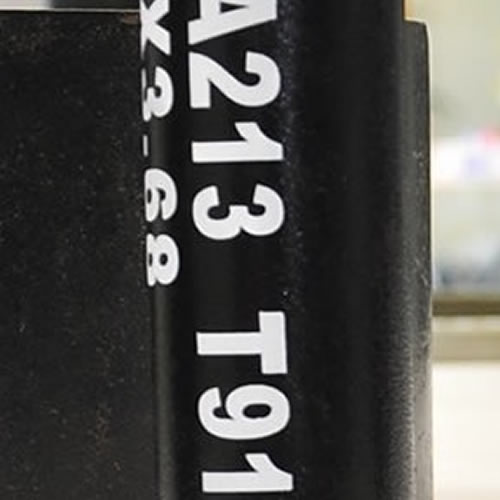
The ASTM A213 T91 seamless tubes are primarily used for boiler, superheater, and heat-exchanger.

When you partner with Sunny Steel, you can stop worrying about meeting deadlines thanks to our responsive and timely service. You'll also say goodbye to unnecessary shopping around. Instead, you'll get white glove service from an expert who understands your needs and can get you the materials you need quickly.