Stainless Steel Pipe
Stainless Steel Pipe - industrial steel pipe
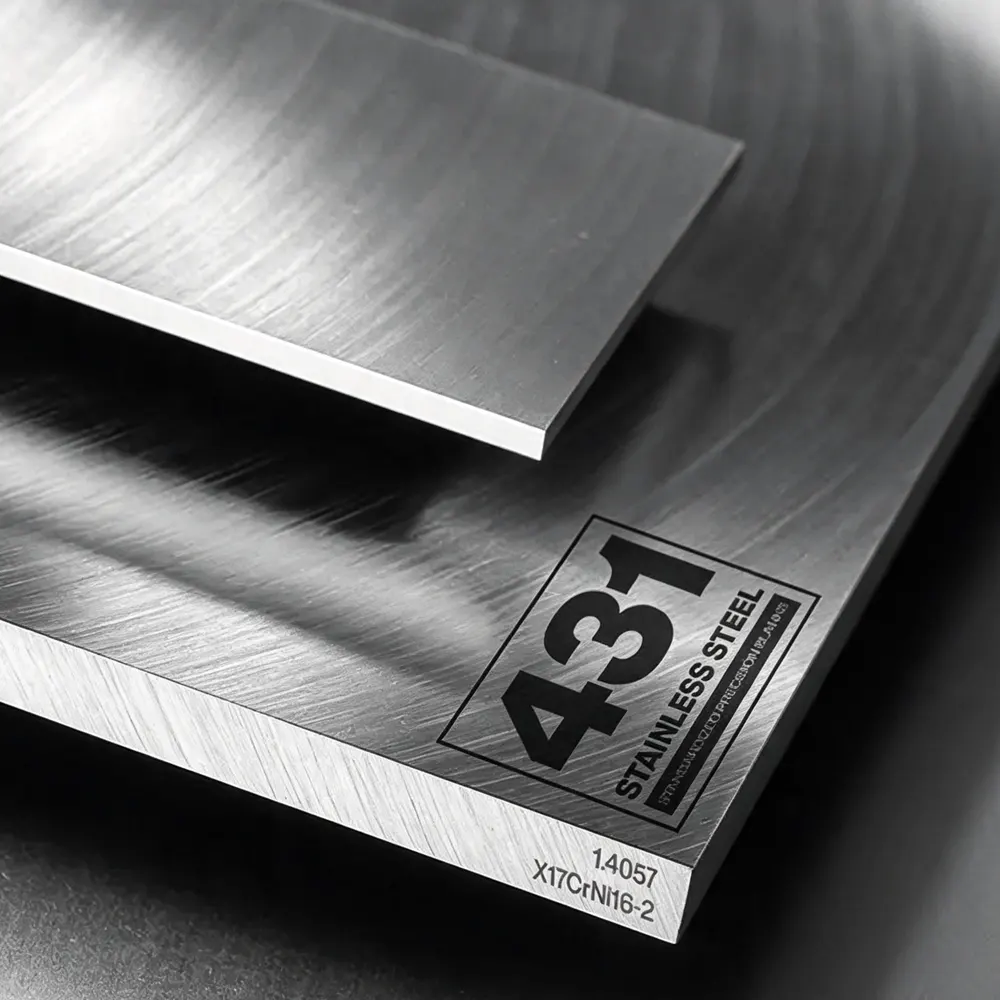
UNS S43100 X17CrNi16‑2 1.4057 Martensitic Stainless
431 martensitic stainless steel (1.4057), heat‑treatable to 32‑47 HRC, supplied in cold‑finished round bar, decarb‑free round bar and cut‑to‑size flat stock.
Heat‑Treatable Martensitic Stainless Steel for High‑Strength Mechanical & Corrosion‑Resistant Components
431 stainless steel cold‑finished round bars and flat stock, martensitic grade for engineering components
431 is a martensitic 400‑series stainless steel, EN designation X17CrNi16‑2, W.Nr 1.4057, UNS S43100. Chromium‑nickel alloying delivers better toughness and moderate corrosion resistance compared to plain‑chromium martensitic stainless grades. This grade is magnetic and fully heat‑treatable for adjustable hardness and mechanical strength. It is susceptible to pitting corrosion under chloride‑containing environments. Available supply forms include flat stock, cold‑finished round bars, decarb‑free round bars and custom cut‑to‑size blanks.
| Standard System | Designation |
|---|---|
| EN Grade | 1.4057 |
| EN Short Name | X17CrNi16-2 |
| EN Standard | EN 10088 |
| AISI / SAE | 431 |
| BS (UK) | 431S29 |
| JIS (Japan) | SUS 431 |
| Element | Content Range |
|---|---|
| Carbon (C) | 0.12 – 0.22 |
| Silicon (Si) | 0 – 1.0 |
| Manganese (Mn) | 0 – 1.5 |
| Phosphorus (P) | 0 – 0.04 |
| Sulfur (S) | 0 – 0.03 |
| Chromium (Cr) | 15.0 – 17.0 |
| Nickel (Ni) | 1.5 – 2.5 |
| Property Item | Value |
|---|---|
| Working Hardness (hardened & tempered) | 32‑47 HRC (300‑447 BHN) |
| Annealed Delivery Hardness, max | 331 HB |
| Density | 7.7 g/cm³ (0.278 lb/in³) |
| Tensile Strength (delivery condition) | ~152.2 ksi |
| 0.2 % Offset Yield Strength | 515 MPa (74.7 ksi) |
| Thermal Conductivity | ~25 W/(m·K) |
| Mean Thermal Expansion Coefficient | 10‑11 × 10⁻⁶ m/(m·K) |
| Specific Heat Capacity | 0.46 J/g‑°C |
| Electrical Resistivity | ~0.7 Ohm·mm²/m |
| Wear‑resistance Rating (1‑6 scale) | 3 |
| Magnetic Characteristic | Magnetizable (martensitic) |
ASTM A276 Type 431 is internationally recognized under numerous national and sector-specific designations. The most common equivalent grade is EN 1.4057 / X17CrNi16-2.
| Standard System | Designation | Region / Organization |
|---|---|---|
| ASTM / UNS | A276 Type 431 / UNS S43100 | USA |
| AISI / SAE | 431 | USA |
| AMS | AMS 5682 | SAE Aerospace (USA) |
| EN / DIN | X17CrNi16-2 / 1.4057 | Europe |
| AFNOR | Z15CN16-02 | France |
| BS | 431S29 | United Kingdom |
| JIS | SUS 431 | Japan |
| SS | 2321 | Sweden |
| ČSN | 17 146 (approx. 1.4057) | Czech Republic |
| PN | 2H17N2 | Poland |
| UNE | F.3427 | Spain |
| INOX / RVS | INOX 431 / RVS 431 | Generic / Netherlands trade names |
| Alloy Name | Alloy 431 | Common industry / distributor name |
Note: While chemical compositions are closely aligned, mechanical property requirements and delivery conditions (annealed, QT800, QT900) must be verified against the specific purchasing standard. For project specifications, always state both the ASTM grade and the equivalent EN / JIS / JIS grade to avoid substitution disputes.
Stainless steel 431 / 1.4057 (UNS S43100) — minimum values of 0.2% proof strength at elevated temperatures for quenched and tempered conditions, in accordance with EN 10088-3. Values in MPa, longitudinal test direction.
| Temperature °C |
Minimum Rp0.2 (MPa) | |
|---|---|---|
| +QT800 | +QT900 | |
| 100 | 515 | 565 |
| 150 | 495 | 525 |
| 200 | 475 | 505 |
| 250 | 460 | 490 |
| 300 | 440 | 470 |
| 350 | 405 | 430 |
| 400 | 355 | 375 |
Design Note: These values are minimum proof stress for allowable-stress calculation under EN 13445 / AD 2000 rules. They are not intended for long-term service above 400 °C; martensitic stainless steels exhibit reduced creep resistance and tempering stability beyond this range. For continuous high-temperature duty (> 450 °C), consider ferritic-austenitic (duplex) or heat-resistant austenitic grades.
Properties are specified in accordance with EN 10088-3 and ASTM A276.
Values apply to longitudinal test specimens. Thickness (t) is expressed in millimeters (mm).
| Heat Treatment Condition | Equivalent ASTM Condition | Thickness t (mm) |
Hardness max. (HB) |
Tensile Strength Rm |
0.2% Yield Strength Rp0.2min (MPa) |
Elongation Amin (%) |
|
|---|---|---|---|---|---|---|---|
| ksi | MPa | ||||||
| Annealed (+A) | Annealed | ≤ 160 | 295 | ≤ 138 | ≤ 950 | — | — |
| Quenched & Tempered (+QT800) | Tempered @ ~600°C | ≤ 60 | — | 116–138 | 800–950 | 600 | 14 |
60 < t ≤ 160 |
600 | 12 | |||||
| Quenched & Tempered (+QT900) | Tempered @ ~650°C | ≤ 60 | — | 130–152 | 900–1050 | 700 | 12 |
60 < t ≤ 160 |
700 | 10 | |||||
Engineering Notes:
1. +QT800 and +QT900 refer to quenched-and-tempered conditions with minimum tensile strengths of 800 MPa and 900 MPa respectively.
2. For thick sections (t > 60 mm), reduced elongation values reflect increased risk of centerline segregation and residual stress.
3. Hardness values for QT conditions are typically 248–302 HB (≈ 24–32 HRC), depending on section size and tempering temperature.
4. Impact energy decreases significantly at temperatures below 0°C; not recommended for cryogenic service.
Martensitic stainless steel. High strength, moderate corrosion resistance. Strict thermal control is mandatory during welding and forging.
Engineering Bottom Line: 431 is a martensitic grade. Do not quench after forging. Always temper immediately after hardening. For welded structures, post-weld tempering at ~650°C is required to restore toughness and prevent cracking.

High-strength martensitic stainless steel selected for components subjected to high mechanical loads and moderate corrosion.
Note: For long-term seawater or high-chloride service, duplex stainless steels (e.g., 2205, 2507) are generally preferred over standard austenitic grades.
Selection Logic: 431 is specified when the application demands tensile strength above 800 MPa combined with moderate corrosion resistance. It is not recommended for cryogenic service or highly oxidizing acids.

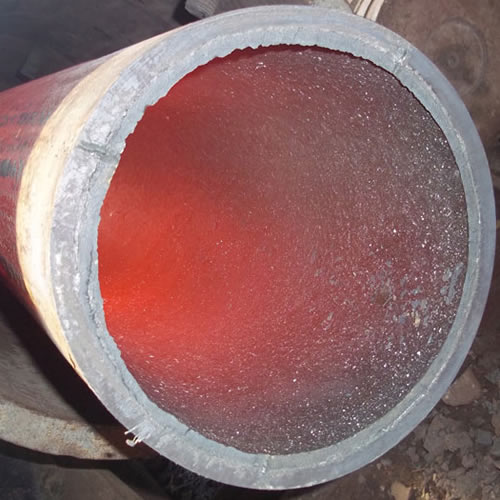
Ceramic lined pipe is made through self-propagating high-temperature synthesis (SHS) technique.
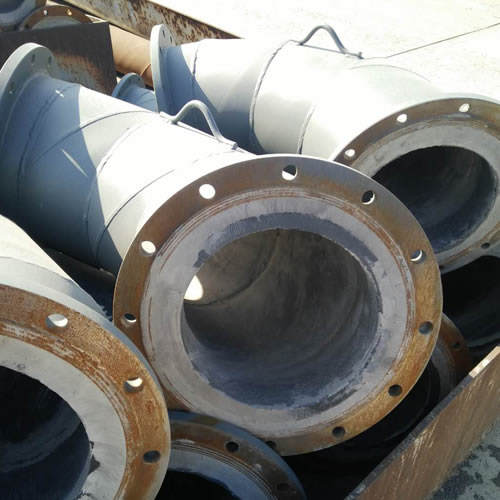
Cast basalt lined steel pipe is composed by lined with cast basalt pipe, outside steel pipe and cement mortar filling between the two layers.
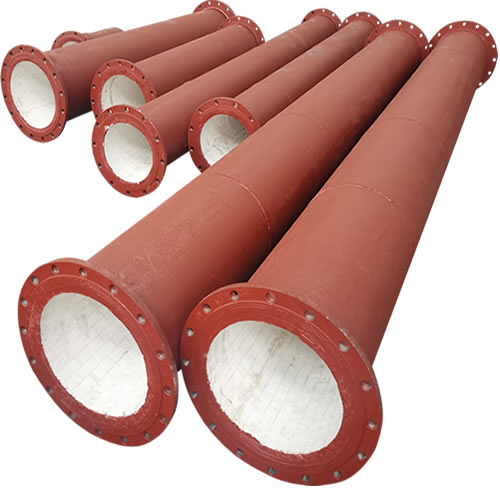
Ceramic tile lined pipes have very uniform coating of specially formulated ceramic material that is affixed to the inner of the pipe.
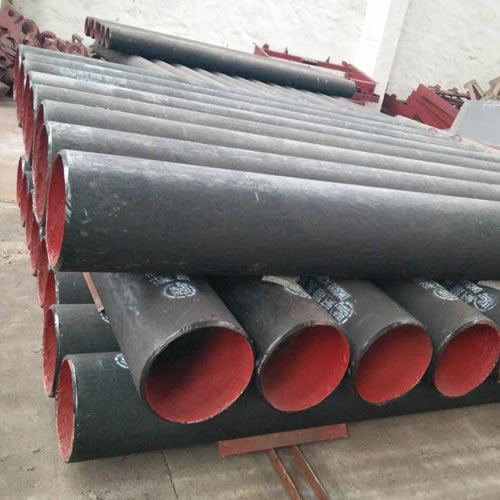
The material of the rare earth alloy wear-resistant pipe is ZG40CrMnMoNiSiRe, which is also the grade of rare earth alloy steel.
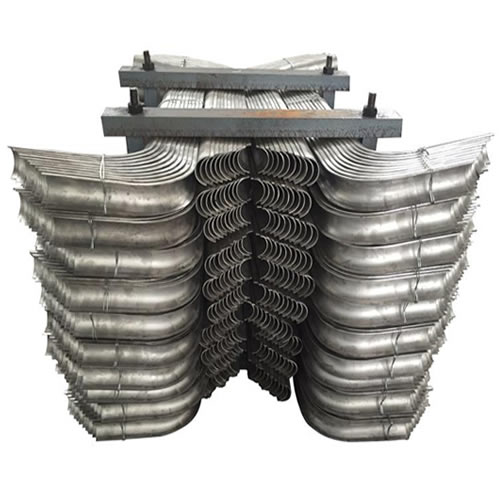
Tubes Erosion Shields are used to protect boiler tubing from the highly erosive effects of high temperatures and pressures thereby greatly extending tube life.
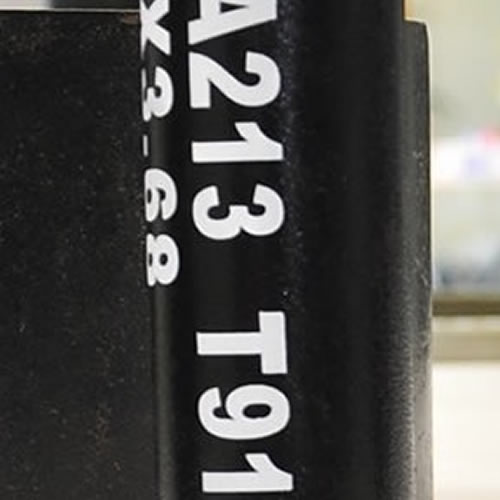
The ASTM A213 T91 seamless tubes are primarily used for boiler, superheater, and heat-exchanger.

When you partner with Sunny Steel, you can stop worrying about meeting deadlines thanks to our responsive and timely service. You'll also say goodbye to unnecessary shopping around. Instead, you'll get white glove service from an expert who understands your needs and can get you the materials you need quickly.