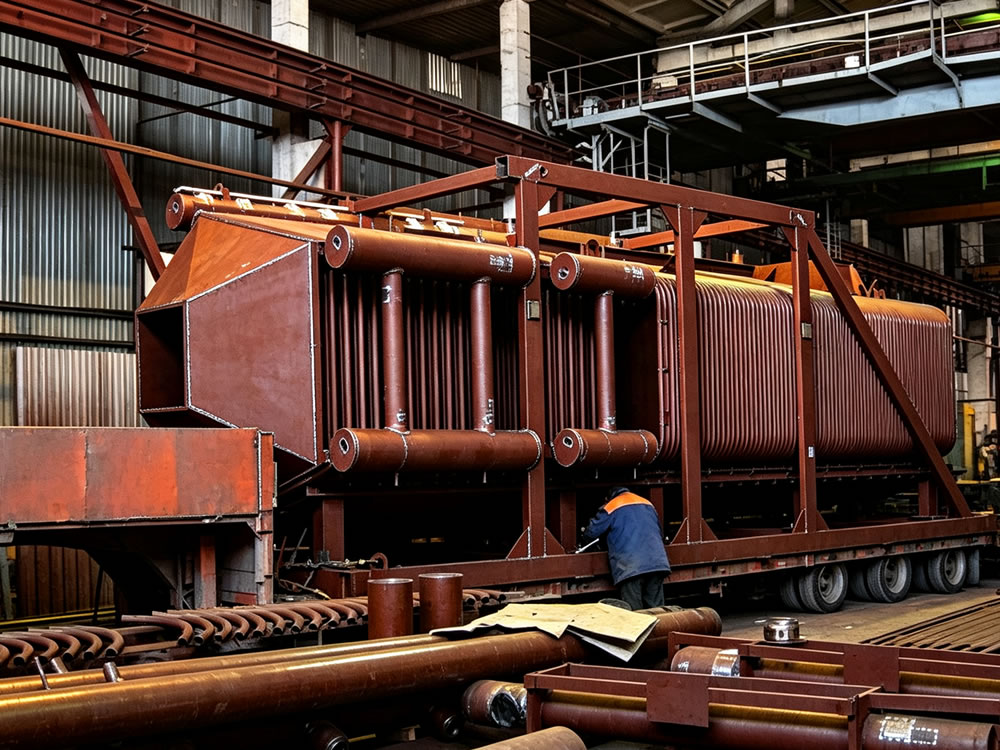
A boiler economizer recovers waste heat from flue gases to preheat feedwater before it enters the steam drum, improving boiler efficiency, reducing operating costs and extending equipment service life.
A boiler economizer is a heat recovery device installed in the rear flue gas passage of a boiler. Its primary purpose is to recover residual heat from hot exhaust gases and transfer that energy to boiler feedwater before it enters the steam drum. By utilizing waste heat that would otherwise be discharged into the atmosphere, the economizer significantly improves boiler efficiency while reducing fuel consumption and operating costs.
Modern industrial boilers commonly discharge flue gases at temperatures between 400°C and 600°C after combustion. Instead of allowing this valuable thermal energy to escape through the chimney, an economizer captures a large portion of the heat and raises the temperature of the incoming high-pressure feedwater. The heated water then enters the steam drum much closer to its saturation temperature, reducing the heat required inside the furnace.
Boiler economizers are widely installed in coal-fired boilers, gas-fired boilers, biomass boilers, waste heat boilers and various utility boilers. They have become one of the most effective energy-saving components in modern steam generation systems because they increase thermal efficiency without increasing fuel consumption.
The working principle of a boiler economizer is based on indirect heat exchange between high-temperature flue gas and pressurized boiler feedwater. The two fluids never mix. Instead, heat is transferred through the walls of economizer tubes, allowing waste energy to be recovered efficiently.
Because the economizer recovers energy that would otherwise be wasted, it provides one of the fastest returns on investment among all boiler heat recovery equipment.
Installing an economizer provides both operational and financial advantages for industrial boiler systems.
In many industrial facilities, even a small increase in feedwater temperature can produce significant annual fuel savings, making the economizer one of the most cost-effective boiler accessories available.
Heat transfer inside an economizer occurs through convection and conduction. High-temperature flue gas flows across the outside surface of the economizer tubes, while feedwater flows inside the tubes under pressure.
As thermal energy passes through the tube wall, the feedwater temperature increases continuously while the exhaust gas temperature decreases. Proper tube arrangement, gas velocity and water flow rate are carefully designed to maximize heat recovery without causing excessive pressure drop.
| Process Stage | Temperature | Purpose |
|---|---|---|
| Flue Gas Inlet | 400–600°C | Heat source |
| Feedwater Inlet | 120–180°C | Cold fluid |
| Feedwater Outlet | 250–320°C | Preheated water |
| Flue Gas Outlet | 150–250°C | Reduced heat loss |
A complete economizer assembly consists of several components designed to ensure efficient heat transfer, structural reliability and long service life.
| Component | Function |
|---|---|
| Economizer Tubes | Transfer heat from flue gas to feedwater. |
| Headers | Distribute feedwater uniformly throughout the tube bank. |
| Support Frame | Supports the complete economizer assembly. |
| Tube Shields | Protect tubes from fly ash erosion. |
| Soot Blowers | Remove accumulated ash deposits during operation. |
| Parameter | Typical Value |
|---|---|
| Working Pressure | 1–30 MPa |
| Feedwater Temperature | 120–320°C |
| Flue Gas Temperature | 400–600°C |
| Tube Material | ASTM A210, ASTM A192, ASTM A213 Alloy Steel |
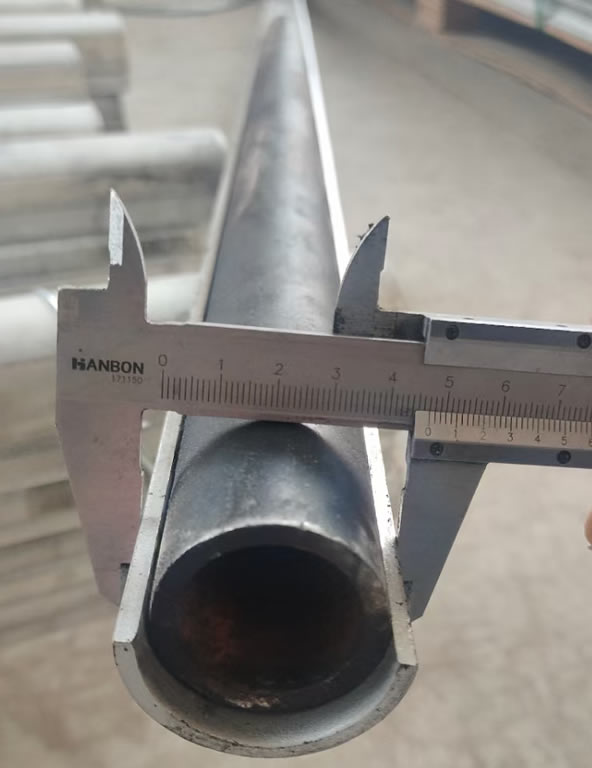
| Tube Diameter | 25–51 mm |
Increasing feedwater temperature before it enters the steam drum is one of the primary objectives of an economizer. Every degree of temperature increase reduces the amount of fuel required for steam generation and lowers stack gas temperature.
In many industrial boilers, raising feedwater temperature by only 1°C can reduce exhaust gas temperature by approximately 2–3°C. Depending on operating conditions, this improvement may increase overall boiler efficiency by 5% to 15%, resulting in substantial annual fuel savings and reduced greenhouse gas emissions.
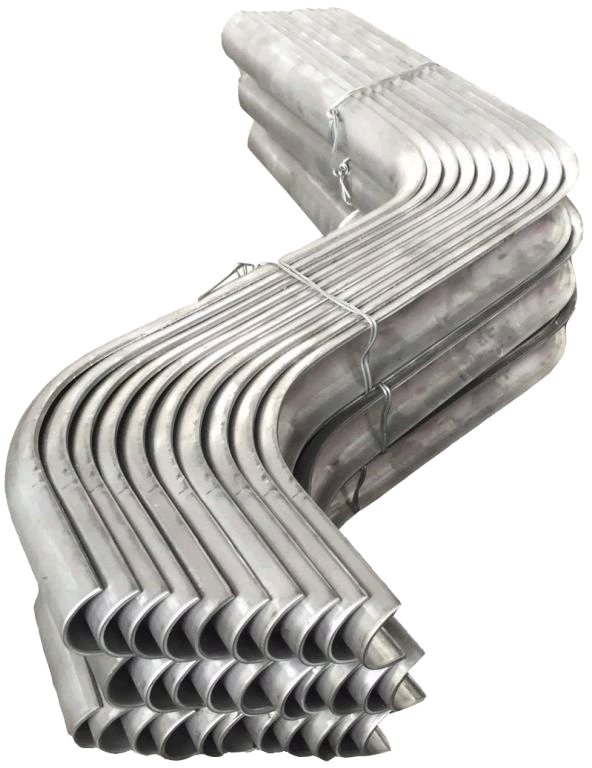
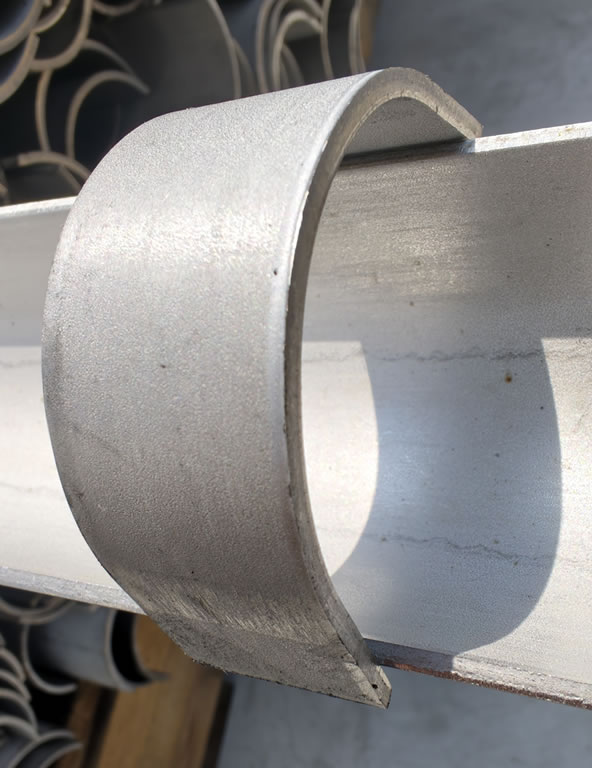
Tubes Erosion Shields are used to protect boiler tubing from the highly erosive effects of high temperatures and pressures thereby greatly extending tube life.

A half pipe sleeve is a piping device, which is placed on a pipe to protect it against the aliments.
Read moreSnap rings are used in conjunction with boiler tubes erosion shields, which is a clip that easily installs boiler tubes erosion shields to the tube.
Read moreA stainless boiler tube shield is a piping device, which is placed on a pipe to protect it against the aliments.

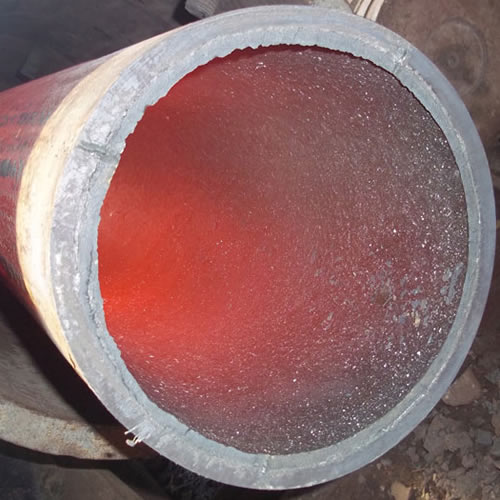
Ceramic lined pipe is made through self-propagating high-temperature synthesis (SHS) technique.
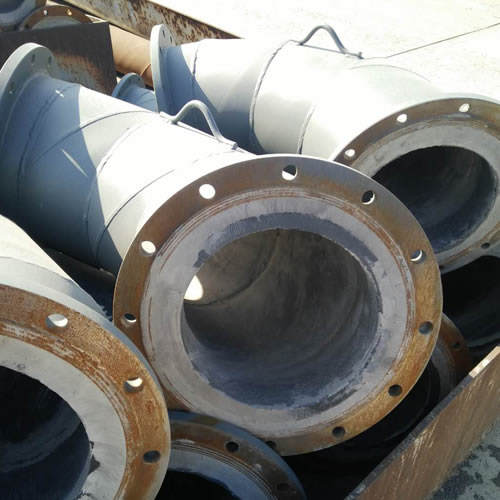
Cast basalt lined steel pipe is composed by lined with cast basalt pipe, outside steel pipe and cement mortar filling between the two layers.
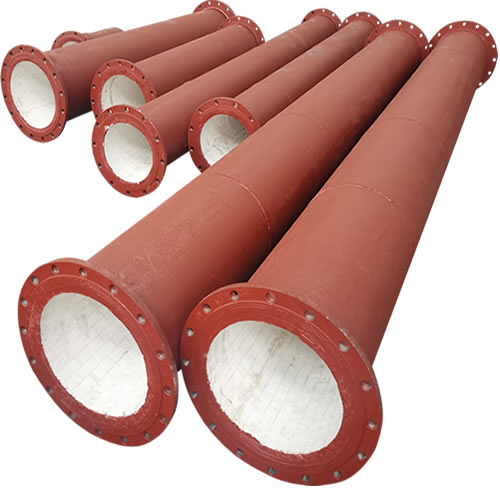
Ceramic tile lined pipes have very uniform coating of specially formulated ceramic material that is affixed to the inner of the pipe.
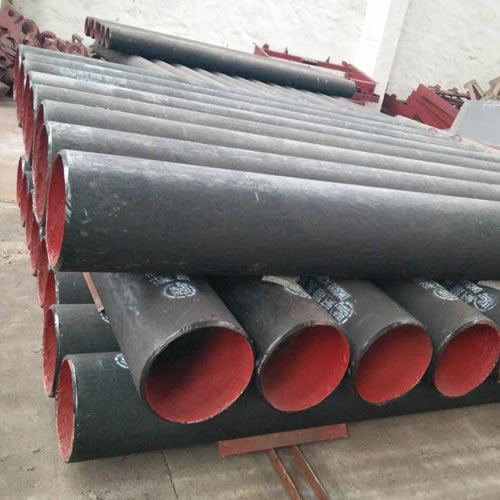
The material of the rare earth alloy wear-resistant pipe is ZG40CrMnMoNiSiRe, which is also the grade of rare earth alloy steel.
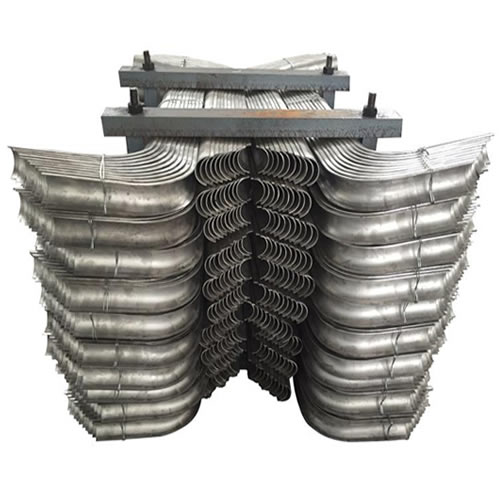
Tubes Erosion Shields are used to protect boiler tubing from the highly erosive effects of high temperatures and pressures thereby greatly extending tube life.
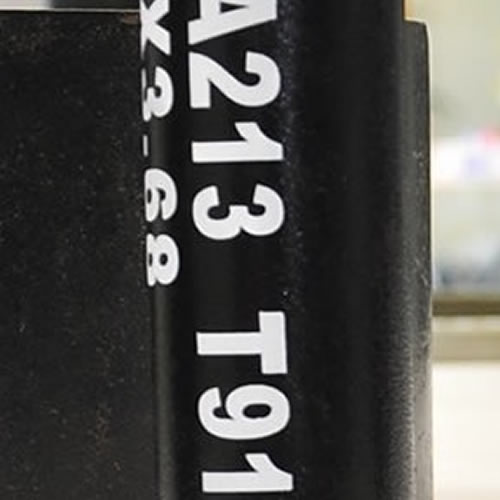
The ASTM A213 T91 seamless tubes are primarily used for boiler, superheater, and heat-exchanger.

When you partner with Sunny Steel, you can stop worrying about meeting deadlines thanks to our responsive and timely service. You'll also say goodbye to unnecessary shopping around. Instead, you'll get white glove service from an expert who understands your needs and can get you the materials you need quickly.