ASTM B338 Grade 2 Titanium Tubing | UNS R50400 CP Titanium Heat Exchanger Tube - Sunny Steel Industrial Pipe Product

ASTM B338 Grade 2 Titanium Tubing

UNS R50400 CP Titanium Heat Exchanger Tube

ASTM B338 Grade 2 CP titanium tube with balanced ductility & corrosion resistance, custom U-bend/coil shapes for power, marine and chemical heat exchange equipment.

Commercially Pure CP Seamless & Welded Tube for Condensers, Evaporators & Heat Exchangers

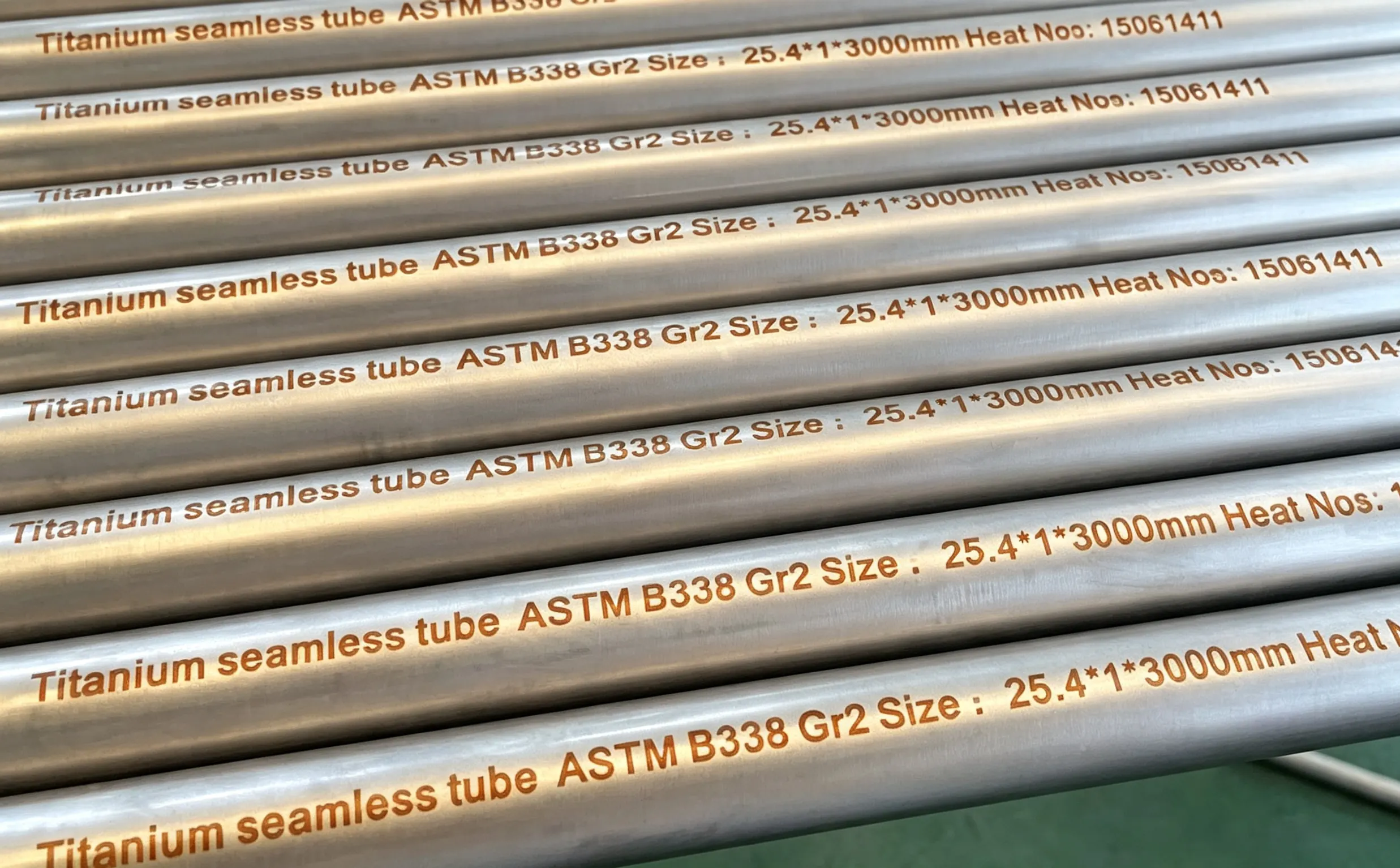
ASTM B338 Grade 2 titanium tubing, UNS R50400, is unalloyed commercially pure (CP) seamless and welded tube complying with ASTM B338-17(R21) / ASME SB338 specification. It is the most universal general-purpose titanium grade engineered for surface condensers, evaporators and all types of industrial heat exchangers. Grade 2 balances moderate tensile strength, superior ductility, outstanding formability and excellent chloride corrosion resistance. The titanium base content is calculated by mass difference after deducting all interstitial and trace impurity elements; oxygen content is the core factor determining its mechanical performance.

Element Maximum Allowable Content Technical Note
Nitrogen (N) 0.03 Interstitial impurity to avoid metal embrittlement
Carbon (C) 0.08 Limit intergranular brittle phase formation
Hydrogen (H) 0.015 Final product test; lower H limit negotiable with manufacturer
Iron (Fe) 0.30 Main residual metallic impurity
Oxygen (O) 0.25 Key element controlling tensile & yield strength
Single Residual Element 0.10 max each Unintentional trace metal impurities (Al, V, Cr, Ni etc.)
Total Residual Elements 0.40 max total Sum of all residual trace metals
Titanium (Ti) Balance Calculated by subtracting all other element percentages

Official Standard Footnotes

A: Full chemical analysis report is required for each heat batch of raw material.

B: Lower hydrogen content can be agreed between buyer and manufacturer via written purchase order.

C: Hydrogen test must be performed on finished tubing, not raw billet.

D: Single residual elements below 0.1% do not need separate reporting.

E: Residual elements refer to unintended trace metals generated during smelting, including Al, V, Sn, Cr, Mo, Nb, Zr, Hf, Ru, Pd, Cu, Si, Co, Ta, Ni, Mn, W.

F: Purchasers can specify targeted residual testing requirements on orders.

G: Titanium mass percentage is calculated by difference method.

Performance Item Minimum Standard Value Range Limit
Tensile Strength 50 ksi (345 MPa) No upper limit specified
0.2% Offset Yield Strength 40 ksi (275 MPa) Max 65 ksi (450 MPa)
Elongation (2in / 50mm gauge length) 20% Minimum ductility for tube sheet expansion
Flaring Test Inner Diameter Expansion Rate 20% Mandatory heat exchanger ductility inspection
  • Self-repairing TiO₂ passive film, excellent resistance to seawater chloride pitting & crevice corrosion
  • Thermal conductivity 50% higher than austenitic stainless steel, higher heat exchange efficiency
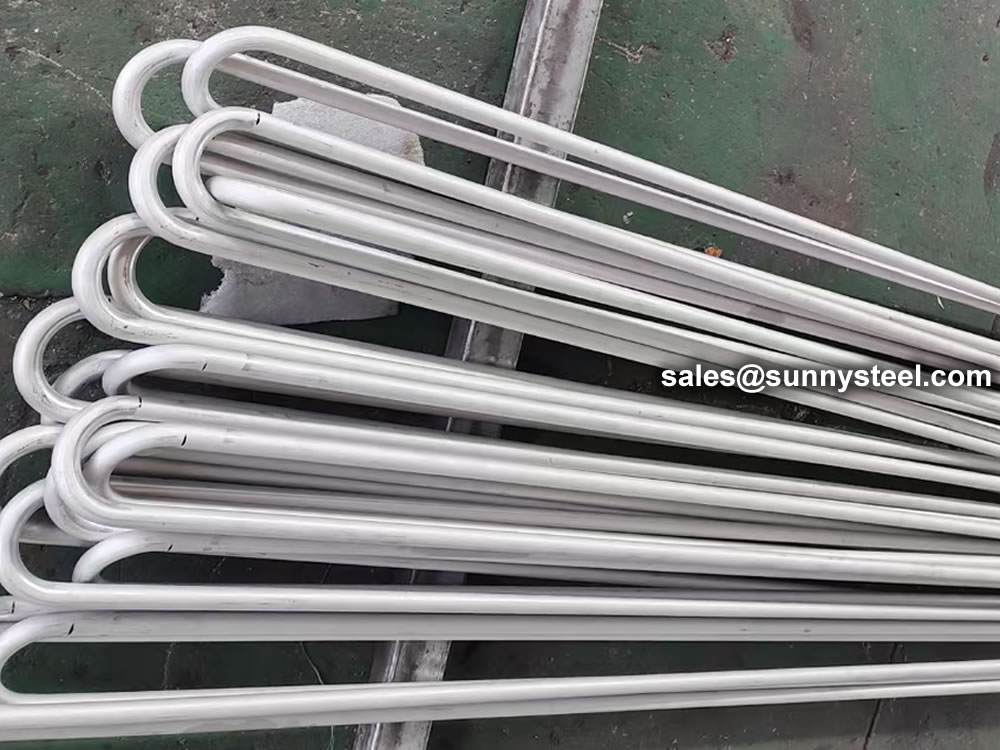
  • Excellent ductility, supports U-tube, serpentine & helical coil cold forming without cracking
  • Low density (4.51g/cm³), light weight reduces overall equipment load
  • No erosion or cavitation even under 10m/s high-speed cooling water flow
  • No metal ion contamination to circulating cooling medium, clean medium delivery
  • Zero corrosion allowance required for long-term seawater service
  • Good weldability via GTAW TIG welding after annealing treatment

Full Mandatory Factory Inspection Items

  1. Full heat batch chemical composition analysis test
  2. Room temperature tensile mechanical performance test
  3. Flaring test for tube sheet expansion ductility verification
  4. Flattening test to detect internal wall hidden defects
  5. 100% Eddy Current Testing (ECT)
  6. 100% Ultrasonic Testing (UT)
  7. Hydrostatic pressure leak test (hold ≥5 seconds)
  8. Full dimensional tolerance measurement
  9. Visual surface scratch & oxidation inspection

Grade 2 VS Grade 2H Comparison

Comparison Item ASTM B338 Grade 2 ASTM B338 Grade 2H
Chemical Composition 100% identical 100% identical
Minimum Tensile Strength 50 ksi (345 MPa) 58 ksi (400 MPa)
Typical Application General low & medium pressure heat exchangers High-pressure pressure vessel heat exchange equipment

Two Manufacturing Processes

Seamless Grade 2 Titanium Tube Production Flow

  • 1. Titanium sponge vacuum arc melting & ingot casting
  • 2. Blooming, hot piercing to form hollow billet
  • 3. High temperature hot extrusion forming
  • 4. Degreasing, pickling to remove oxide skin
  • 5. Multi-pass cold rolling / cold drawing sizing
  • 6. Vacuum stress relief annealing
  • 7. Straightening, fixed-length cutting
  • 8. 100% UT + ECT NDT & hydrostatic test

Welded Grade 2 Titanium Tube Production Flow

  • 1. Annealed CP Grade 2 titanium coil decoiling
  • 2. Edge trimming & continuous TIG automatic welding (no filler wire)
  • 3. Cold forming & sizing after welding
  • 4. Full stress relief annealing treatment
  • 5. Surface pickling finishing
  • 6. Triple 100% ECT + UT + hydrostatic inspection
  • 7. Cutting, marking & export packaging
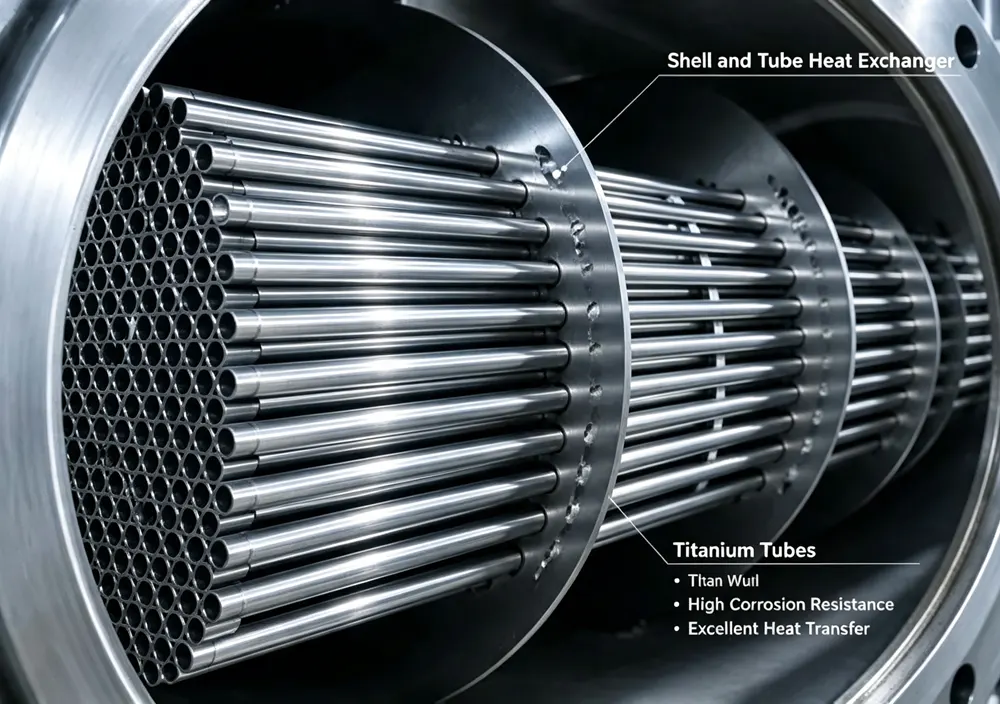
Titanium Tub Shell and Tube Heat Exchanger

Titanium Tub Shell and Tube Heat Exchanger

Wide Industrial

Application Fields

Shell and Tube Heat Exchanger fitted with thin-wall titanium tubes, featuring high corrosion resistance and excellent heat transfer performance.

  • • Thermal Power Plant Steam Turbine Surface Condensers & Feedwater Heat Exchangers
  • • Multi-effect Seawater Desalination Evaporator Tubing Bundles
  • • Petrochemical & Chlor-Alkali Acid/Chloride Medium Heat Exchange Equipment
  • • Offshore Platform & Marine Ship Cooling Piping Systems
  • • HVAC & Industrial Refrigeration Corrosion-resistant Heat Coils
  • • Waste Incineration Acid Flue Gas Waste Heat Recovery Tubes
  • • Swimming Pool Heat Pump Heat Exchanger Components

Crystal Structure of ASTM B338 Grade 2 Titanium

Similar to commercially pure titanium Grades 1 and 3, ASTM B338 Grade 2 titanium exhibits an alpha (α) crystal structure at room temperature, which is hexagonal close-packed (HCP).

Phase Transformation Characteristics

Room Temperature
Alpha (α) phase – hexagonal close-packed (HCP) structure
Transformation Temperature
Transitions to beta (β) phase (body-centered cubic – BCC) at approximately 885°C [1625°F]
Effect of Alloying Elements
Impurities or alloying additions can raise or lower the transformation temperature, dividing the single equilibrium transformation into two distinct points:
  • Alpha transus – below this temperature, the alloy is fully α phase
  • Beta transus – above this temperature, the alloy is fully β phase
Typical Transus Temperatures
Grade 2 titanium:
Alpha transus: 890°C [1635°F]
Beta transus: 913°C [1675°F]

Engineering Significance: The α-phase stability of Grade 2 titanium at service temperatures ensures excellent ductility, weldability, and corrosion resistance, making it the preferred choice for heat exchangers, condensers, and seawater piping systems.

Frequently Asked Questions
The unified UNS designation of Grade 2 CP titanium is R50400, fully compliant with ASTM B338 and ASME SB338 standards.
It has outstanding resistance to seawater, brackish water, brine and hypochlorite media, much better anti-chloride pitting performance than 304/316 stainless steel.
Yes, minimum 20% elongation ensures smooth U-bending, serpentine and helical forming without surface cracking after annealing treatment.
Continuous stable working temperature up to 300°C, short intermittent operation can reach 400°C without oxidation degradation.
Seamless tube has zero weld for ultra-high pressure equipment; welded tube uses filler-free TIG welding with lower cost for large condenser bundles, both pass all ASTM B338 tests.
Heat exchanger tubes need mechanical expansion into tube sheets during assembly; flaring test verifies enough ductility to avoid tube cracking during on-site expansion.
Standard pickled matte finish for industrial heat exchangers; optional mirror electropolish for food and pharmaceutical sanitary equipment.
Outer diameter 5mm ~ 200mm, wall thickness 0.2mm ~ 30mm, max single length 12m, custom fixed cutting supported.
Complete EN 10204 3.1 MTC including chemical, mechanical and full NDT records; SGS/BV third-party inspection documents available on request.
They share identical chemical composition; Grade 2H has higher minimum tensile strength (58ksi vs 50ksi), specially designed for high pressure vessel heat exchangers.

To ensure reliable performance in demanding industrial environments, every iridium crucible is manufactured under strict quality control procedures and inspected before delivery.
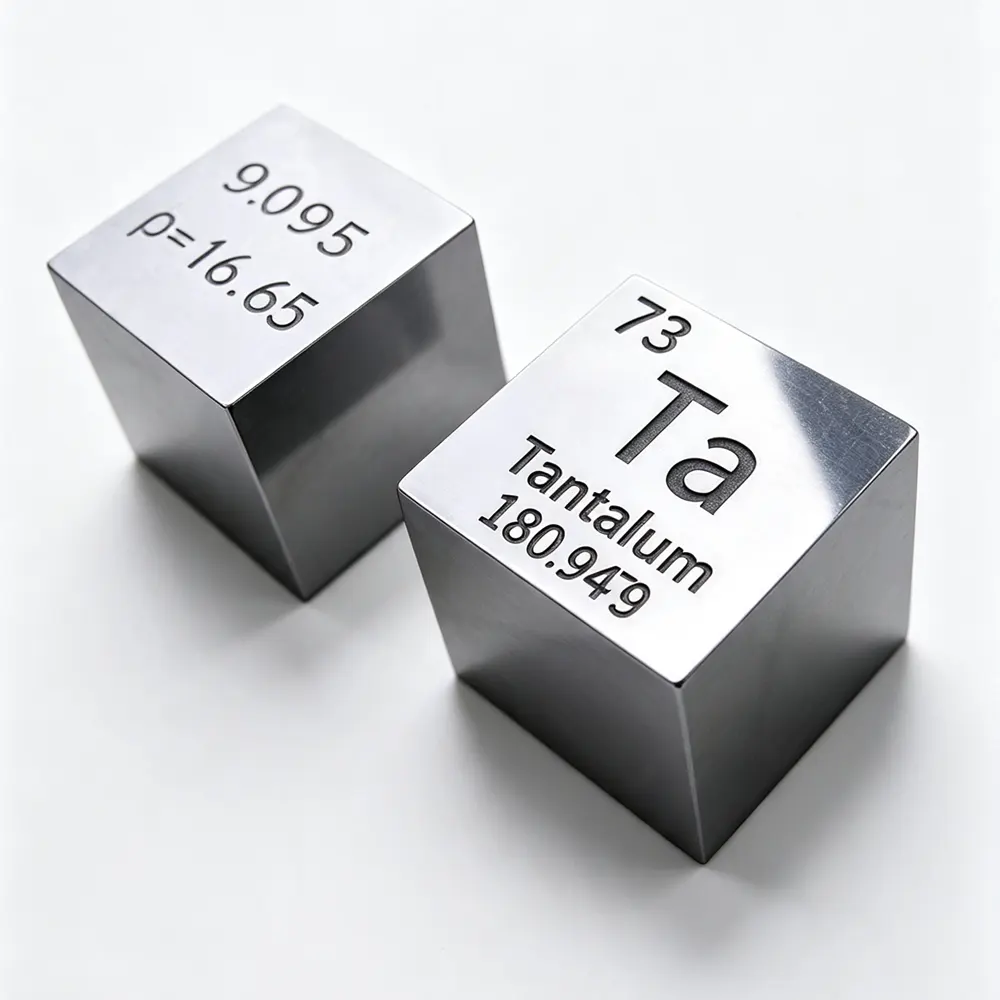
  • Chemical Composition Analysis
  • Material Purity Verification
  • Dimensional Inspection
  • Surface Finish Inspection
  • Visual Examination
  • Welding Inspection (if applicable)
  • Third-Party Inspection Available
  • Export Documentation Support
Iridium Unique Properties

The Unique Properties of Iridium

Iridium is a platinum group metal distinguished by its exceptional physical and chemical stability. With a melting point of 2446°C, it remains structurally stable under extreme thermal conditions where most metals fail. Its outstanding resistance to aggressive chemicals further enhances its durability in the most demanding industrial environments.

These properties make iridium an ideal material for sputtering targets, where consistent performance under extreme temperatures is critical. Its high density and hardness promote the formation of thin films with excellent structural integrity—essential for the production of reliable, long-lifetime semiconductor devices.

Hot Products

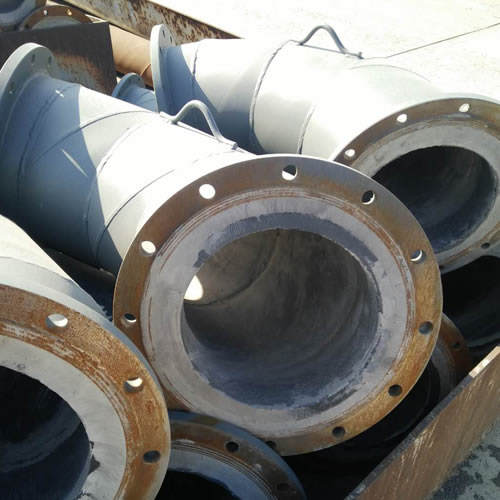
【H】 Ceramic lined pipe

Ceramic lined pipe is made through self-propagating high-temperature synthesis (SHS) technique.
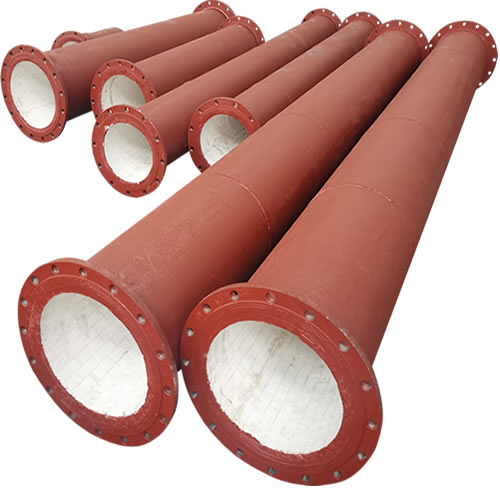
【H】 Cast basalt lined steel pipe

Cast basalt lined steel pipe is composed by lined with cast basalt pipe, outside steel pipe and cement mortar filling between the two layers.
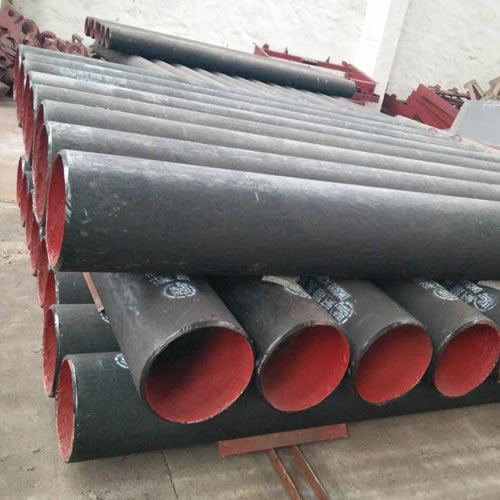
【H】 Ceramic Tile Lined Pipes

Ceramic tile lined pipes have very uniform coating of specially formulated ceramic material that is affixed to the inner of the pipe.
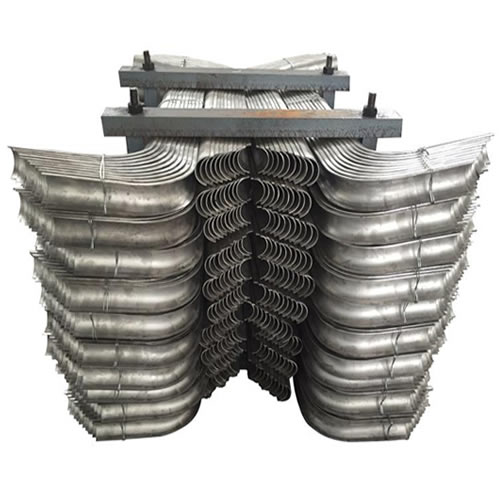
【H】 Rare earth alloy wear-resistant pipe

The material of the rare earth alloy wear-resistant pipe is ZG40CrMnMoNiSiRe, which is also the grade of rare earth alloy steel.
【H】 Tubes Erosion Shields

Tubes Erosion Shields are used to protect boiler tubing from the highly erosive effects of high temperatures and pressures thereby greatly extending tube life.
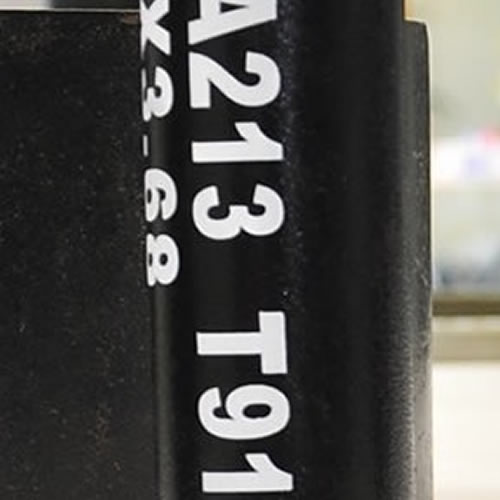
【H】 ASTM A213 T91 Alloy Tube

The ASTM A213 T91 seamless tubes are primarily used for boiler, superheater, and heat-exchanger.

The White Glove Service You Deserve

When you partner with Sunny Steel, you can stop worrying about meeting deadlines thanks to our responsive and timely service. You'll also say goodbye to unnecessary shopping around. Instead, you'll get white glove service from an expert who understands your needs and can get you the materials you need quickly.

application

Materials delivered on-time and at a fair price

application

No delays in production or manufacturing process

application

Meet engineering specifications to ensure top quality

application

World-class customer service ready to help