Where are expansion joints in use?
An expansion joint is a useful component in an infinite number of applications. Metal expansion joint assemblies are commonly used for all kinds of industries and applications including:
- Power Generation
- Co-Generation, Petrochemical
- Chemical Processing
- Pulp Paper Manufacturing
- Cryogenic Process
- Pressure Vessel and heat Exchanger
- Heat Steam recovery Generator
- Architect Engineering
- Construction Engineering
- Mechanical contractor
- Pharmaceutical manufacturing
- Gas Turbine, Gas Transmission
- Diesel Engine Mfg, Incineration
- Waste Water Treatment
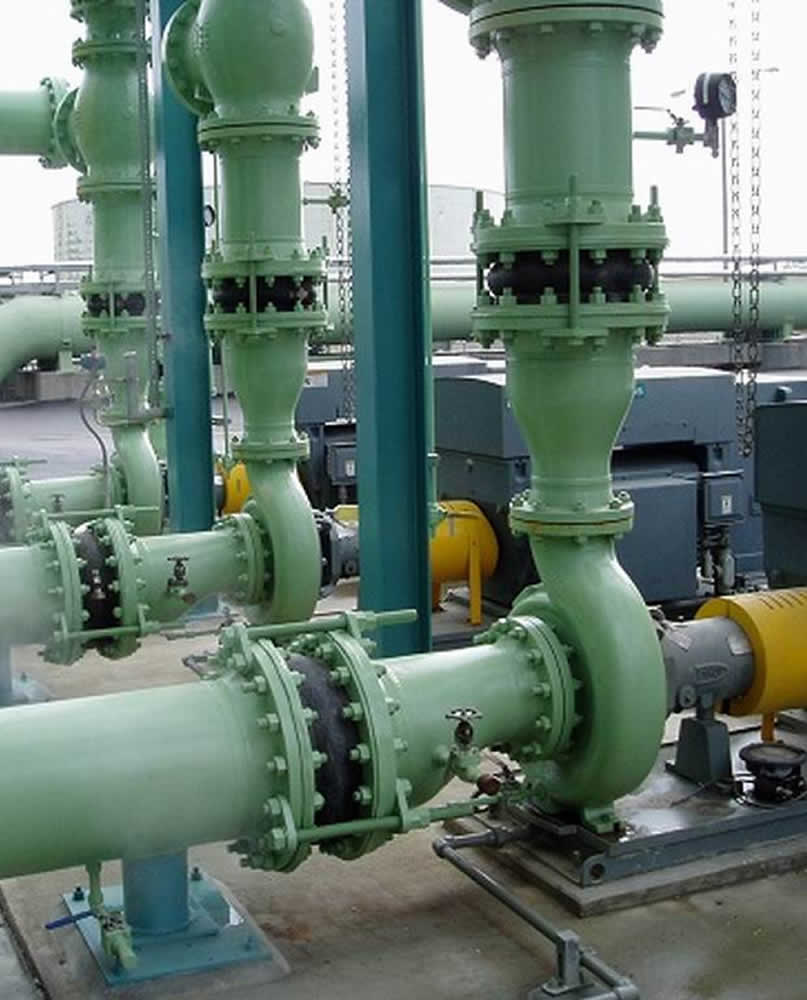
Expansion joints are often installed near boilers, heat exchangers, pumps, turbines, condensers, engines and in long pipe systems or pipe ducts.
Expansion joints come in a wide variety of designs. Some of them are standard and some are customised as per client requirements.
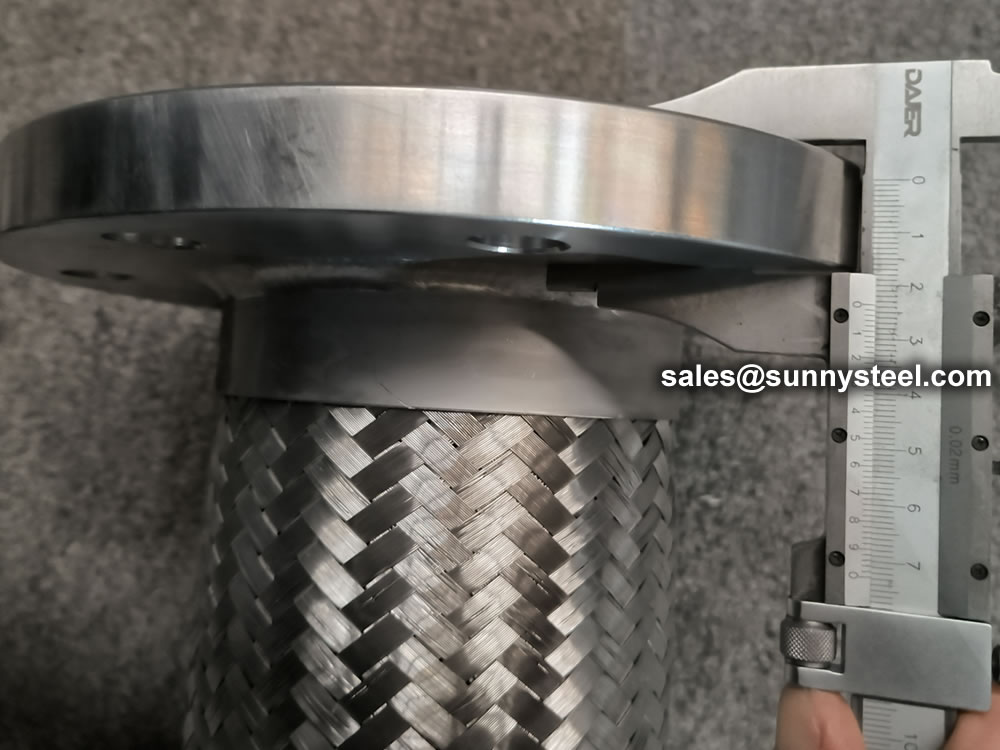
Although their design may vary significantly, all expansion joints are nevertheless composed from some of the following components, all with one or more specific functionalities: bellows, welding ends, flanges, hinges, tie-rods, spherical washers, wire mesh, insulation, inner sleeve, external cover, elbow and/or ring reinforcement/equalizing rings.
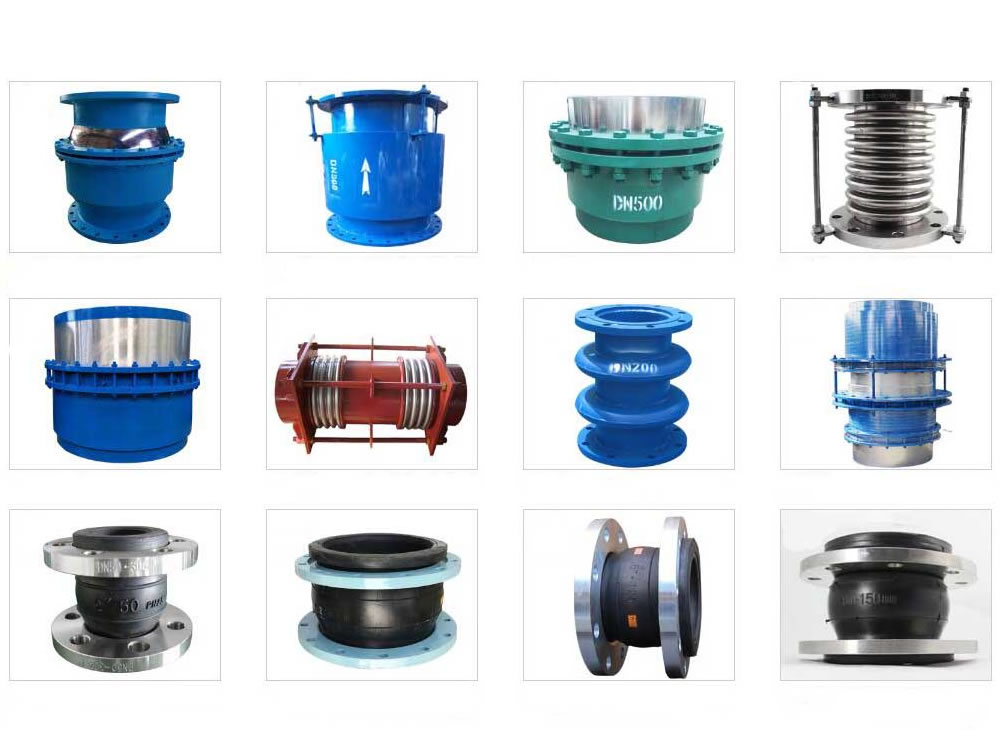
In general, there are fabric, metallic, and rubber expansion joints.
-
Metallic Expansion Joints
- Single Expansion Joints
- Hinged Expansion Joints
- Gimbal Expansion Joints
- Universal Expansion Joints
- Elbow Pressure Balanced Expansion Joints
- In-line Pressure Balanced Expansion Joints
- Externally Pressurized Expansion Joints
- Toroidal Expansion Joints
- Thick Wall Expansion Joints
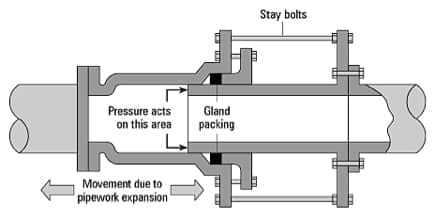
- Slip-type Expansion Joints
- Rectangular Metallic Expansion Joints
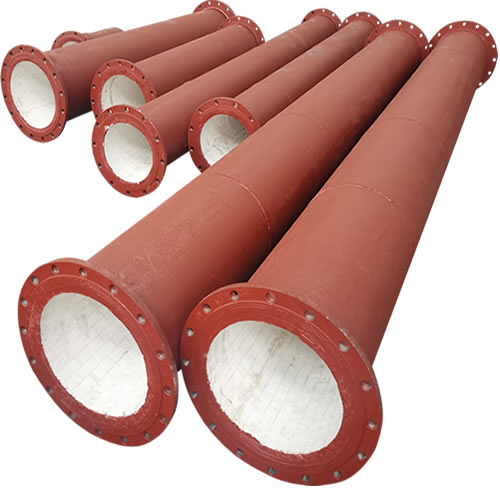
- Refractory Lined Expansion Joints
- Fabric Expansion Joints
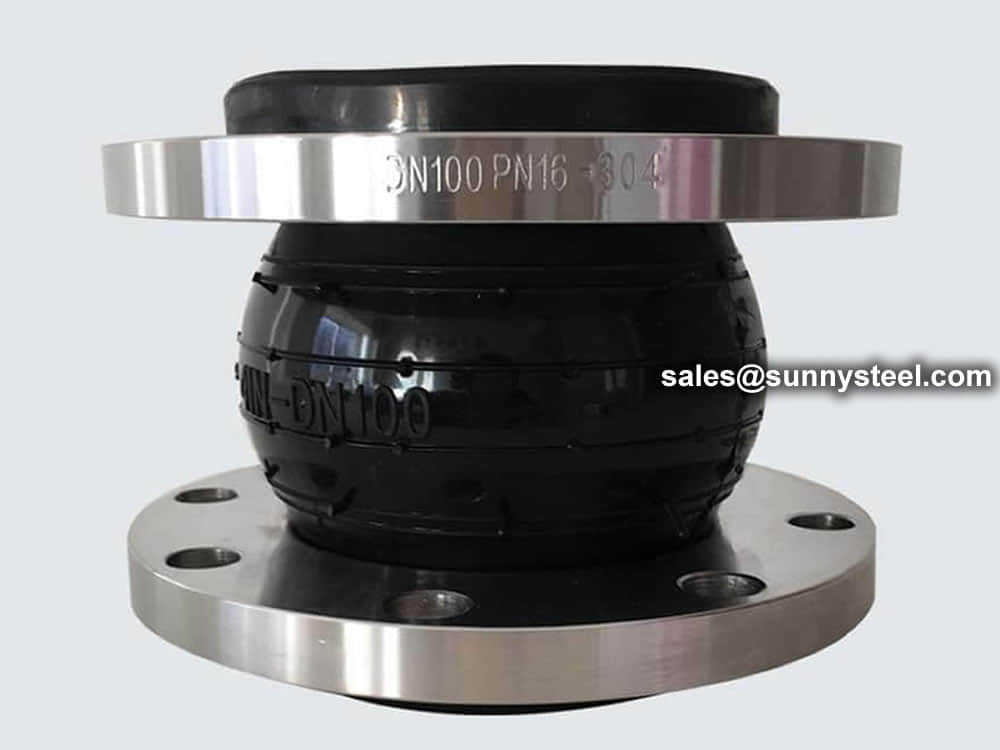
- Rubber (Neoprene) Expansion Joints
In a piping system a Expansion joints alternately known as Bellows are like sealed springs. Sealed because it is required to contain the fluid pressure which is flowing through it and spring because it is required to respond to the movement of the connected piping without offering appreciable stiffness to the piping system.
Application of expansion bellows
The Bellows are generally employed in a piping system in one of the following situations:
- When the space constraints do not permit providing adequate flexibility by conventionalmethods (e. g. expansion loops etc.) for maintaining the system stresses withinacceptable limits.
- When conventional solutions (e.g. expansion loops etc.) create unacceptable processconditions (e.g. excessive pressure drop). When it is not practical to limit the piping induced loads on the terminal nozzles of theconnected equipment within admissible limits by conventional methods.
- When the equipment such as Compressors, Turbines, Pumps etc. necessitate isolatingthe mechanical vibrations from being transmitted to the connected piping.
How do they work?
An expansion joint or movement joint is an assembly designed to safely absorb the heat-induced expansion and contraction of construction materials, to absorb vibration, to hold parts together, or to allow movement due to ground settlement or earthquakes.
They are commonly found between sections of buildings, bridges, sidewalks, railway tracks, piping systems, ships, and other structures.
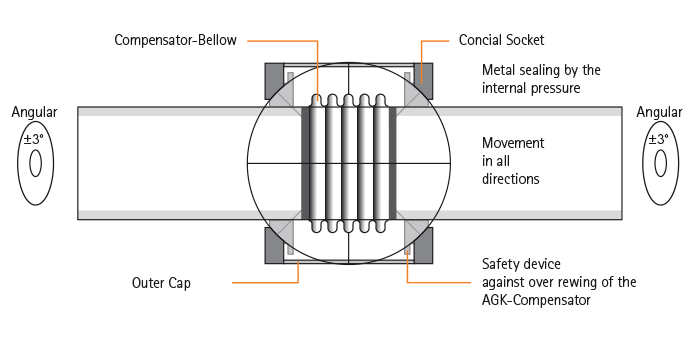
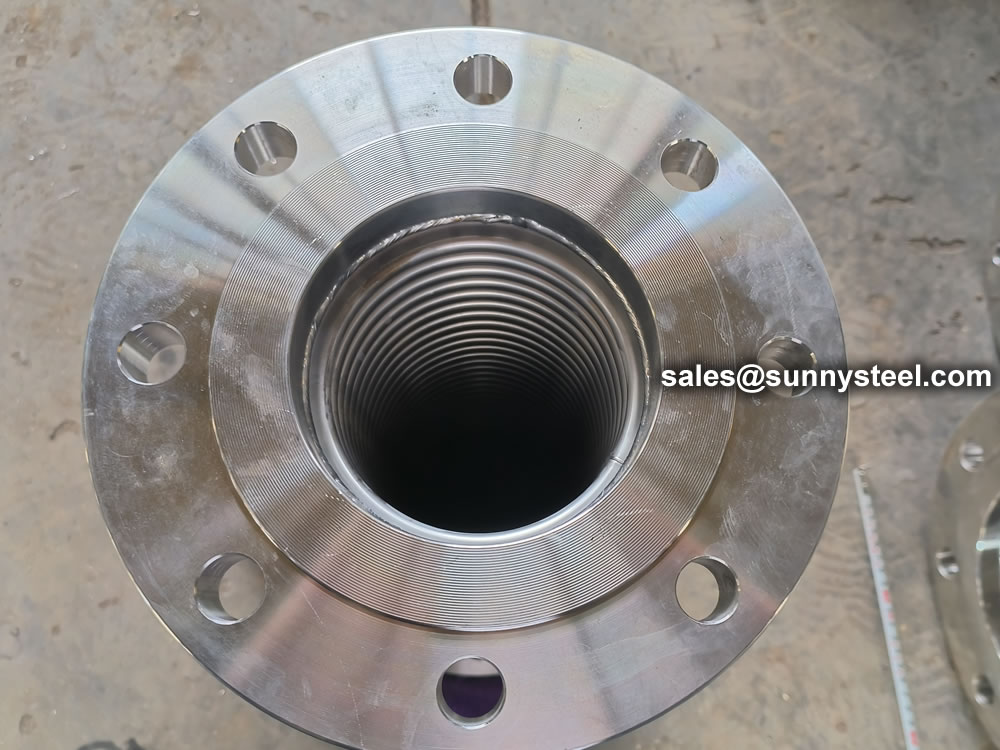
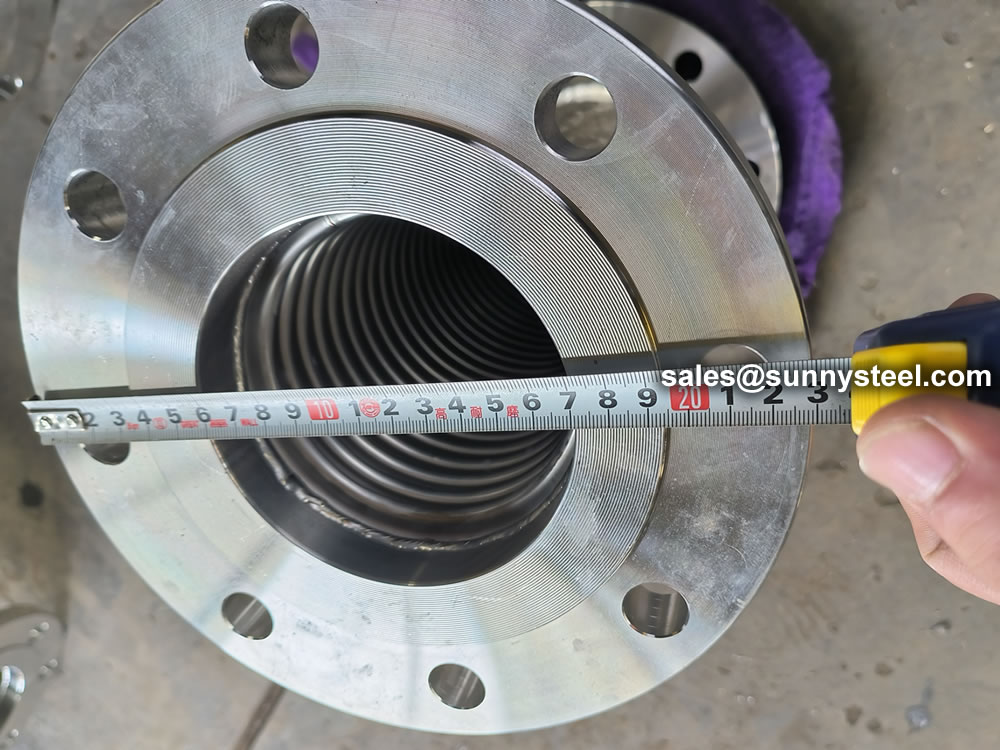
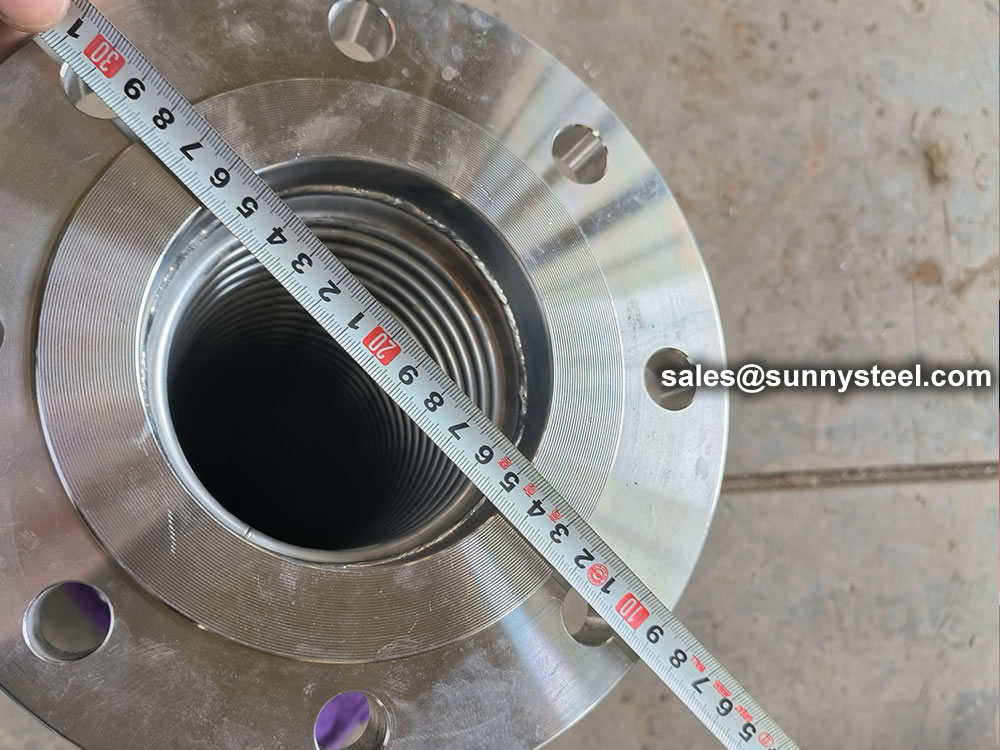
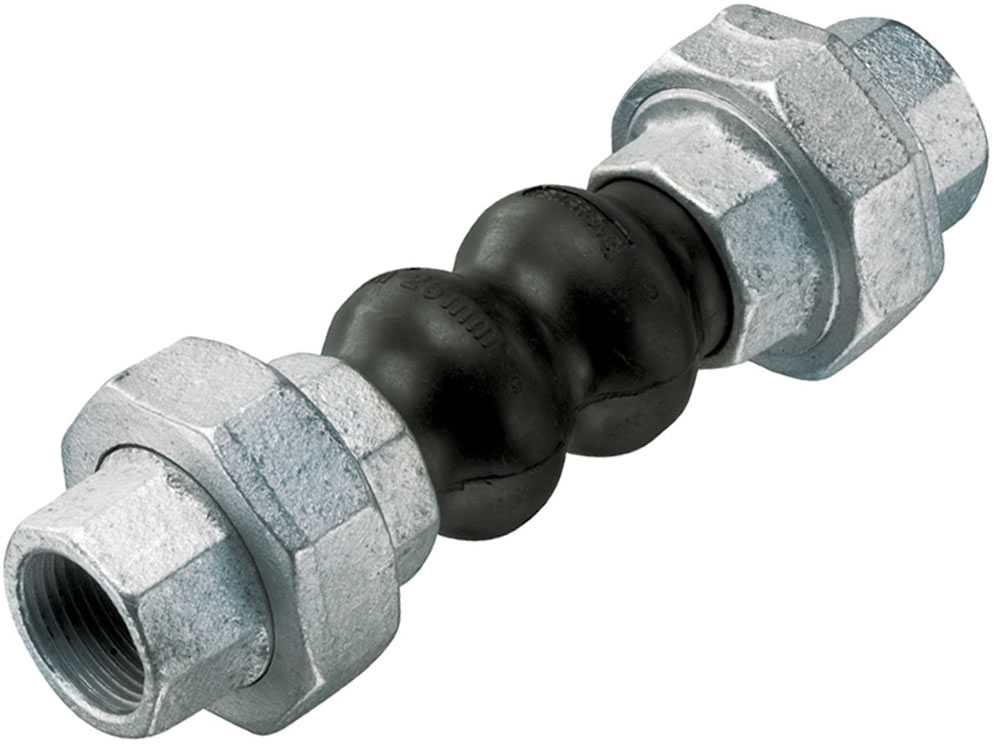
Expansion joints sometimes called expansion bellows, flexible joints or Expansion joint are devices that comprise of a flexible element known as the bellows membrane that is fitted to end connections that are best suited to the pipework they are to be installed in.
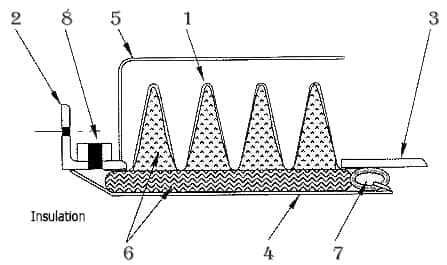
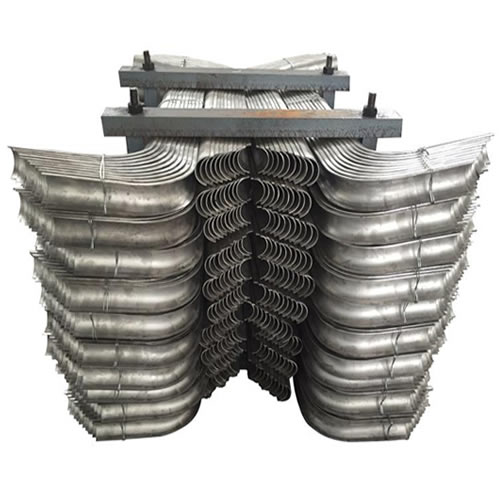
Most bellows membranes are manufactured from stainless steel and are made up of a series of convolutions manufactured to withstand the pressure of the system but also must be suitable to accept the movements for which they are designed. The bellows membrane comprises of a series of convolutions designed to withstand the internal pressures of the system, but at the same time flexible enough to accept axial, lateral and angular deflections.
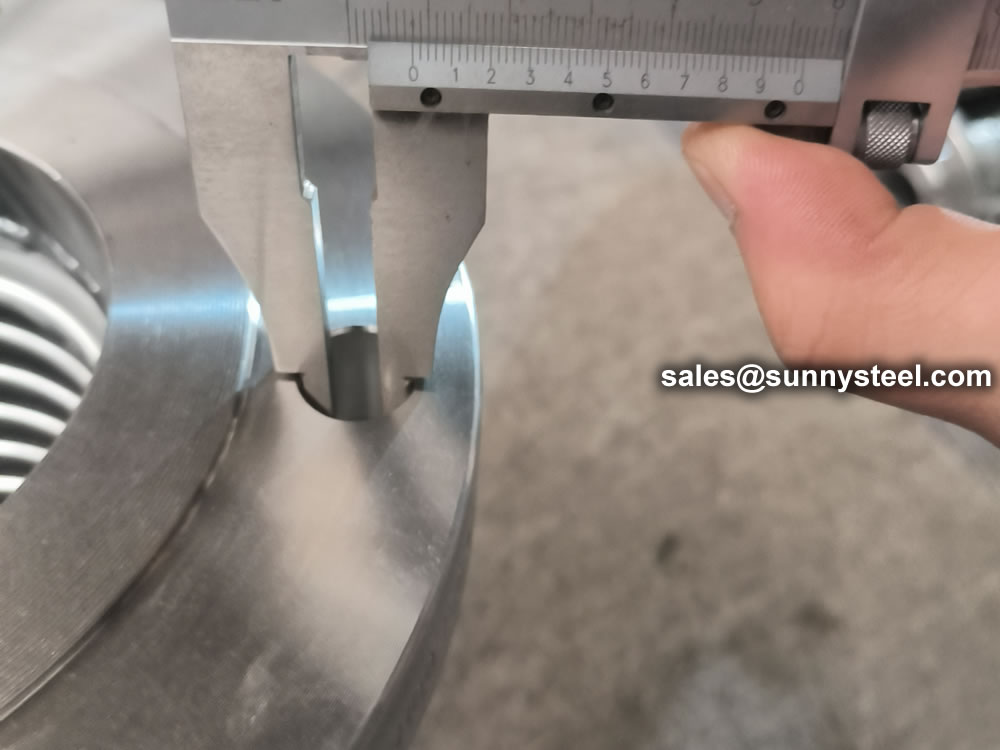
The joint needs to be a highly resistant nature so it’s necessary to make sure that it’s far thicker than you’d expect. In turn, this slows down any effects of potential corrosion as although it may be affected by the elements over time, it will still retain its density.
Ducted Air Systems
Expansion joints are required in large ducted air systems to allow fixed pieces of piping to be largely free of stress as thermal expansion occurs.
Bends in elbows also can accommodate this.
Expansion joints also isolate pieces of equipment such as fans from the rigid ductwork thereby reducing vibration to the ductwork as well as allowing the fan to “grow” as it comes up to the operating air system temperature without putting stress on the fan or the fixed portions of ductwork.
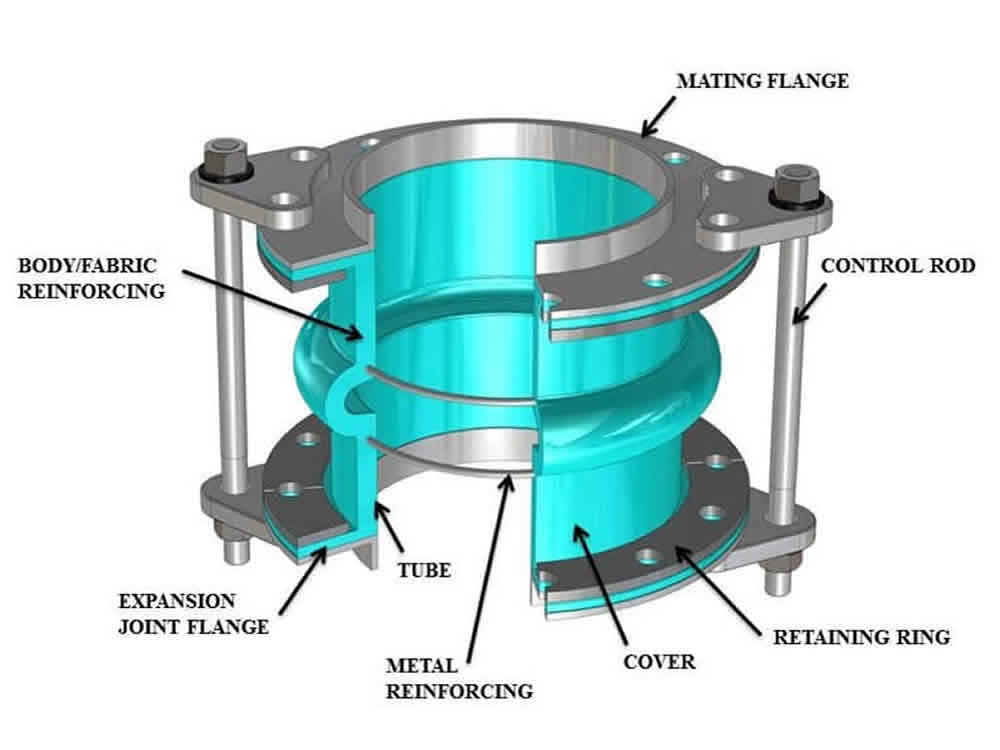
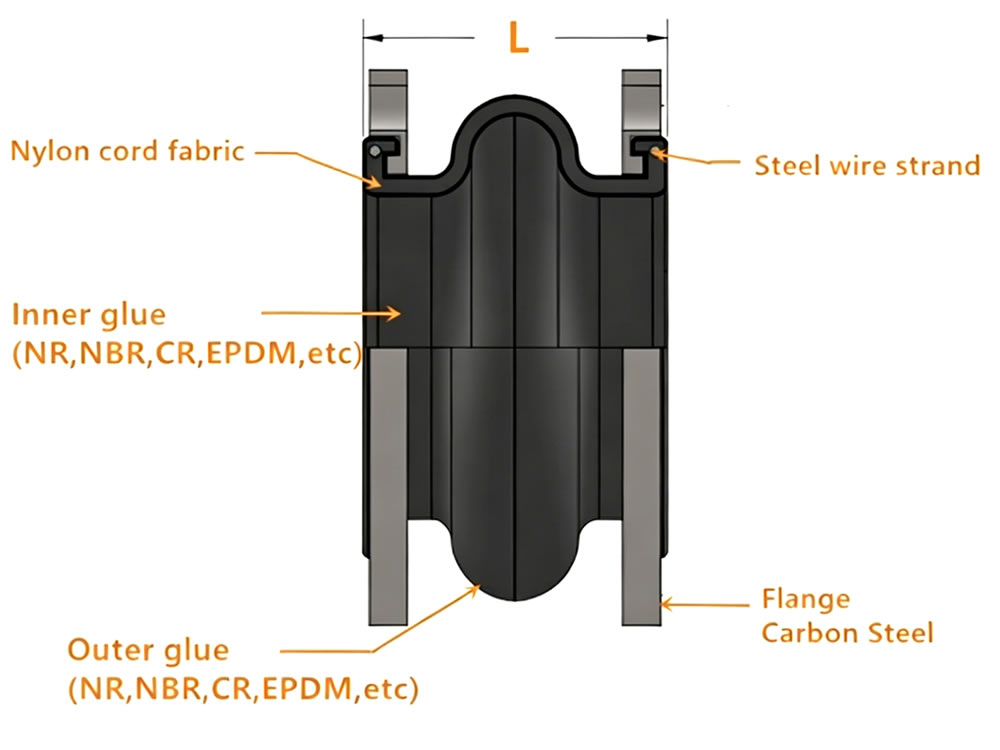
An expansion joint is designed to allow deflection in the axial(compression) or laterally (shear) or angular (bending) deflections. Expansion joints can be non-metallic or metallic (often called bellows type). Non-metallic can be a single ply of rubberized material or a composite made of multiple layers of heat and erosion resistant flexible material.
Typical layers are: outer cover to act a gas seal, a corrosion resistant material such as Teflon, a layer of fiberglass to act as an insulator and to add durability, several layers of insulation to ensure that the heat transfer from the flue gas is reduced to the required temperature and an inside layer.
A bellows is made up of a series of one or more convolutions of metal to allow the axial, lateral or angular deflection required.
Application of big size metal expansion joint
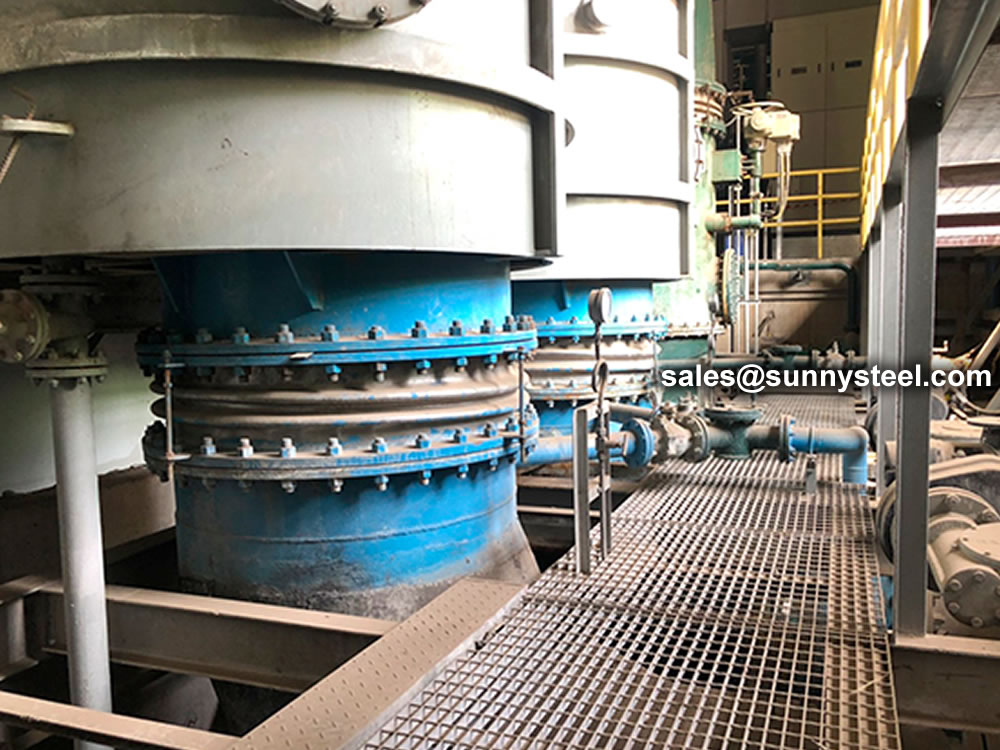 Installing product: Metal expansion joint with carbon steel flange
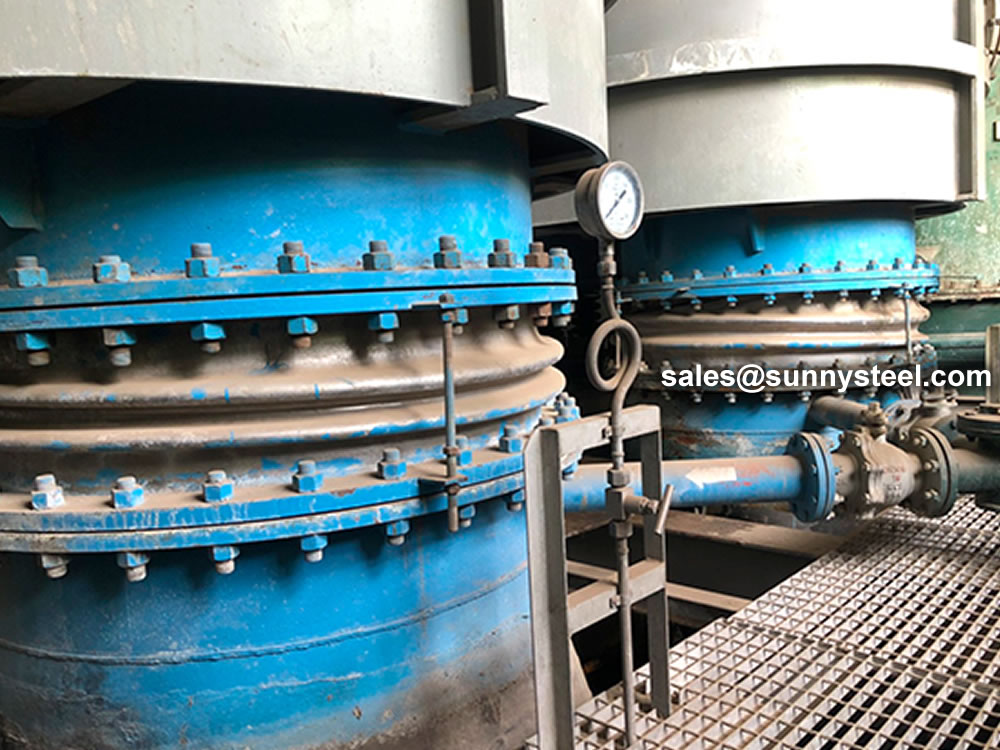 Size: DN1600 DN1200
Tied Universal Expansion Joint Applications
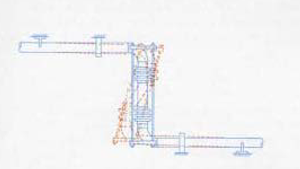
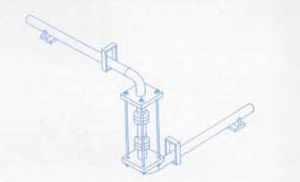
Tied universal expansion joints are frequently used to absorb lateral deflection in a "Z bend configuration. The expansion joint absorbs the thermal movement of horizontal pipelines as lateral deflection. This can be accomplished in a single plane or three plane configuration. In a three plane "Z bend the horizontal pipes may lie at any angle in the horizontal plane since the tied universal expansion joint can absorb lateral deflection in any direction.
What industries use expansion joints?
Expansion joints are used in all kinds of different sectors and in a huge range of different industrial contexts.
- Expansion joints are particularly suited for aggressive chemicals and for abrasion resistance.
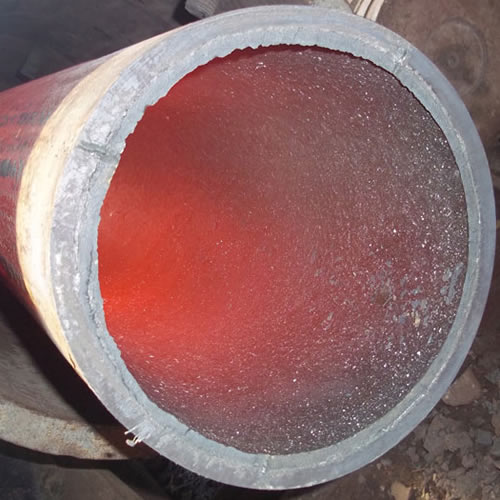
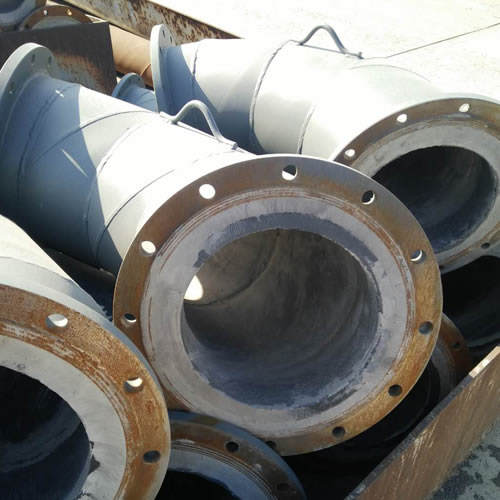
- Sunny Steel Metal Expansion Joints can be custom-made from a range of carbon steels, austenitic stainless steels and ceramic lined.
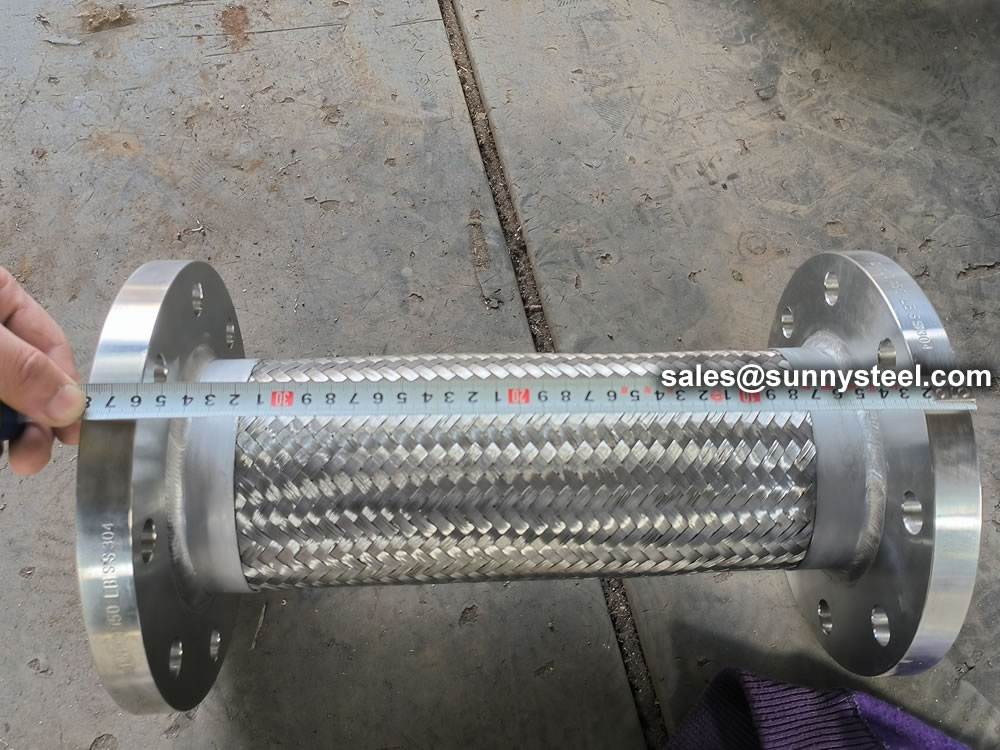
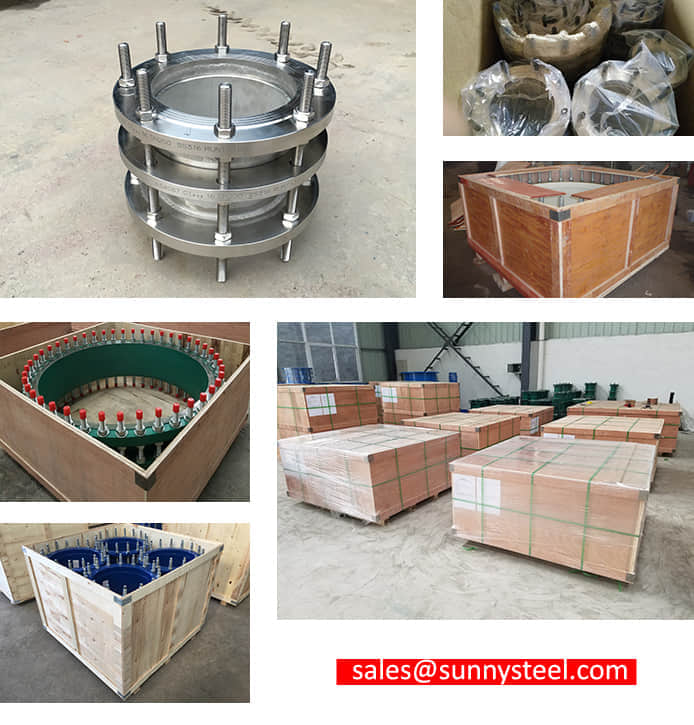
- Stainless steel pipe expansion joint, with control rods
Specific industries that use expansion joints include the Energy sector such as nuclear power plants and district heating schemes.
Essentially, wherever there is a need to control pipework movement expansion joints are required. They are used in factories and power plants wherever thermal expansion needs to be controlled, such as pipelines that connect with condensers or power turbines. They are used in oil and fuel gas applications.
The Petrochemical industry on oil refineries, pumping stations and oil rigs.
Civil engineering, waste management, sewage treatment, recycling, water treatment, aerospace, aviation, defence, the automotive industry, agriculture, mining, metals manufacturing, food and dairy manufacturing and packaging, and so on.