Wear Resistant Overlay for Mining & Industrial Equipment
Professional hardfacing welding services and solutions that dramatically improve wear resistance and extend component lifespan in harsh industrial conditions.
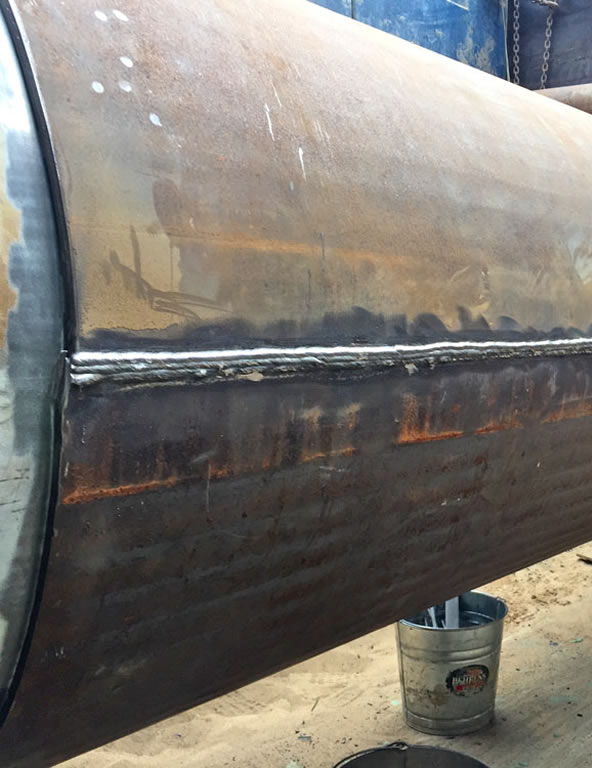
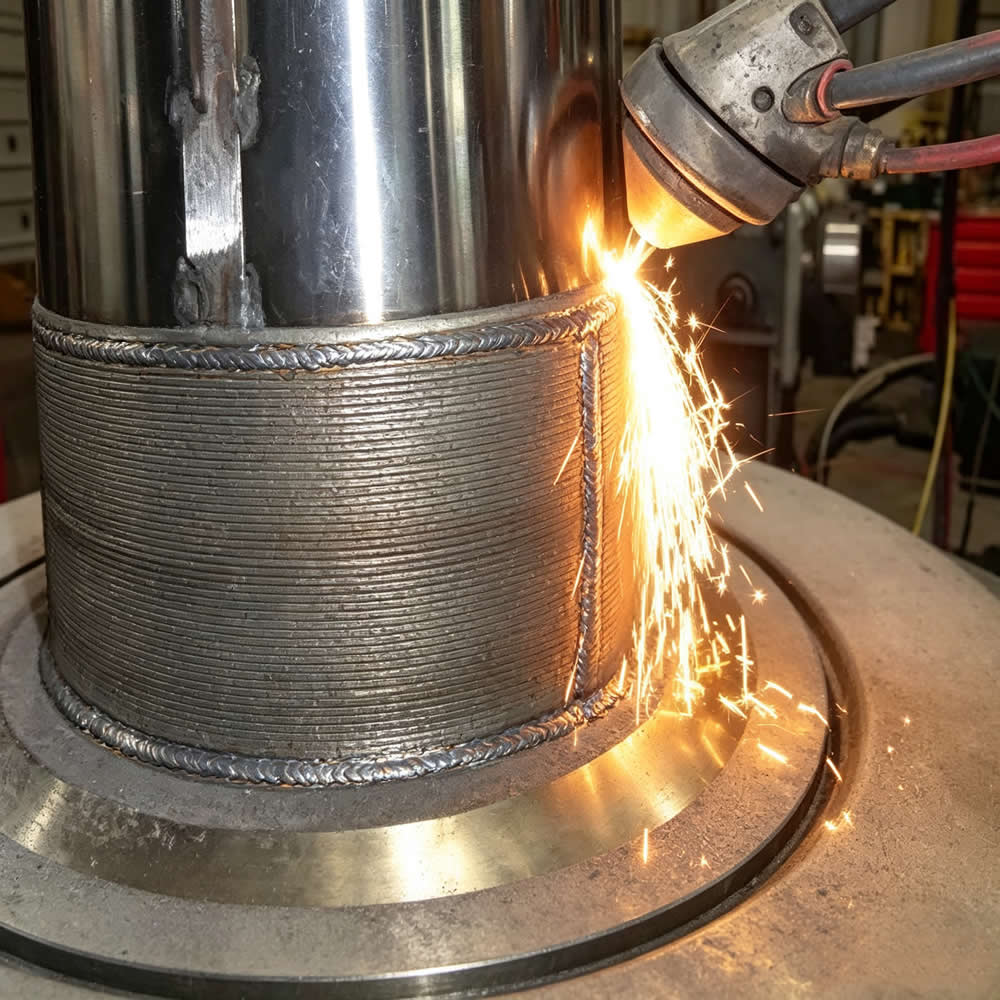
Hardfacing (also called hard surfacing or surface welding) is a welding process that deposits a wear-resistant alloy onto a base metal to enhance durability, restore dimensions, and extend service life.
Hardfacing welding is the process of applying a wear-resistant alloy onto the surface of carbon steel, alloy steel, stainless steel or cast steel components. The deposited overlay forms a protective layer that withstands abrasion, erosion, impact, corrosion and high-temperature wear while maintaining the structural strength of the base material.
Unlike conventional repair welding, hardfacing focuses on improving surface durability rather than restoring dimensional accuracy alone. Properly selected hardfacing alloys can increase component service life several times compared with untreated parts.
The overlay is applied using specialized welding consumables such as covered electrodes, flux-cored wires, or solid filler rods. Common processes include SMAW, FCAW, GMAW, SAW, and PTA.
Hardfacing welding is a surface engineering process that deposits wear-resistant alloy layers onto metal components exposed to severe abrasion, erosion, impact, corrosion, or elevated temperatures. Instead of replacing expensive equipment, hardfacing restores worn surfaces and provides a durable protective coating that significantly extends service life while lowering maintenance costs.
Hardfacing welding is a popular choice for extending the service life of critical industrial components. Here are why:
Hardfacing welding (also known as hard surfacing or weld overlay) is a proven metalworking technique that deposits a layer of hard, wear-resistant alloy onto the surface of base metals. This process dramatically improves resistance to abrasion, erosion, impact wear, and corrosion, making it the preferred choice for extending the service life of critical industrial components.
We utilize a wide range of advanced welding techniques to ensure optimal bonding and performance:
Hard alloy overlays effectively resist sliding abrasion, gouging abrasion and mineral particle wear.
Hardfacing significantly extends the service life of expensive industrial components, reducing replacement frequency.
Restoring worn parts is far more economical than manufacturing or purchasing new components.
Reduced downtime allows equipment to operate continuously in demanding production environments.
Different hardfacing materials are available to match abrasion, impact, corrosion or high-temperature applications.
Hardfacing can protect newly manufactured equipment or rebuild worn components for extended reuse.
| Process | Main Features | Typical Applications |
|---|---|---|
| Open Arc Welding | High deposition rate and economical | Mining equipment, chutes, liners |
| Flux Cored Arc Welding (FCAW) | Excellent productivity and weld quality | Industrial wear plates and rollers |
| Gas Metal Arc Welding (GMAW) | High efficiency with smooth weld appearance | General industrial components |
| Submerged Arc Welding (SAW) | Suitable for thick overlays and large components | Rollers, crusher parts, heavy machinery |
| TIG Hardfacing | High precision and excellent surface finish | Valves, shafts and precision parts |
| Alloy Type | Main Characteristics | Recommended Service |
|---|---|---|
| High Chromium Carbide | Outstanding abrasion resistance | Ore, coal, cement and ash handling |
| Complex Carbide | Extreme wear resistance | Crusher parts and excavating tools |
| Tungsten Carbide | Maximum hardness | Severe mineral abrasion |
| Cobalt-Based Alloy | Heat and corrosion resistance | High-temperature valves and turbines |
| Nickel-Based Alloy | Corrosion and oxidation resistance | Chemical processing equipment |
Both are weld overlay processes, but they differ in purpose, material selection and final function.
A weld overlay process that deposits a different alloy onto the base material
to provide corrosion, erosion or chemical resistance (e.g. SS316L, Inconel™, Monel™).
Commonly applied to pressure vessel shells, pipe interiors and valve bodies.
The overlay material is usually dissimilar from the substrate.
A weld overlay process intended to restore dimensions or improve
wear, abrasion, impact or high-temperature resistance.
Typically uses wear-resistant alloys (high-Cr carbide, WC, Co-base)
and is often applied to the same family of base metal
(carbon or low-alloy steel) to extend service life.
Note: Both processes use similar welding techniques (SMAW, FCAW, GTAW, SAW, laser), but differ in purpose: cladding = functional/environmental protection; hardfacing = wear / life-cycle improvement.
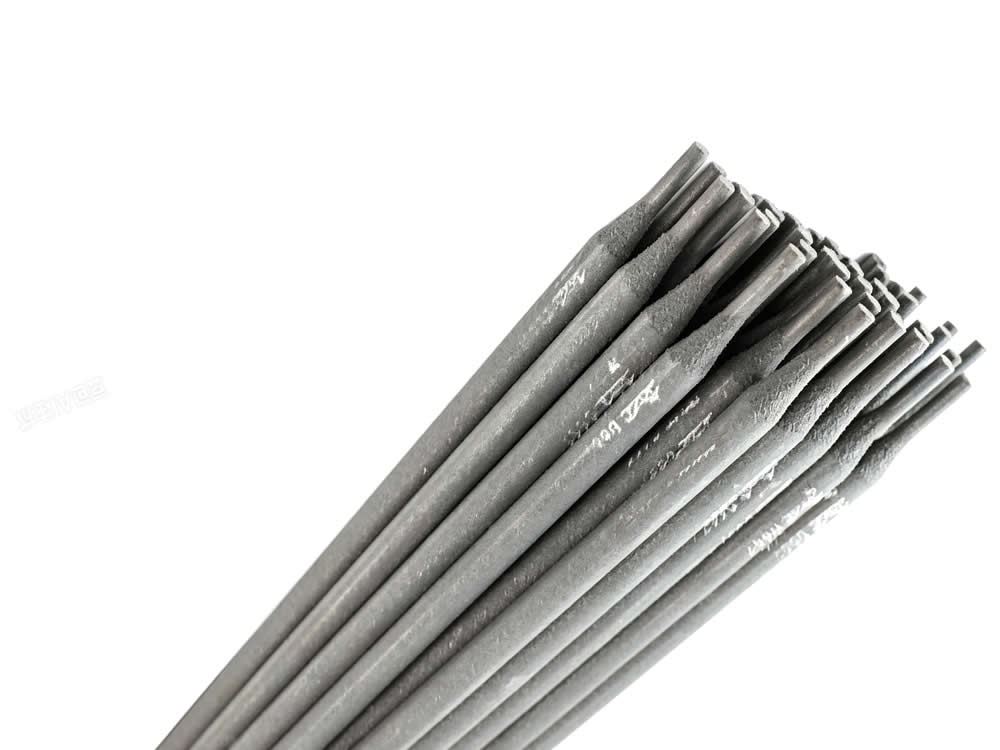
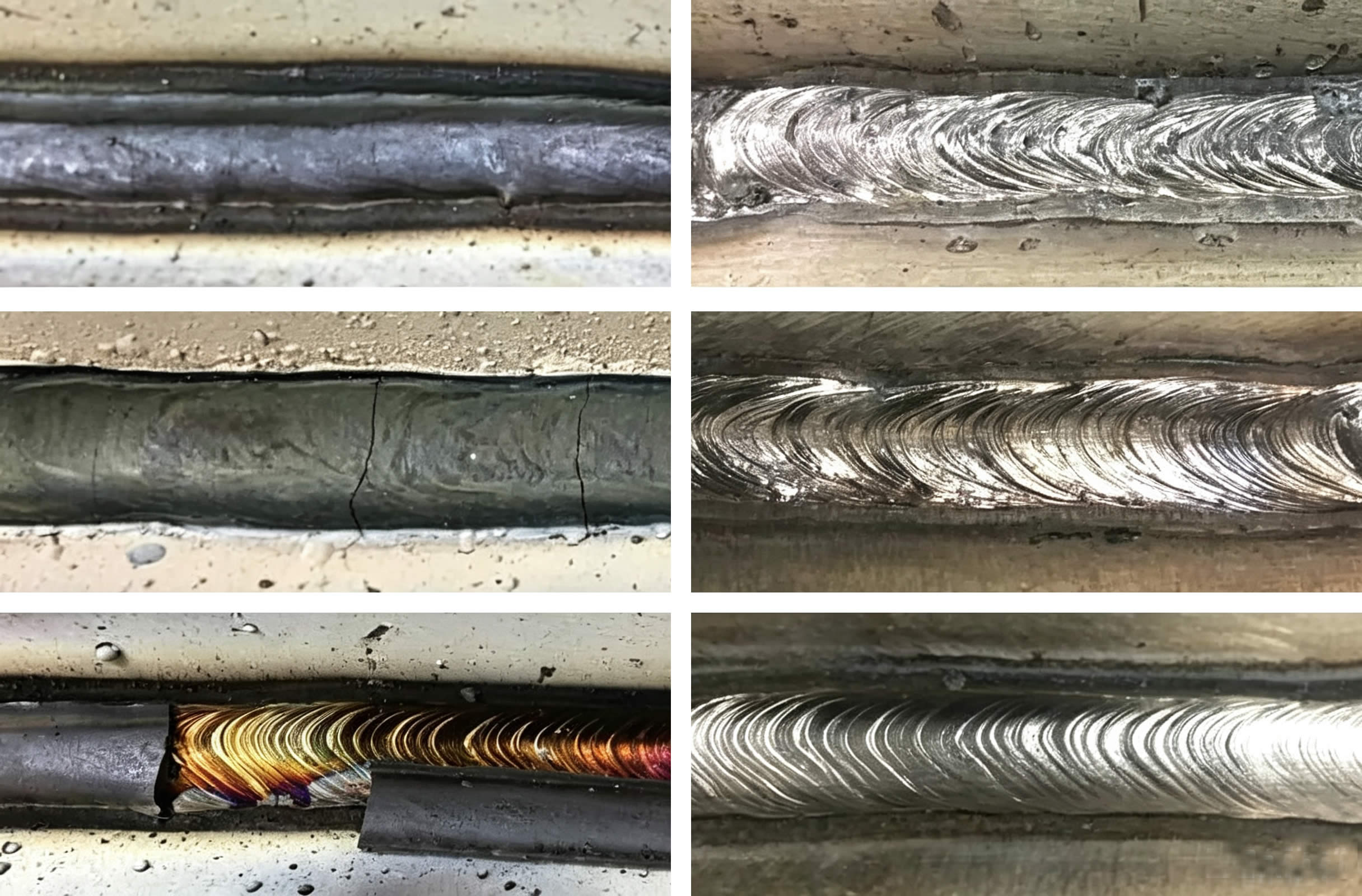
When performing hardfacing (surfacing / weld overlay), electrode selection is based on the wear mechanism, service temperature, corrosion environment and base material compatibility.
The three primary electrode families are:
All electrode types may be alloyed with Cr, Mo, W, Nb, V or C to tailor hardness, toughness and corrosion resistance for specific service conditions.
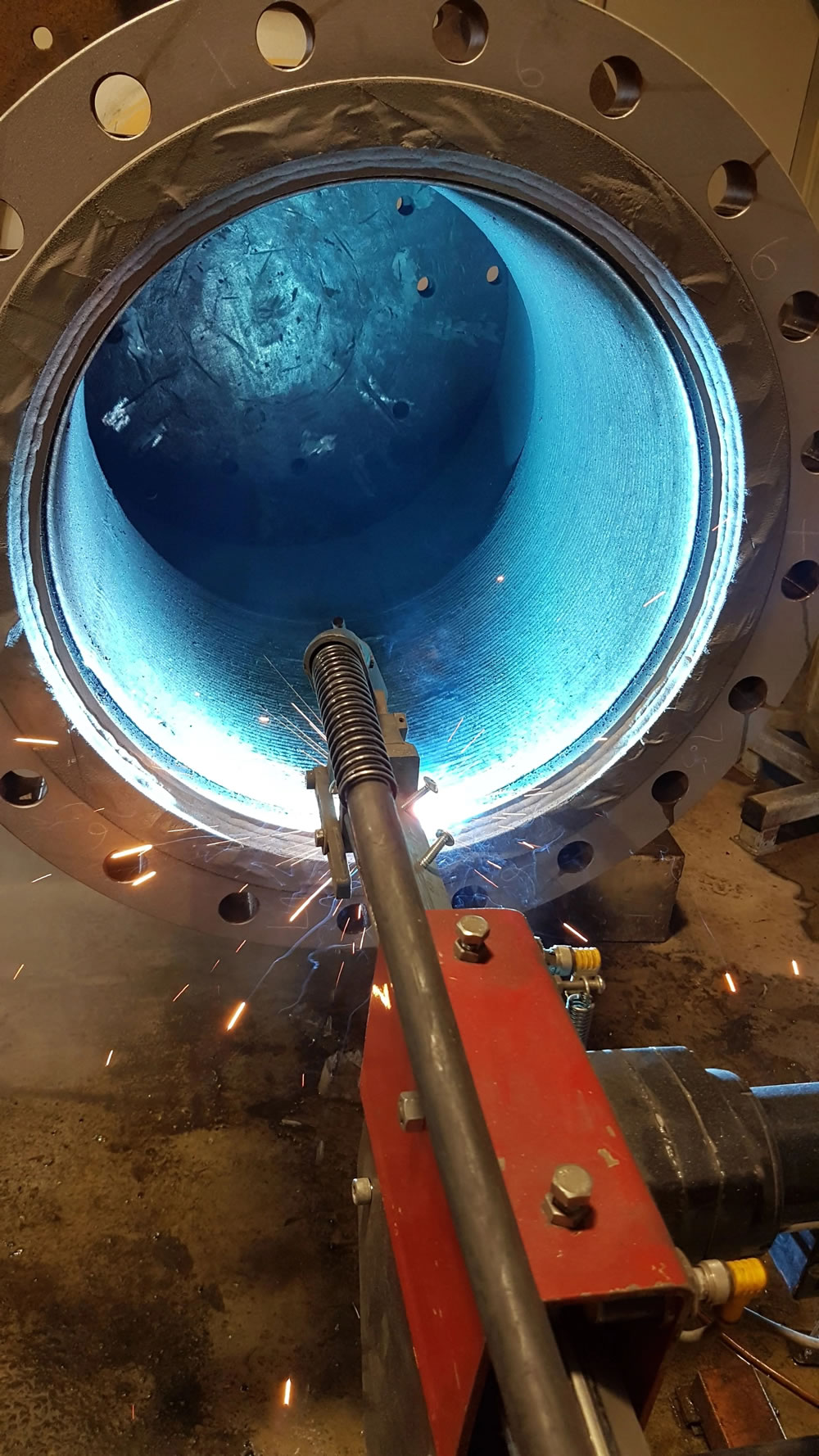
A high-performance weld overlay designed for extreme abrasion and sliding wear resistance.
Chromium Carbide Hardfacing is a weld overlay process that deposits iron-based alloys rich in chromium and carbon onto a base material to form a wear-resistant surface.

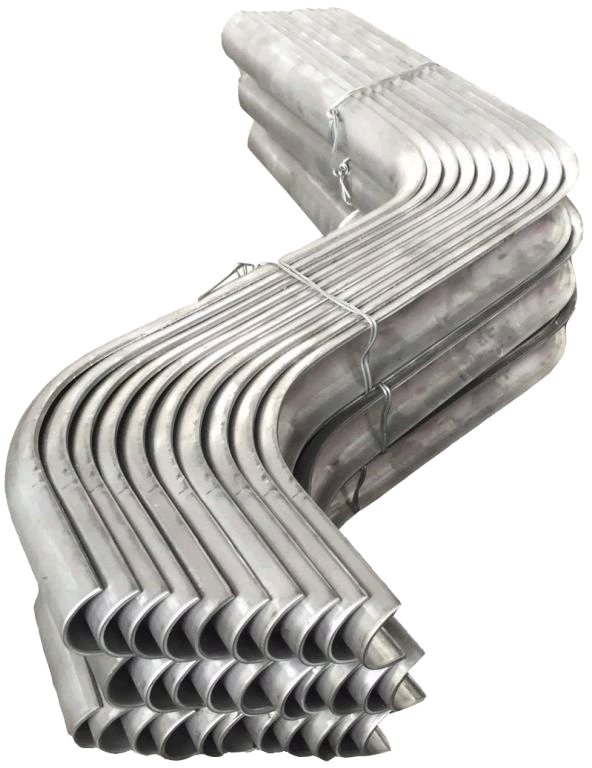
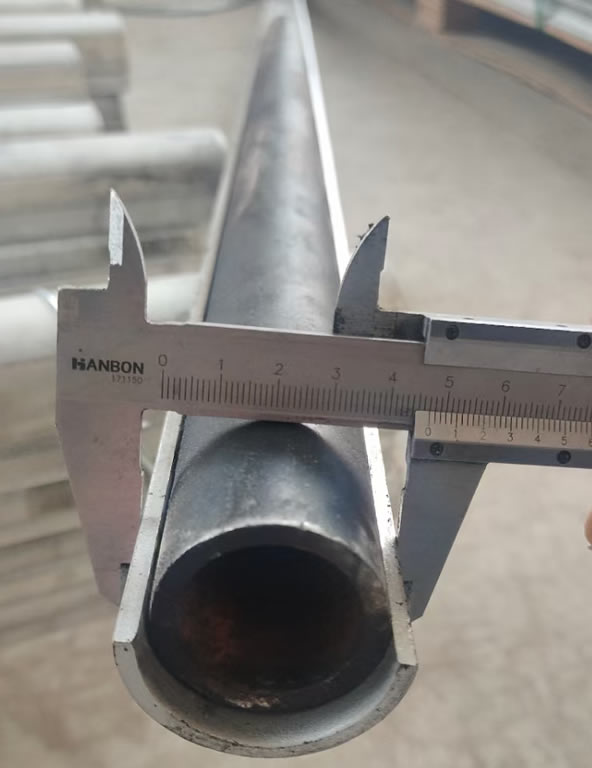
Tubes Erosion Shields are used to protect boiler tubing from the highly erosive effects of high temperatures and pressures thereby greatly extending tube life.

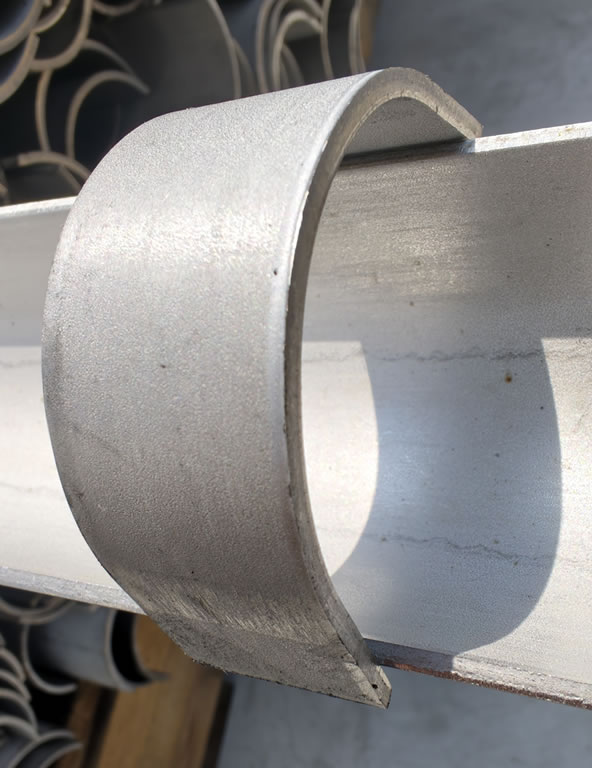
A half pipe sleeve is a piping device, which is placed on a pipe to protect it against the aliments.
Read moreSnap rings are used in conjunction with boiler tubes erosion shields, which is a clip that easily installs boiler tubes erosion shields to the tube.
Read moreA stainless boiler tube shield is a piping device, which is placed on a pipe to protect it against the aliments.

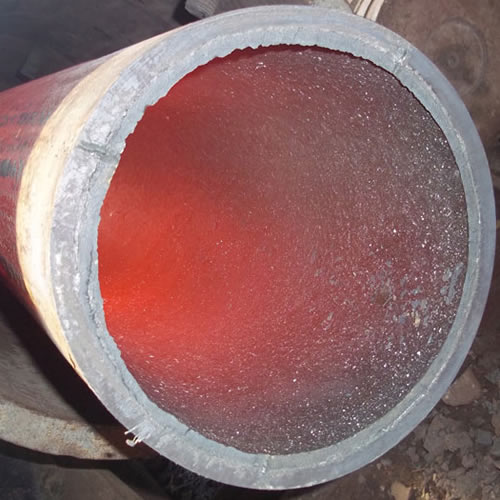
Ceramic lined pipe is made through self-propagating high-temperature synthesis (SHS) technique.
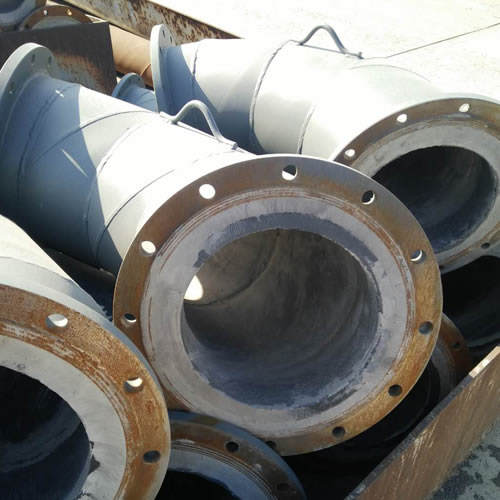
Cast basalt lined steel pipe is composed by lined with cast basalt pipe, outside steel pipe and cement mortar filling between the two layers.
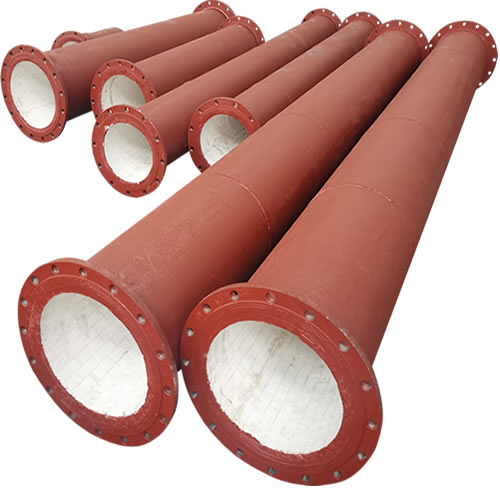
Ceramic tile lined pipes have very uniform coating of specially formulated ceramic material that is affixed to the inner of the pipe.
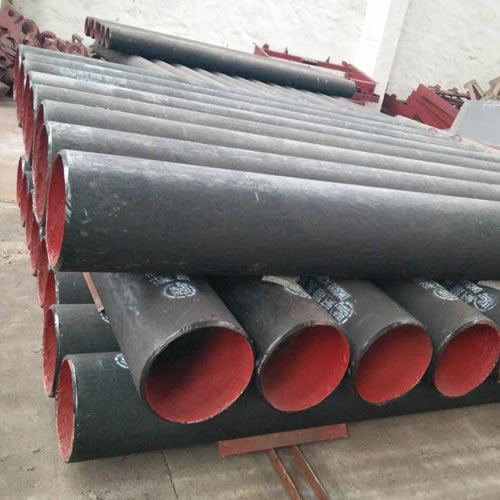
The material of the rare earth alloy wear-resistant pipe is ZG40CrMnMoNiSiRe, which is also the grade of rare earth alloy steel.
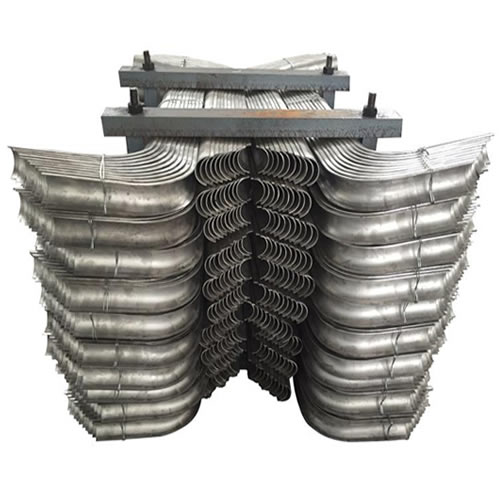
Tubes Erosion Shields are used to protect boiler tubing from the highly erosive effects of high temperatures and pressures thereby greatly extending tube life.
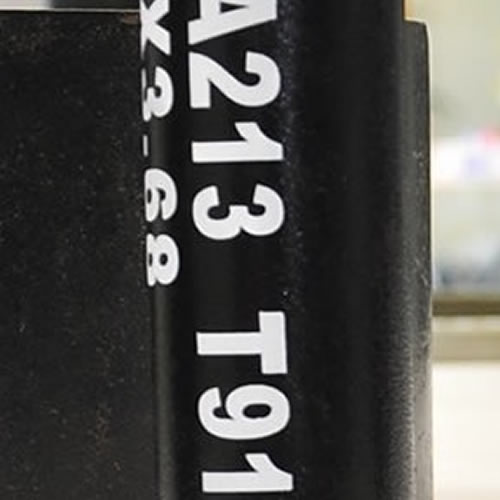
The ASTM A213 T91 seamless tubes are primarily used for boiler, superheater, and heat-exchanger.

When you partner with Sunny Steel, you can stop worrying about meeting deadlines thanks to our responsive and timely service. You'll also say goodbye to unnecessary shopping around. Instead, you'll get white glove service from an expert who understands your needs and can get you the materials you need quickly.