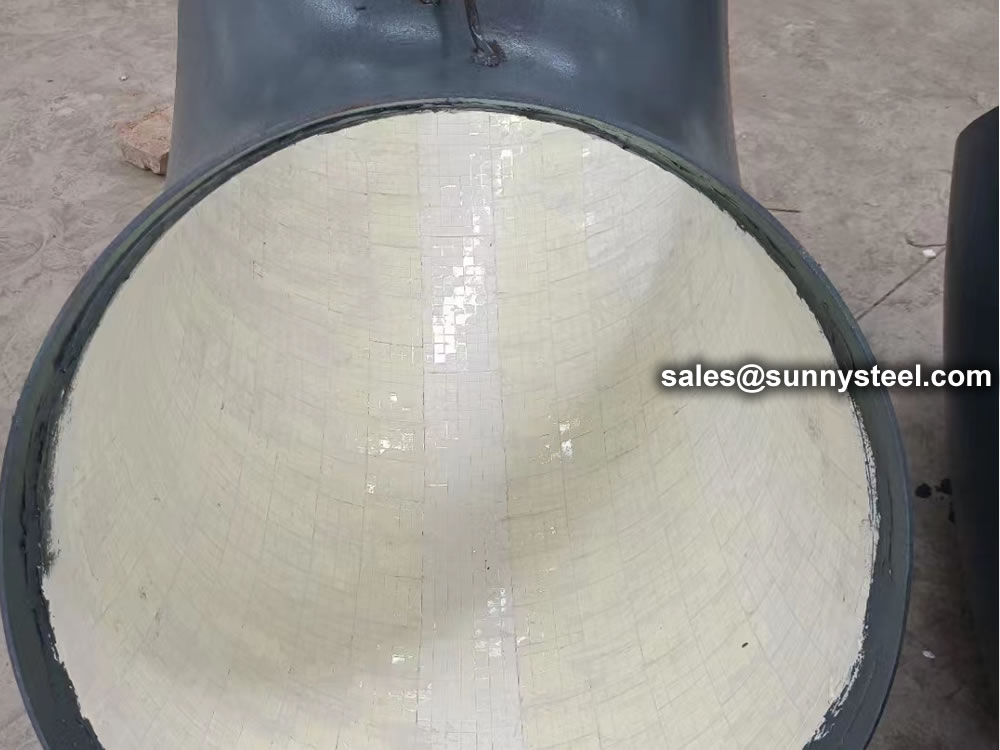
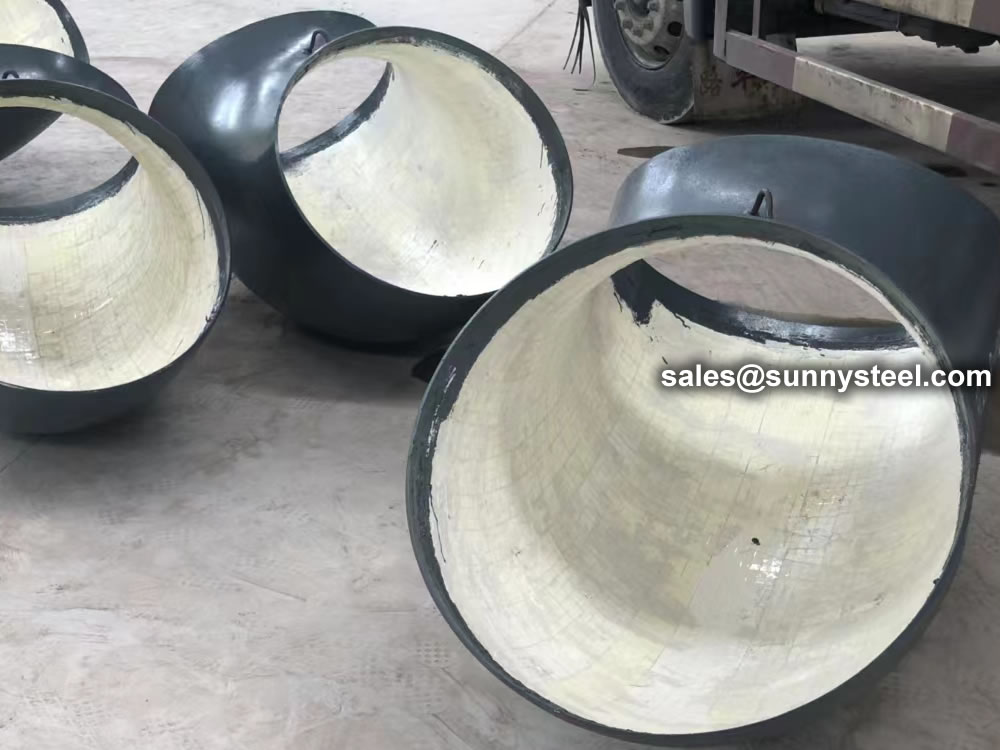
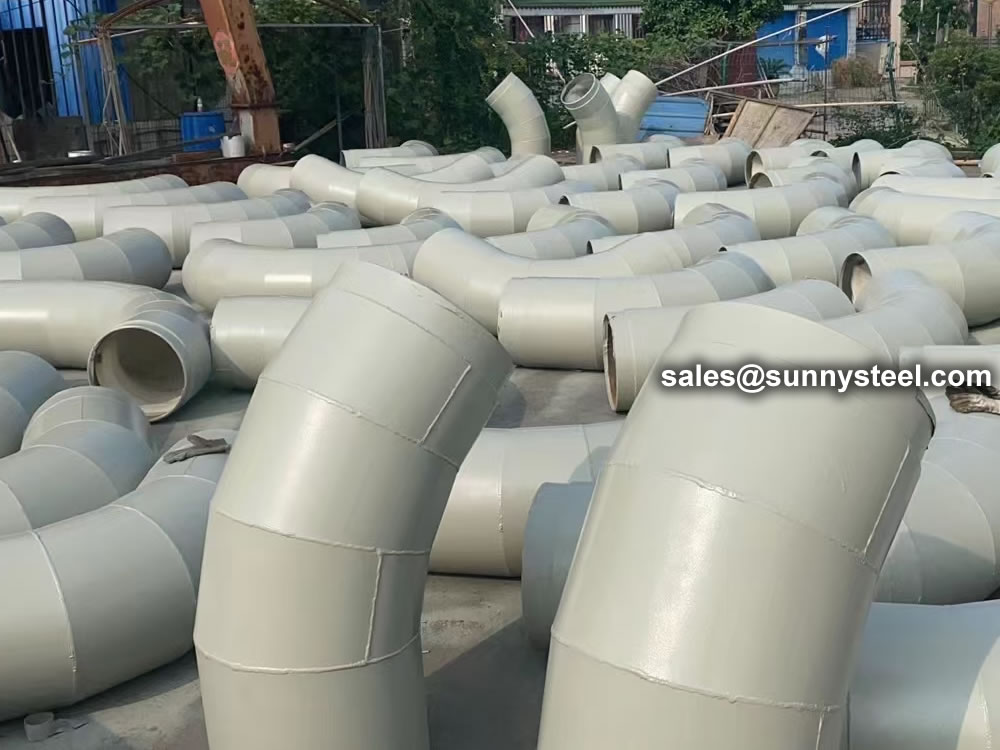
Bend for Pulverized Coal Conveying
Bend for Pulverized Coal Conveying - ceramic wear resistant product
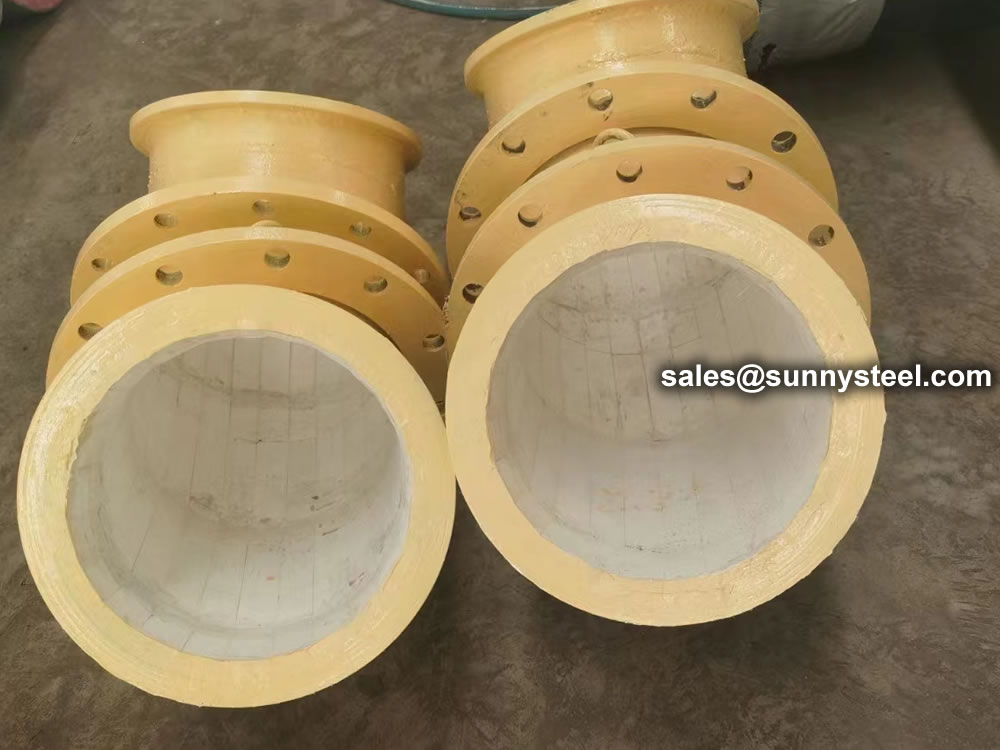
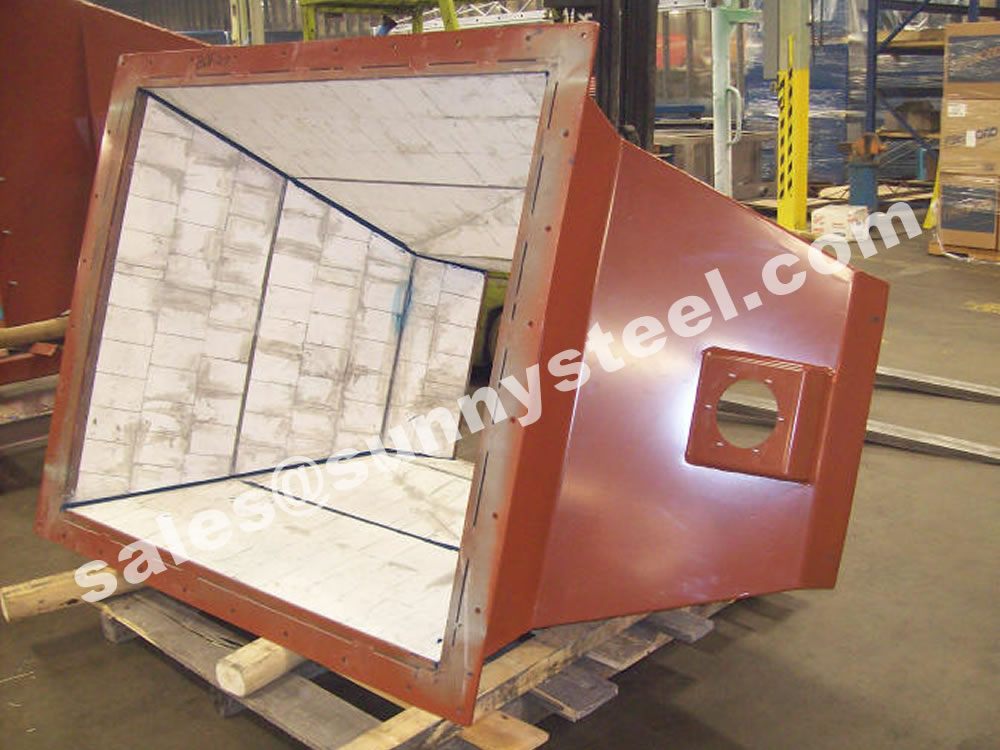
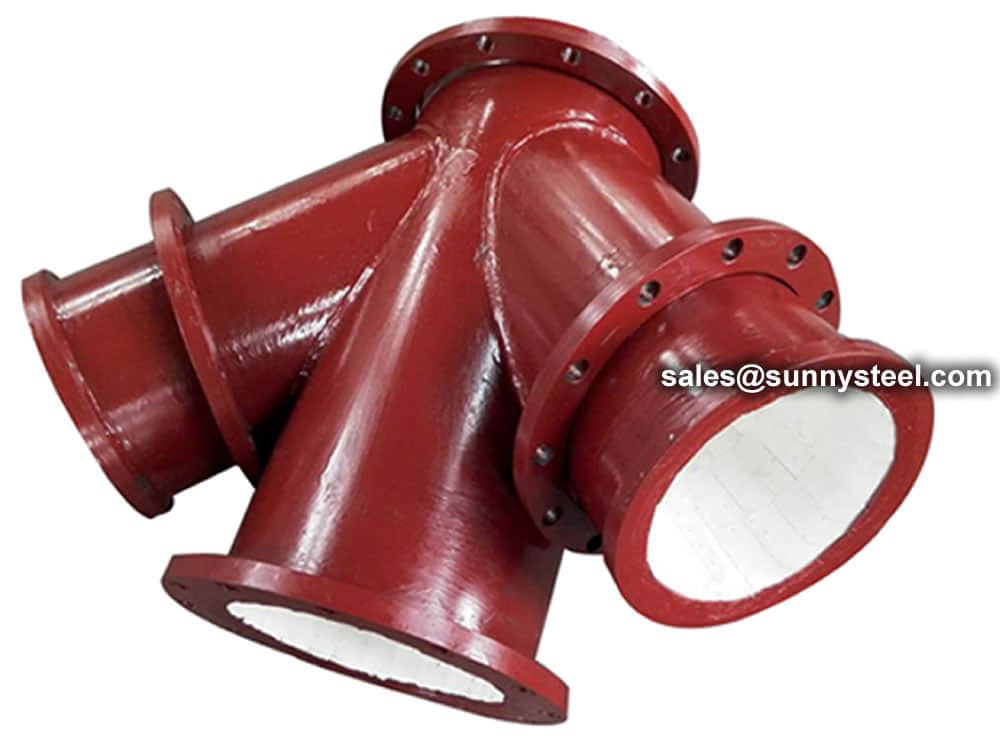
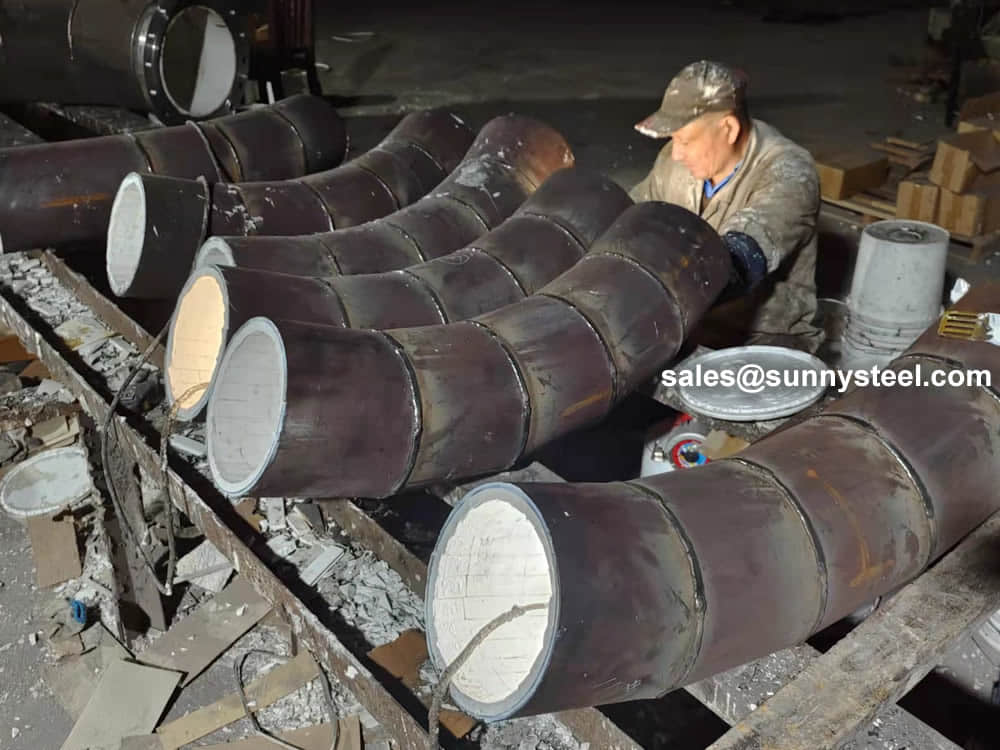
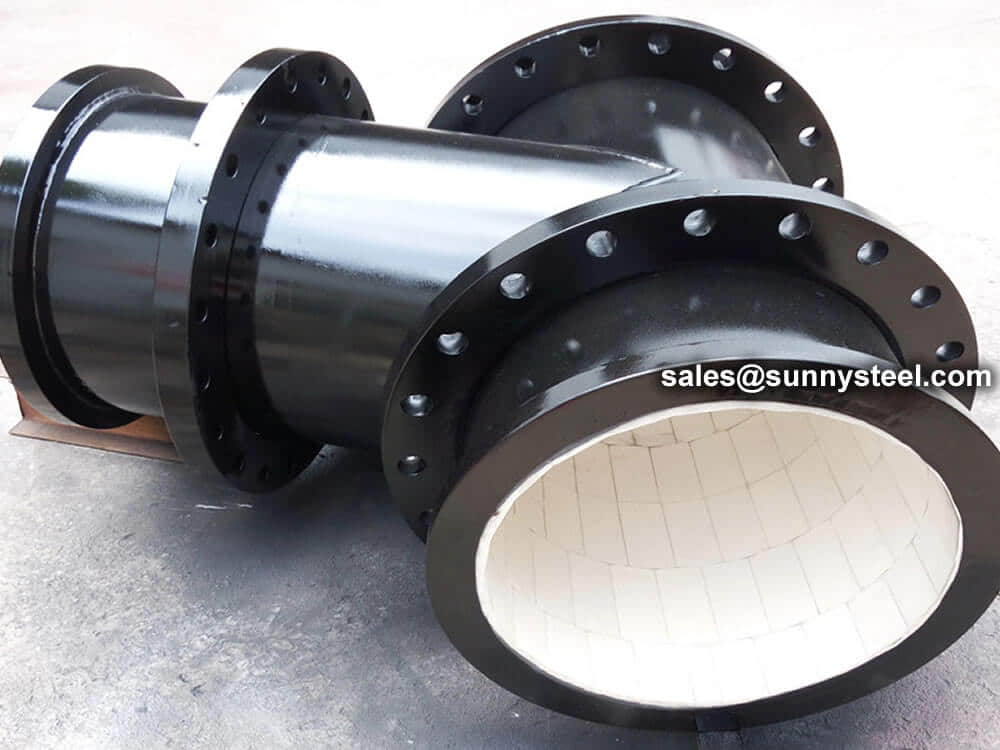
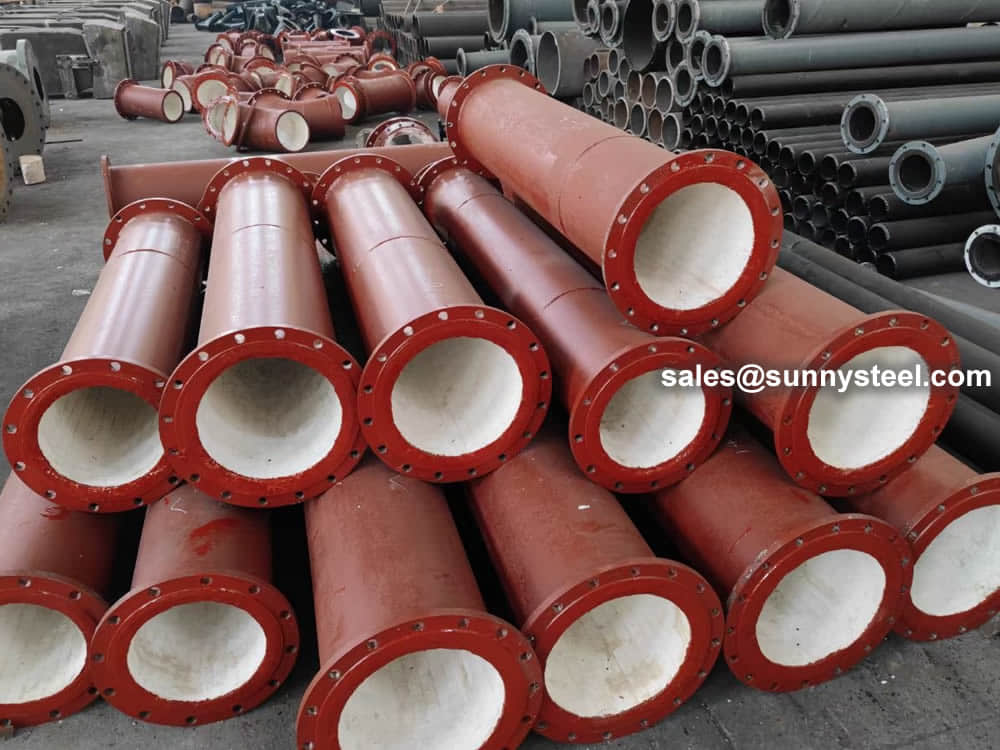
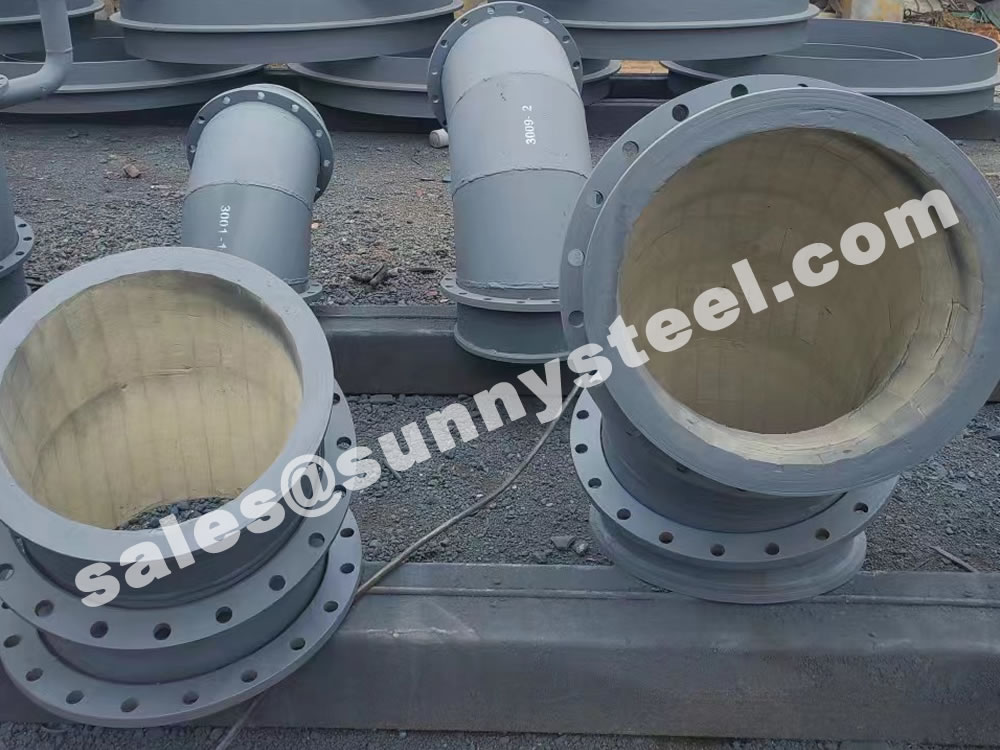
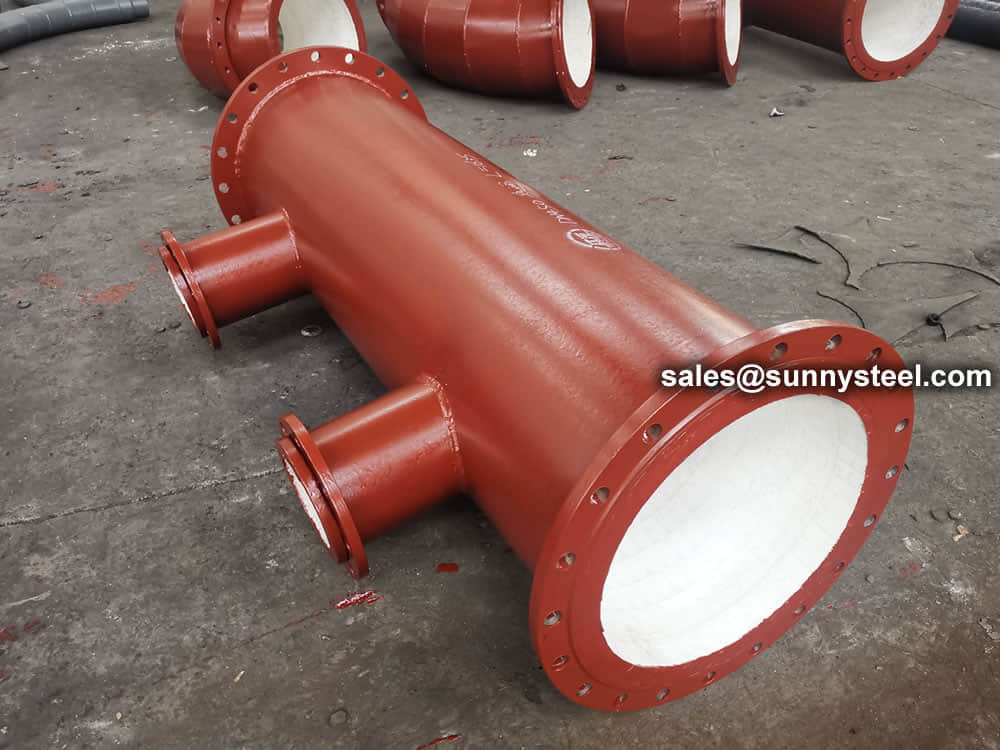
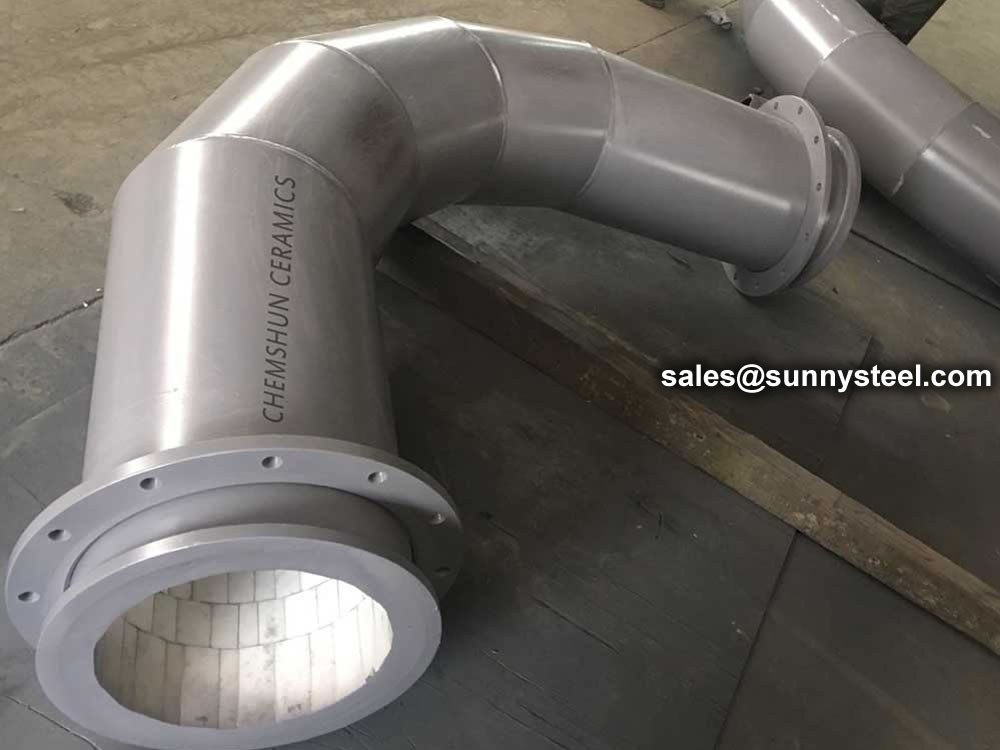
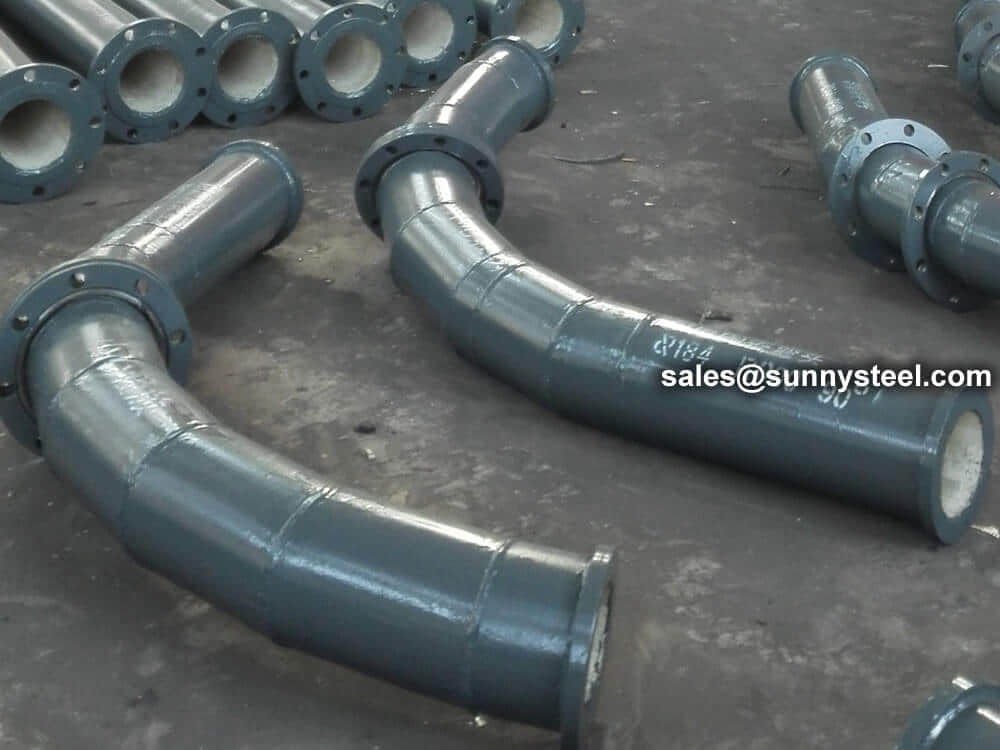
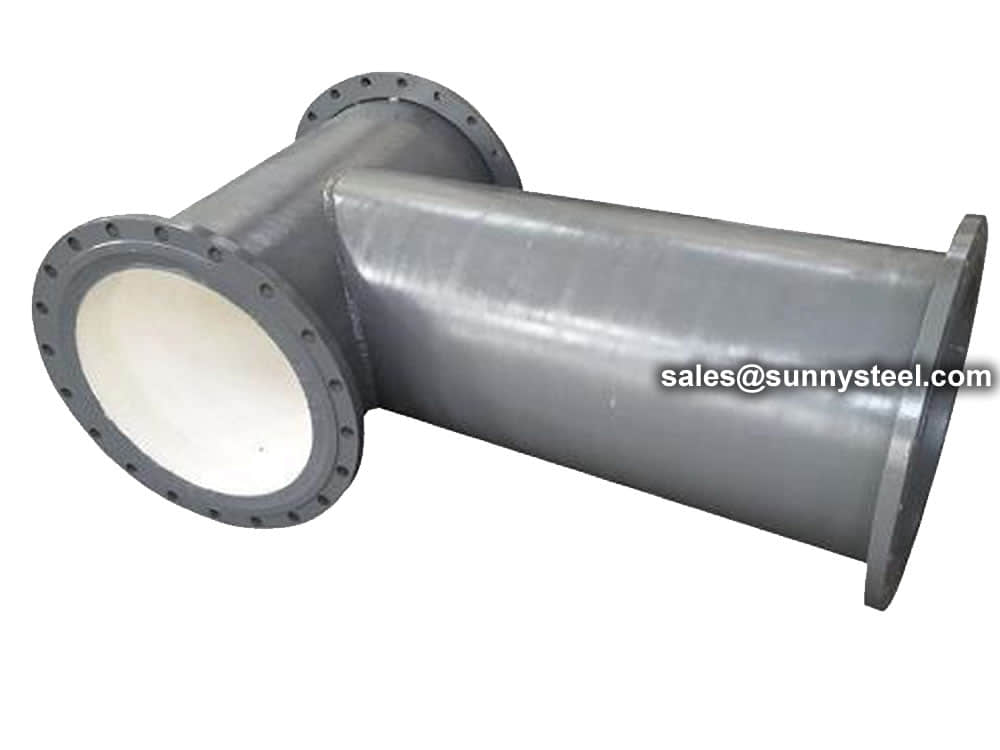
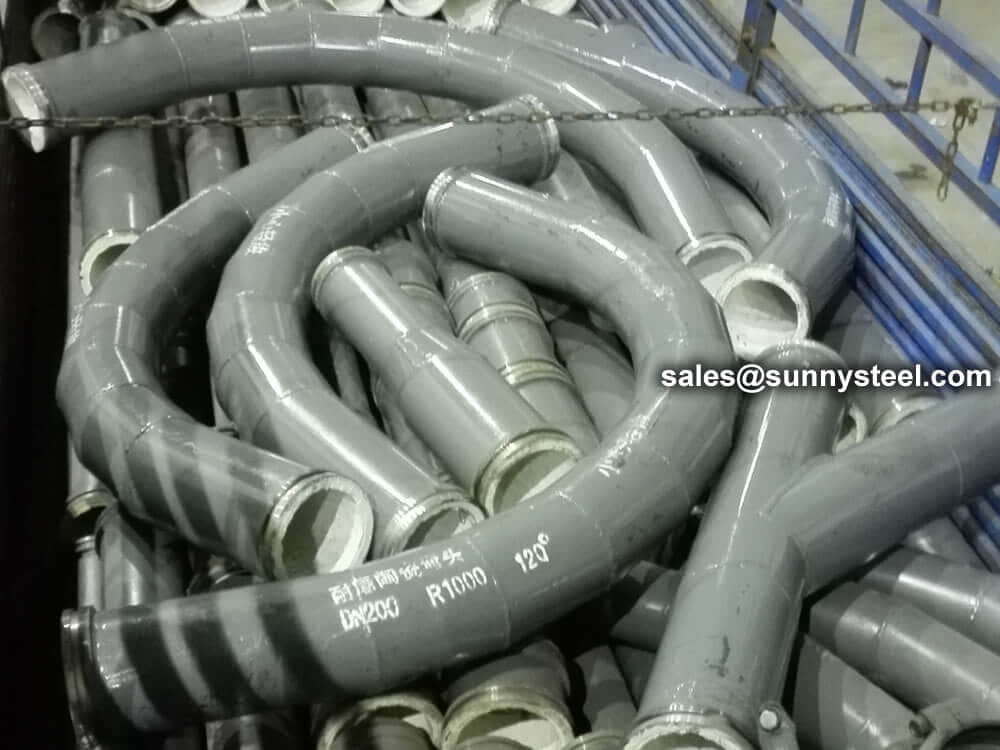
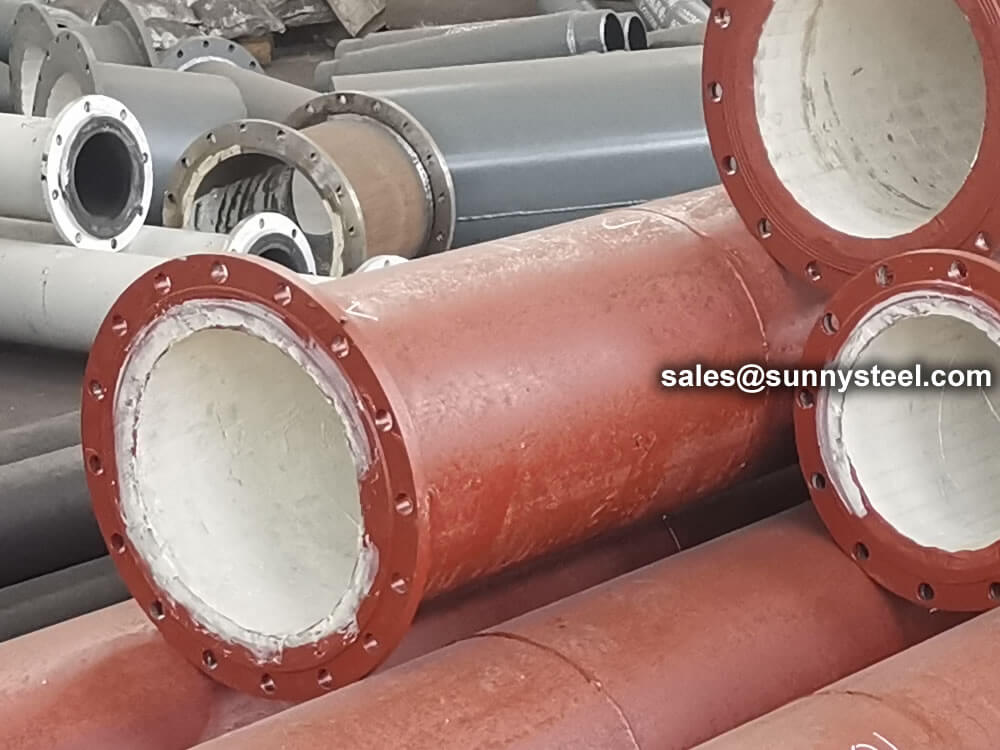
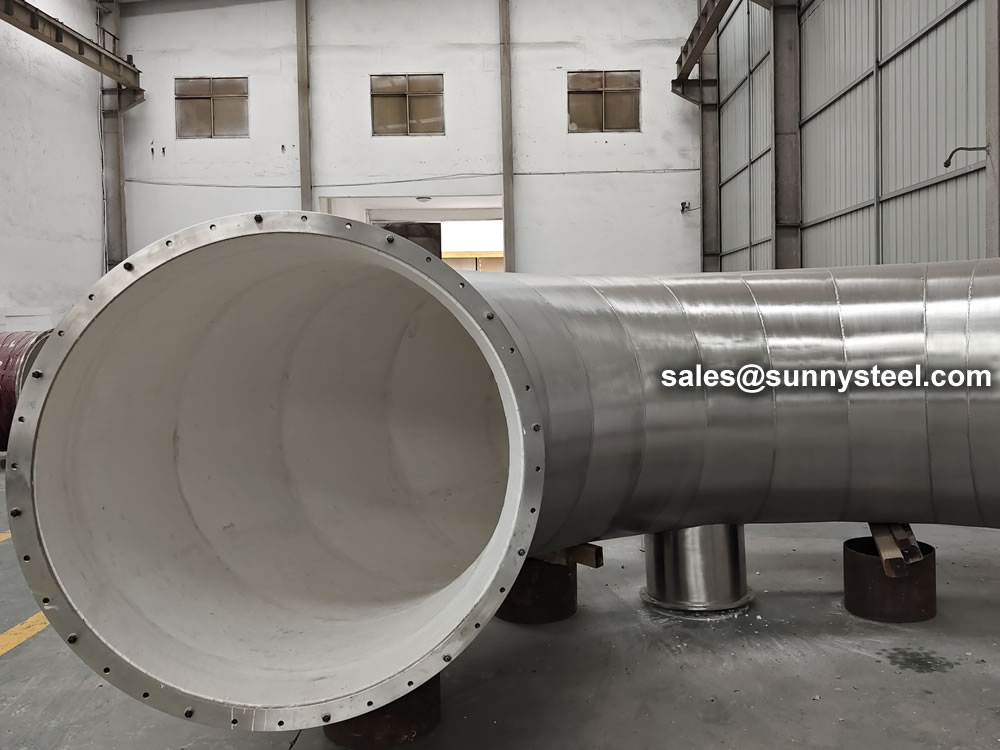
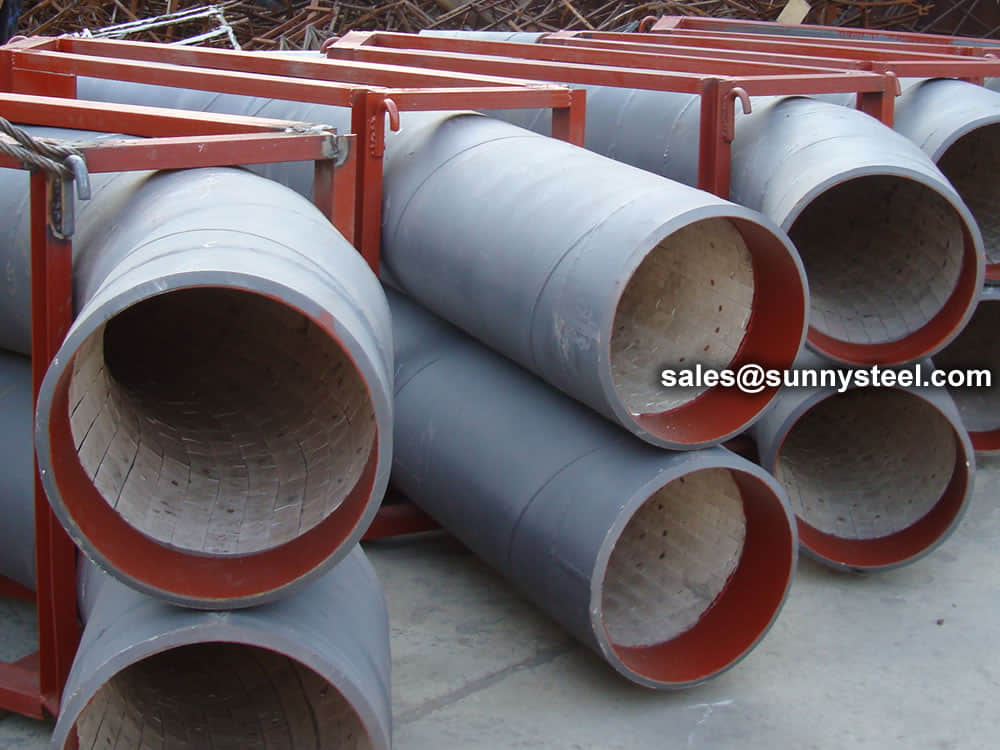
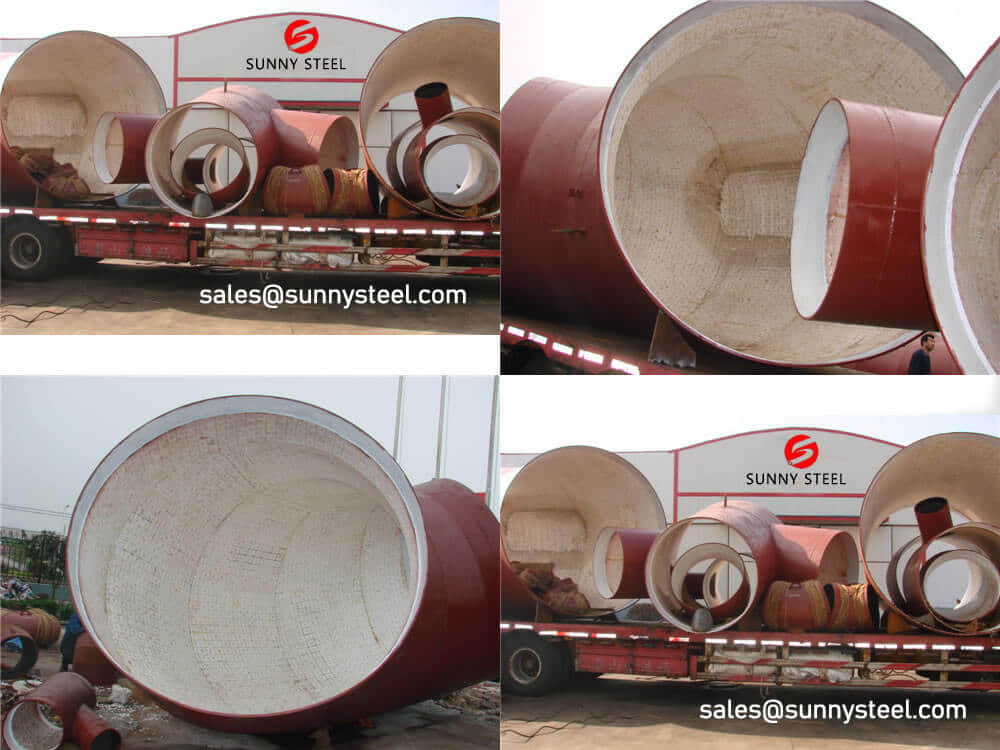
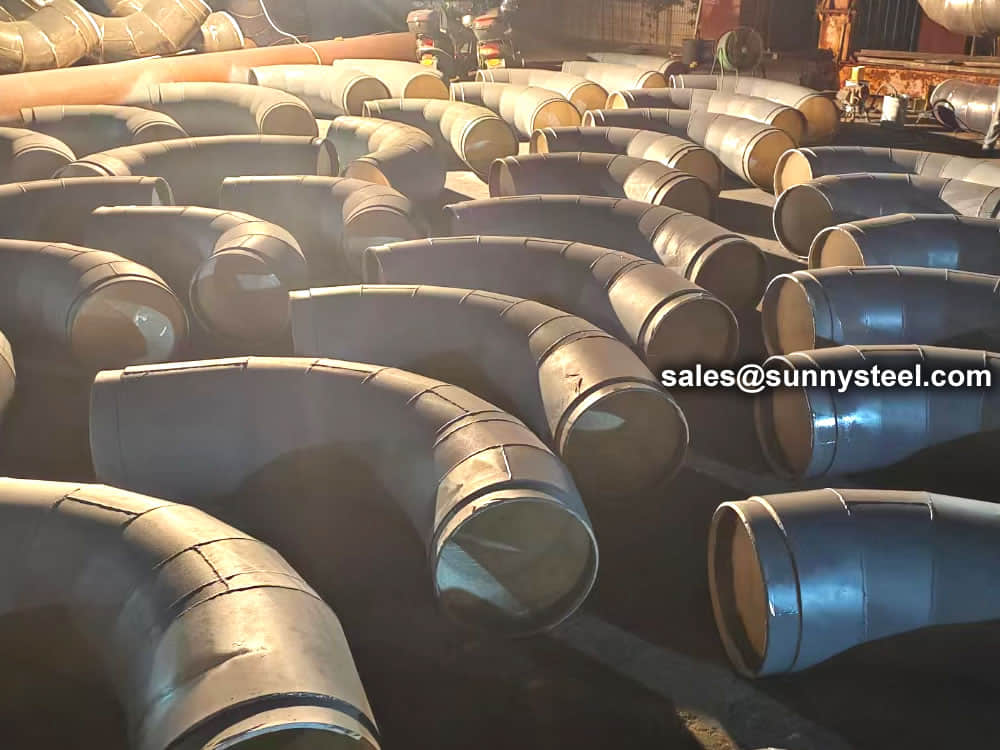
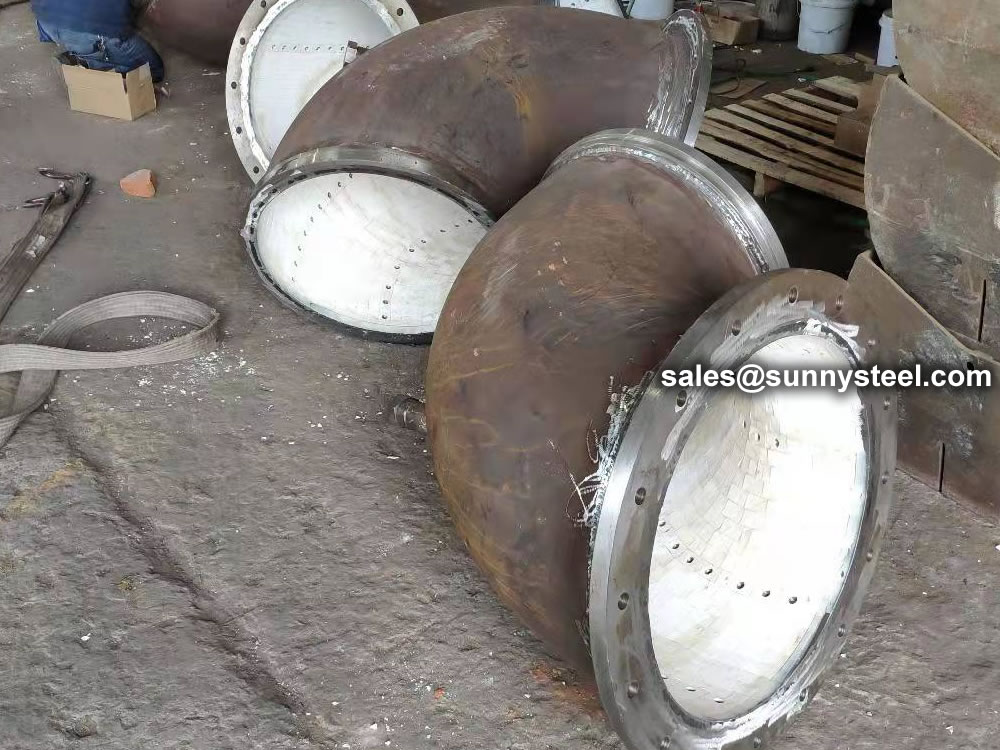
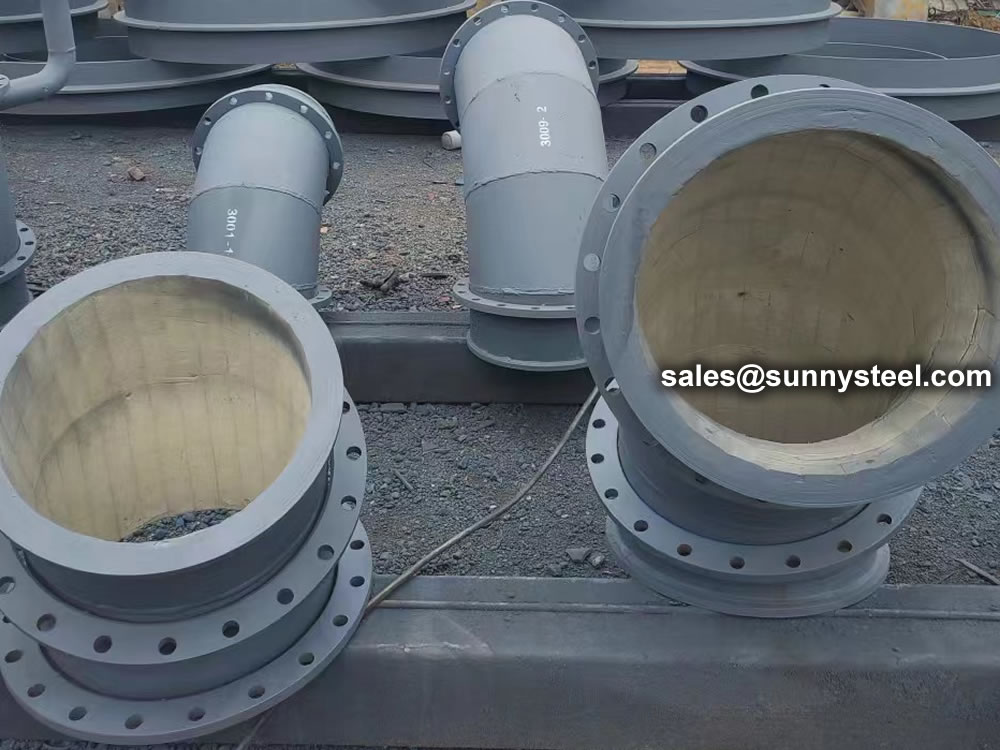
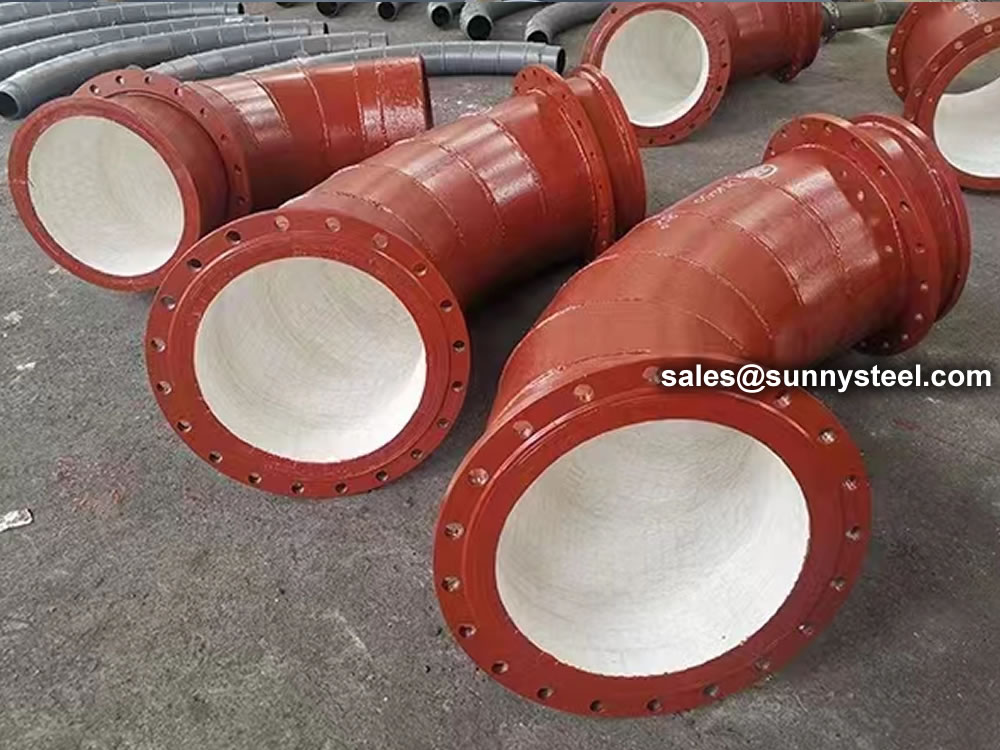
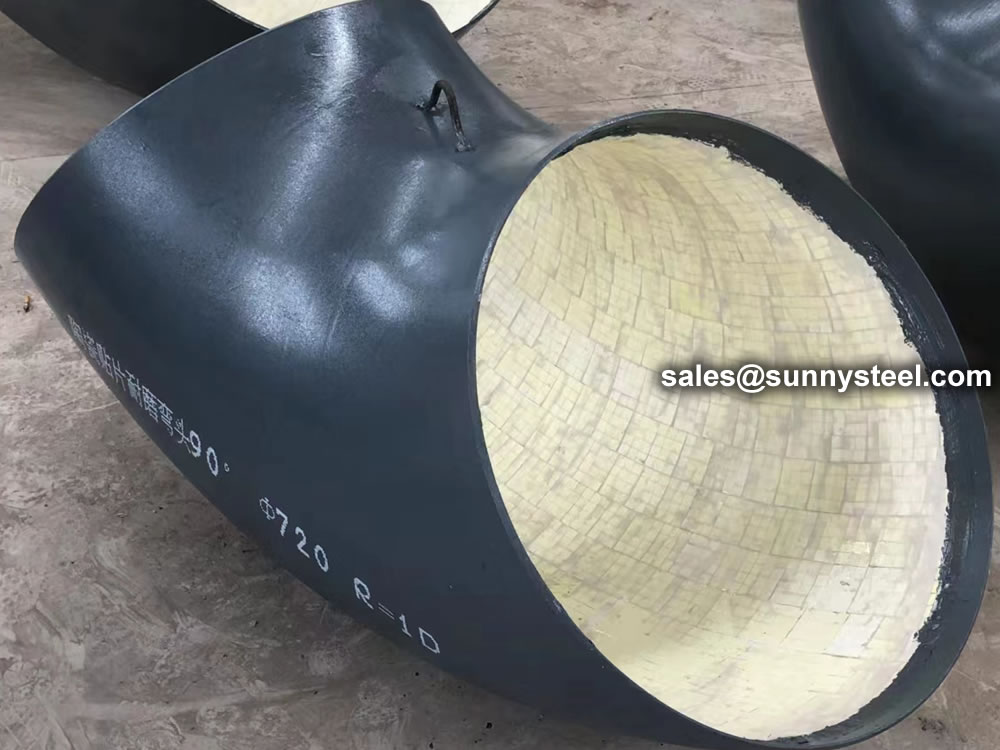
Ceramic tile lined elbows are designed to withstand severe abrasion and impact. High hardness alumina ceramic tiles are embedded in the inner surface of the steel elbow, greatly extending service life compared to standard steel elbows.
To achieve the best abrasion-resistant solutions, thicken ceramic liners can be used in the elbow which has serious abrasions.
Ceramic tile lined elbow fabrication technology principle, special corundum ceramics, made from Al2O3 as raw material, with rare metal oxides as solvents, and sintered at high temperature by 1730 are combined with wear-resistant ceramic pieces and block bricks in the pipe wearing surface through bonding, welding, inlay, riveting and socket technology. Thus forming a surface with excellent abrasion resistance, and the matrix still uses the composite pipe of the ordinary metal material.
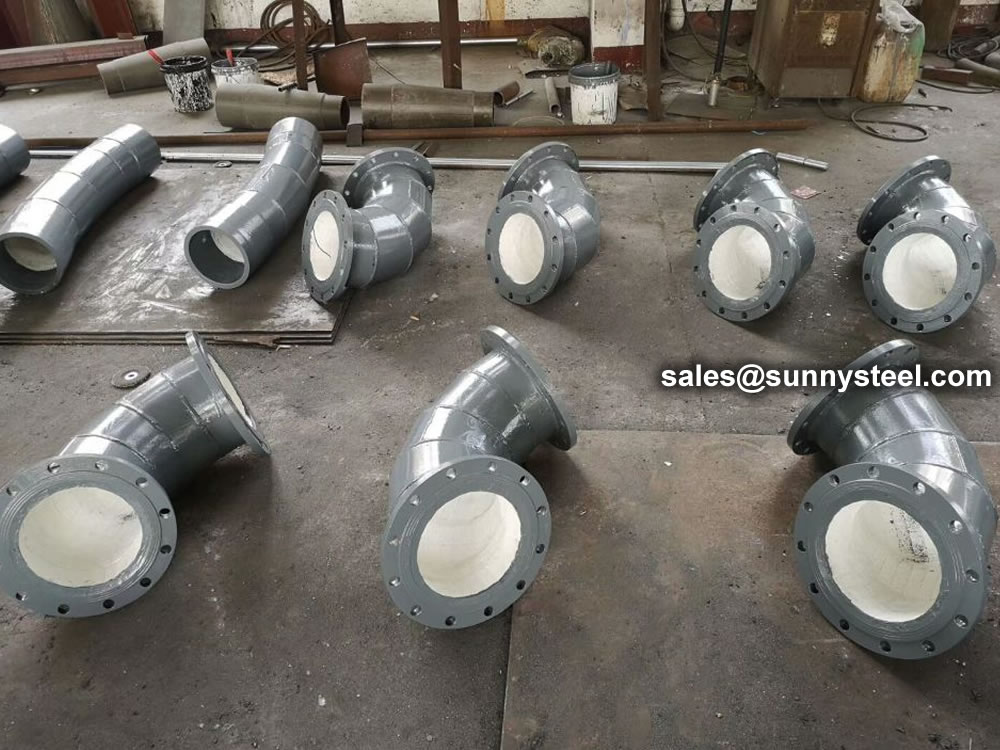
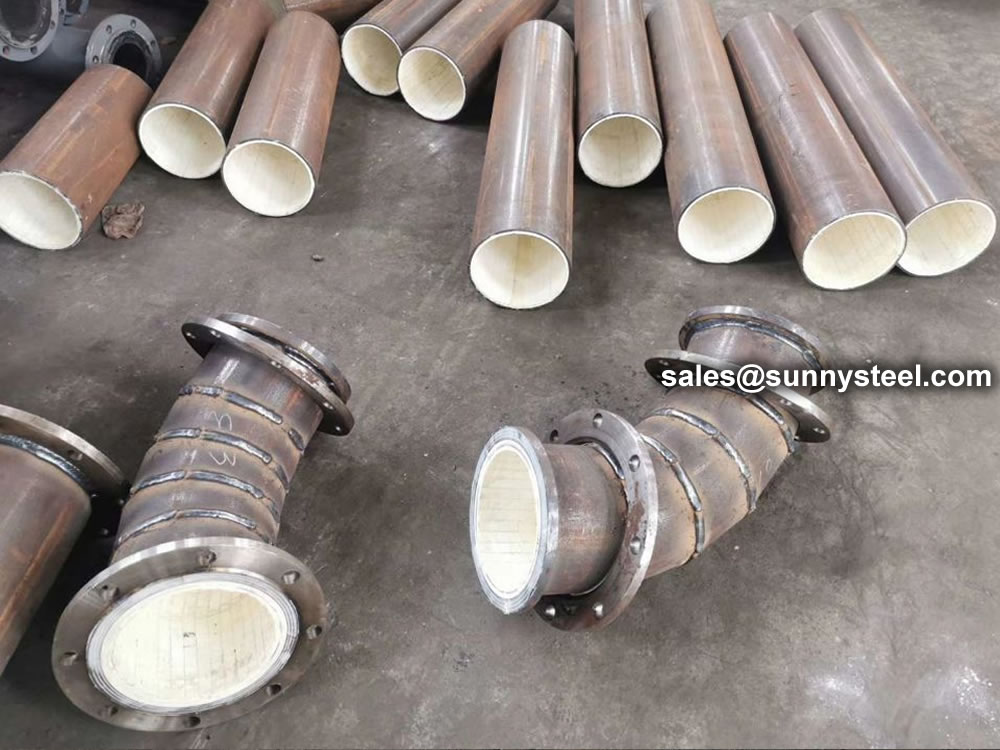
According to different needs of the choice of wear-resistant ceramic patches, to meet the special needs of users of technical conditions. Compared with the traditional all-metal high alloy pipe fittings, the working face has higher abrasion resistance, which can make the whole wear-resistant and anticorrosion service life of the pipe increase several times to dozens of times times. Overall weight of the first mate down, reduce the amount of steel, reduce the cost of equipment and maintenance costs, improve economic efficiency.
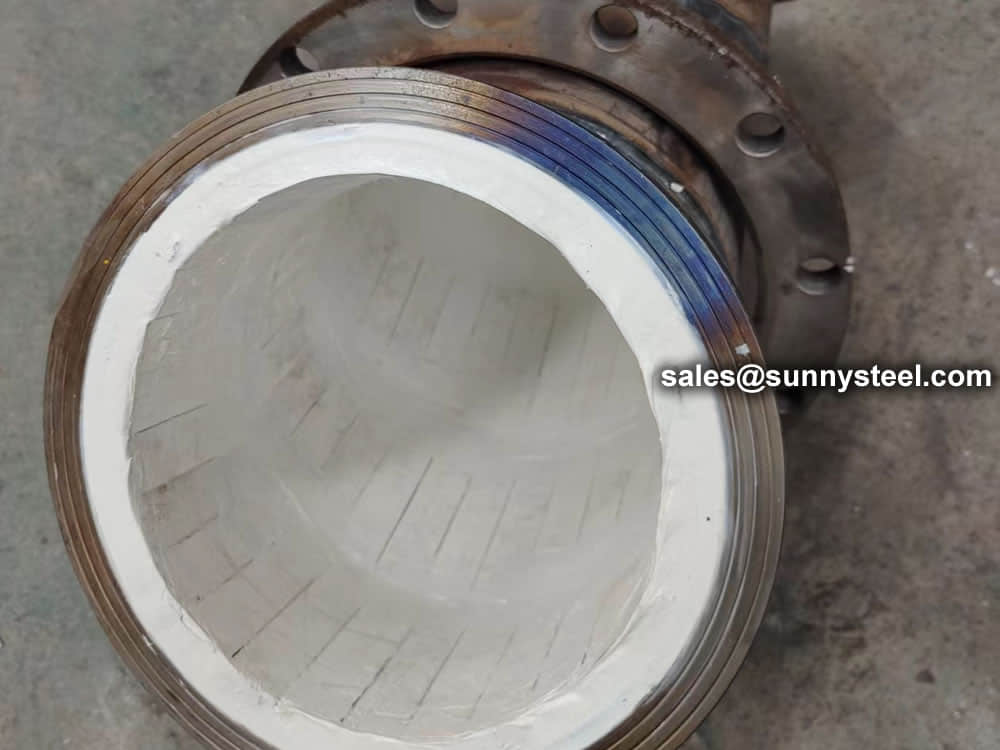
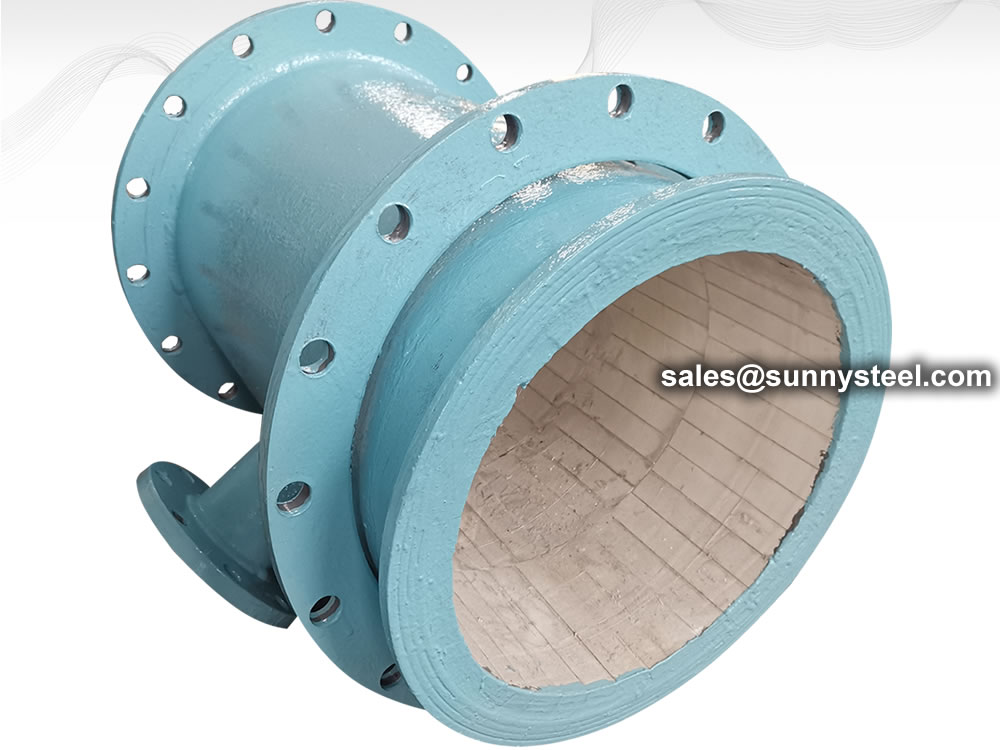
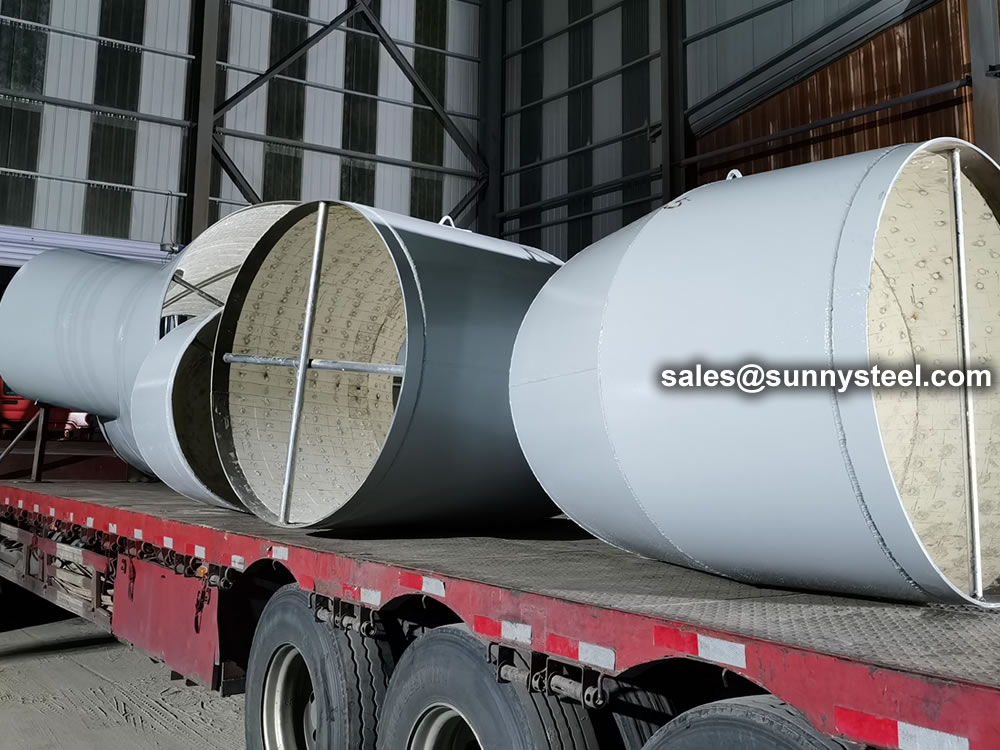
A ceramic tile lined elbow is a type of elbow pipe fitting that has been internally coated with ceramic tiles to provide superior resistance to wear, abrasion, and corrosion. These ceramic tiles are securely bonded to the inner surface of the elbow using high-temperature adhesives or epoxy, creating a robust and protective layer.
Ceramic tile lined elbows find common use in industries where the pipeline system comes into contact with abrasive materials, such as mining, power generation, cement production, and chemical processing. They are highly effective at shielding against the erosive impact of abrasive slurries, high-velocity particles, and corrosive fluids.
The ceramic tile lining within the elbows serves to minimize wear and extend the lifespan of the pipeline system. It results in a smooth inner surface, reducing friction and turbulence in the fluid flow, thus enhancing overall efficiency. Additionally, the ceramic tiles exhibit exceptional hardness and resistance to chemical attacks, ensuring reliable performance in challenging environments.
When employing ceramic tile lined elbows, it is crucial to consider proper installation techniques and maintenance procedures to maximize their effectiveness. Regular inspections and maintenance checks help identify any signs of wear or damage to the ceramic lining, allowing for prompt repairs or replacements.
| Flexure strength | Tensile strength | Elongation | Cross section stretch Ratio | Impact toughness | Hardness of wearable layer | Hydrostatic testing pressure |
|---|---|---|---|---|---|---|
| MN/㎡ | MN/㎡ | % | % | J/c㎡ | HRC | Mpa |
| >610 | >700 | 5 | 5.1 | >15 | >38 | 5.6-12.9 |
To achieve the best abrasion-resistant solutions, thicken ceramic liners can be used in the elbow which has serious abrasions.
Steel-shell composite pipes with high-alumina ceramic tile lining for extreme wear conditions.
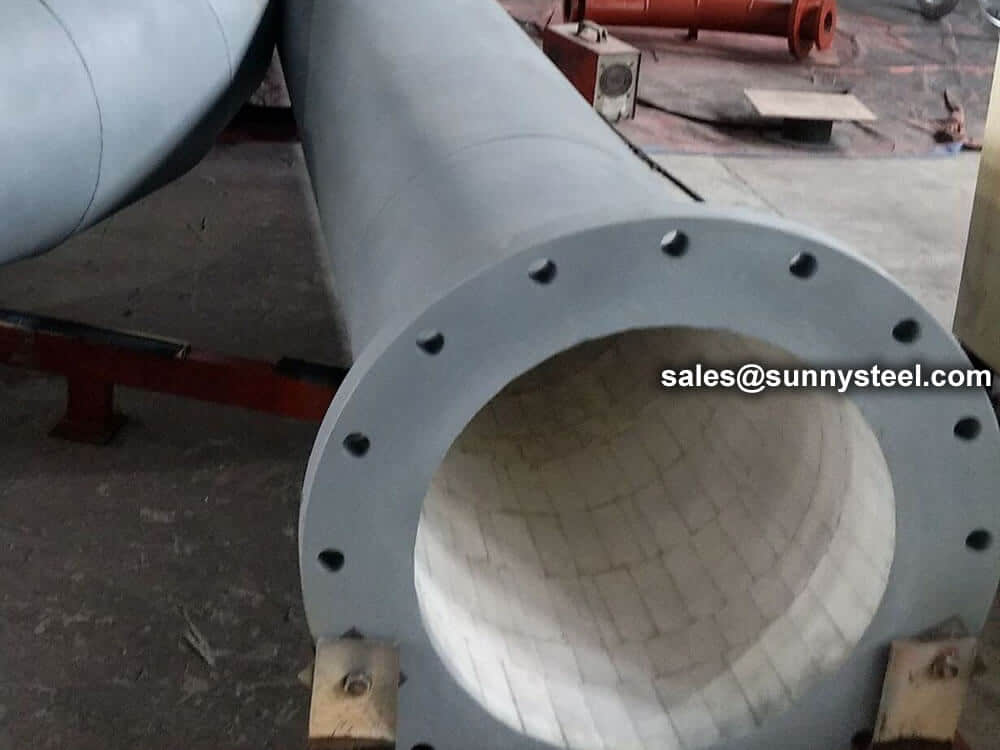
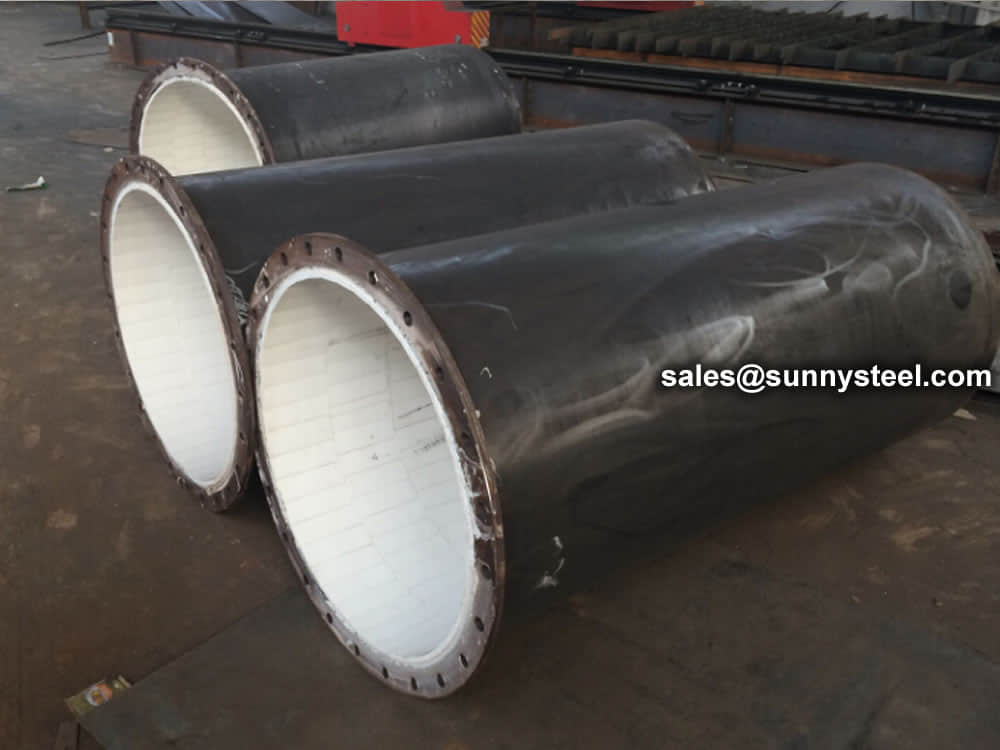
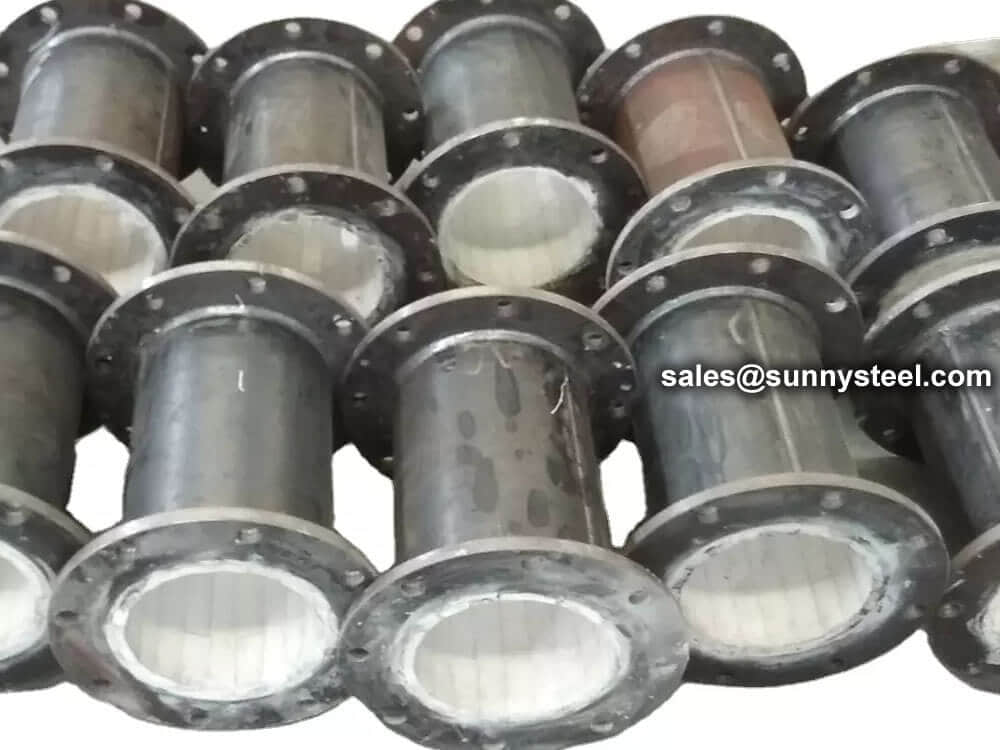
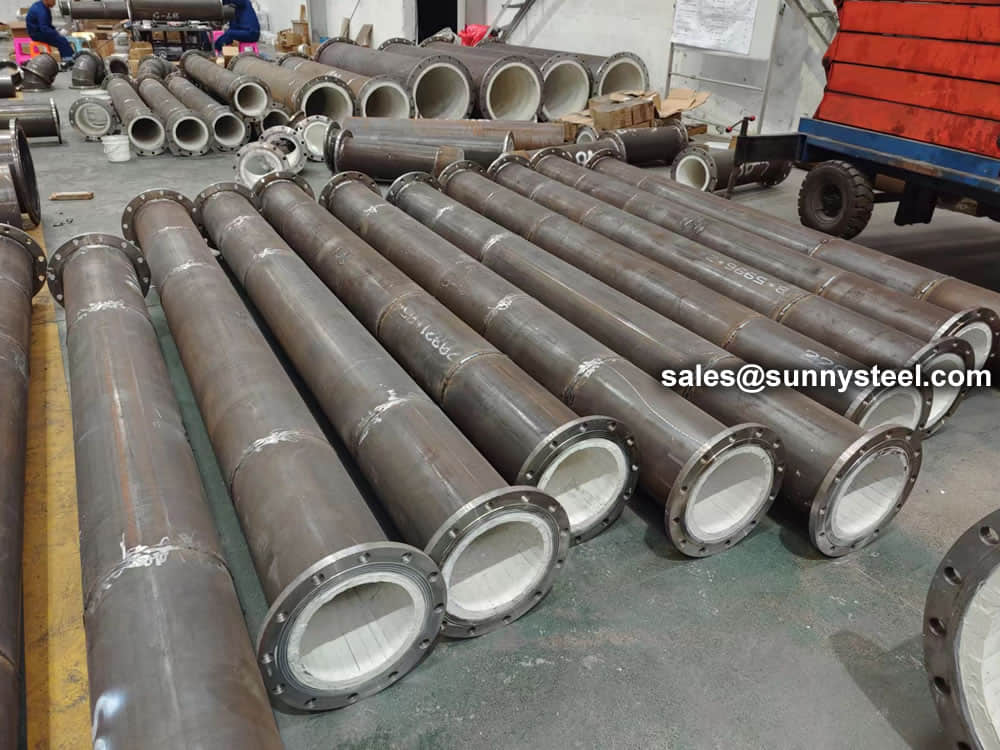
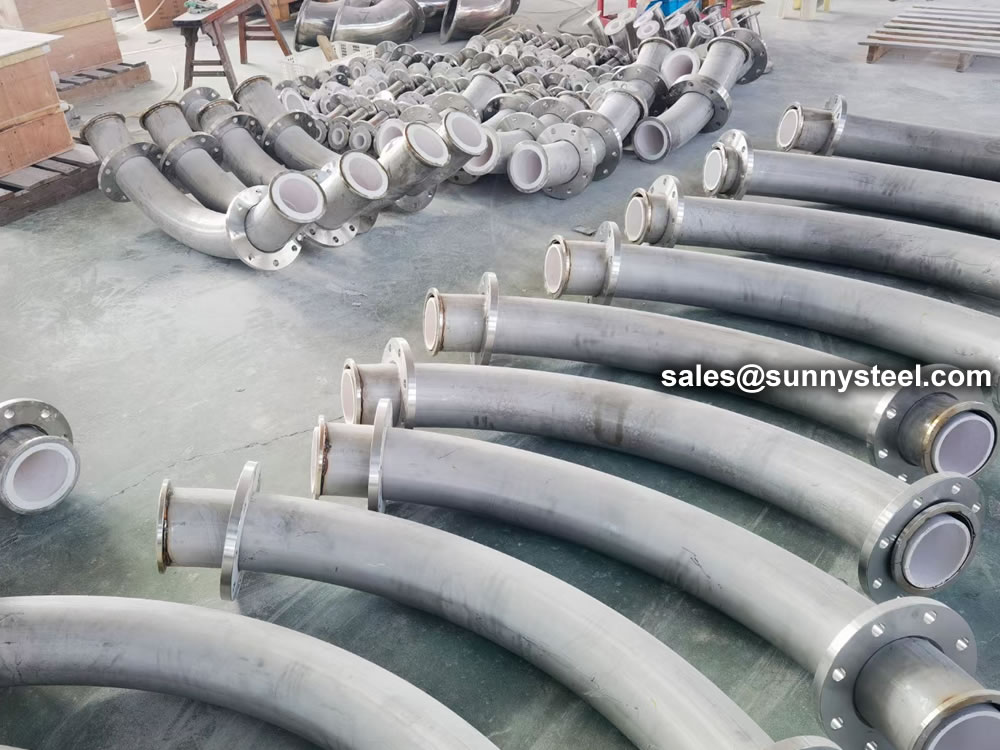
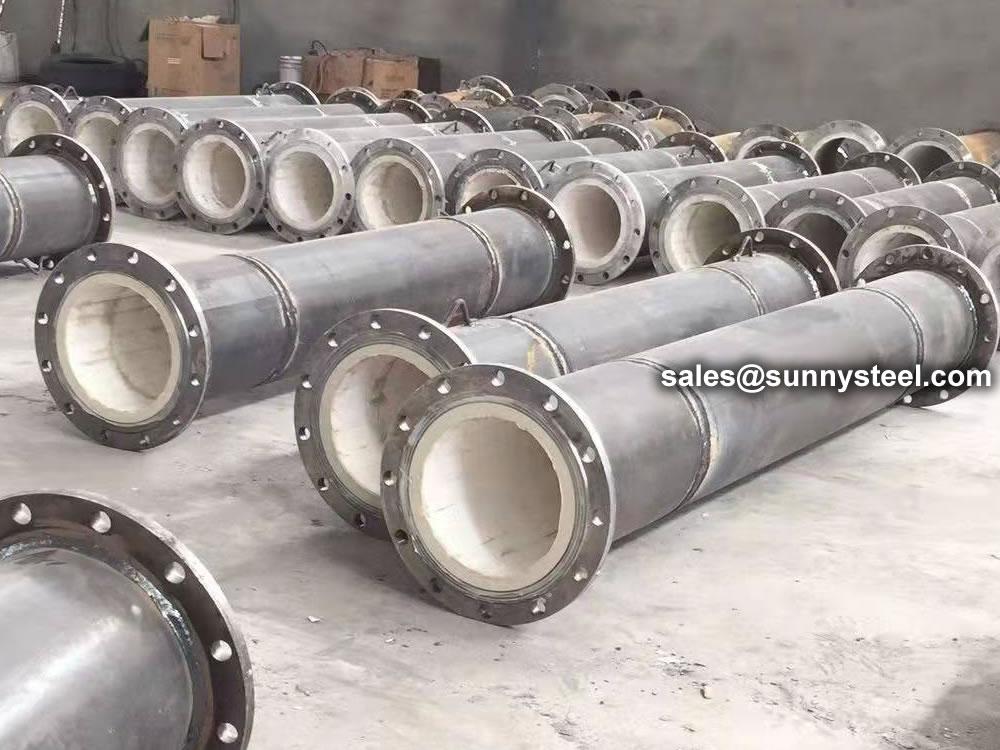
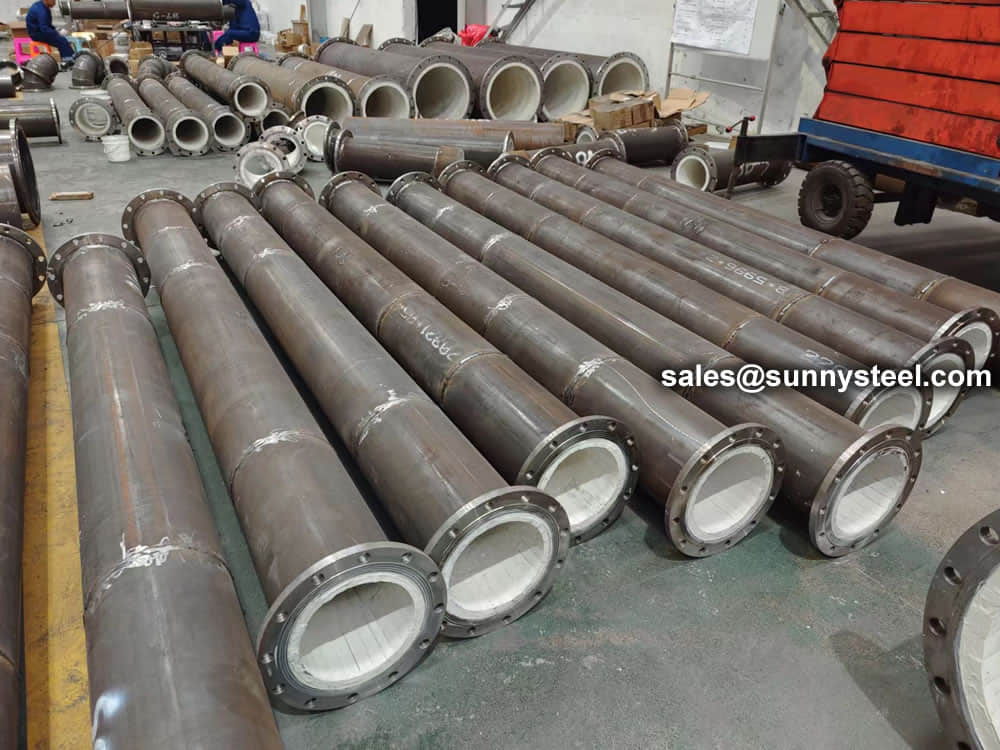
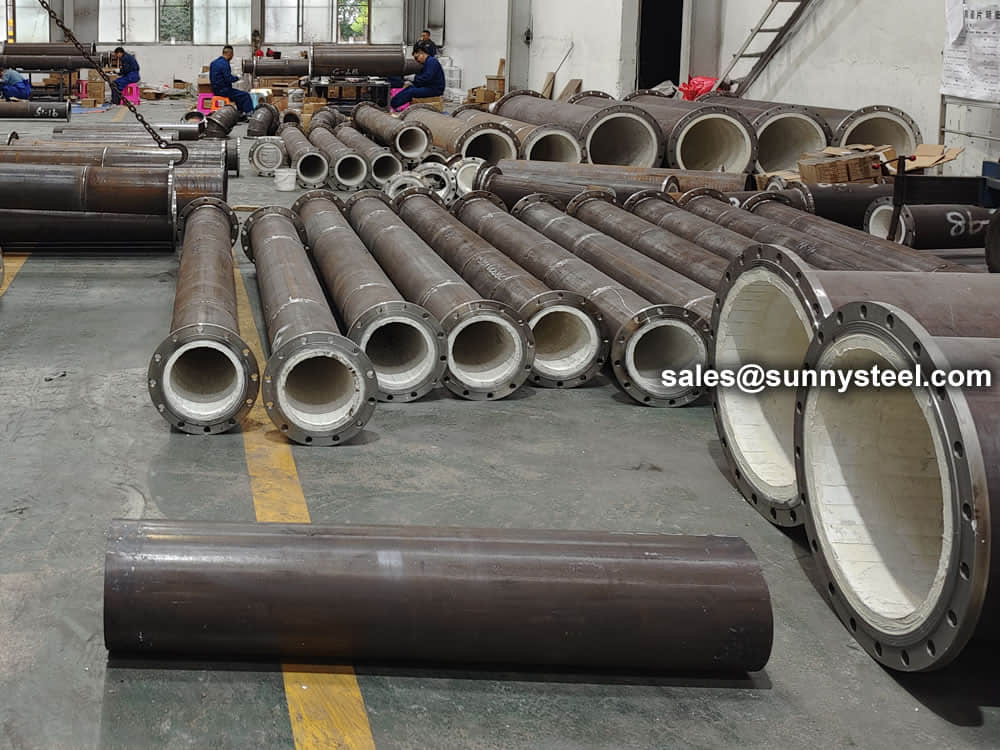
Ceramic tile lined pipe is a composite product developed by integrating advanced domestic and international technologies. It consists of a steel outer shell and an inner lining of high-alumina ceramic tiles, delivering exceptional wear resistance and long service life.
Anti-dislodgement ceramic tiles are precisely positioned and bonded with a high-strength inorganic adhesive, then further secured by wear-resistant steel stud welding. This dual-reinforcement method ensures that the ceramic tiles remain firmly attached under severe operating conditions. The product offers flexible installation, excellent wear performance, convenient fabrication and moderate cost.
High-alumina ceramics achieve a Rockwell hardness of HRA 80–90, second only to diamond and far superior to wear-resistant steel and stainless steel.
The wear resistance of high-alumina ceramics is approximately 266 times that of manganese steel and 171.5 times that of high-chromium cast iron. Field investigations and customer feedback confirm that equipment service life can be extended by more than 10 times under identical operating conditions.
High-alumina ceramics are inorganic oxides with an extremely stable molecular structure and no electrochemical corrosion mechanism. They resist attack from acids, alkalis, salt solutions and organic solvents, making them suitable for chemically aggressive environments.
High-alumina ceramic linings can operate continuously at temperatures up to 1,400°C, making them suitable for high-temperature flue gas, ash handling and furnace applications.
High-alumina ceramics exhibit excellent self-lubricating properties and low surface adhesion. The surface roughness is only 1/6 that of steel pipes, resulting in significantly lower flow resistance and reduced material buildup.
The density of high-alumina ceramics is approximately 3.6 g/cm³, about half that of steel. This significantly reduces the overall weight of the piping system, making transportation, handling and installation easier and more cost-effective.
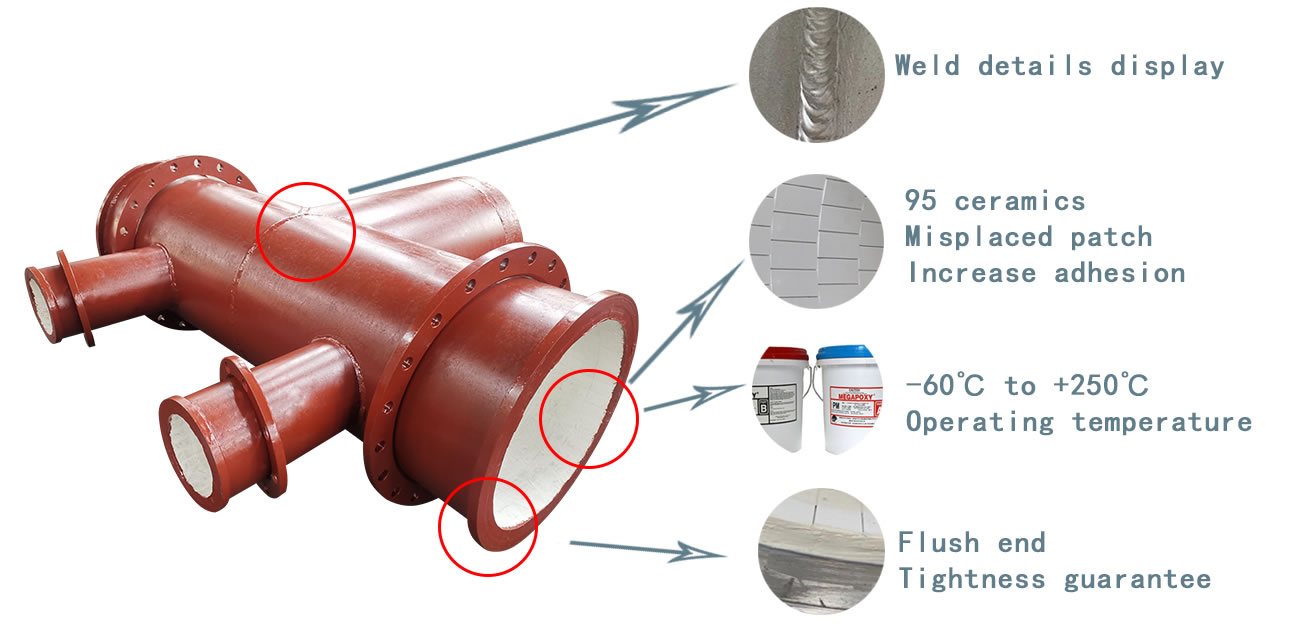
Three-layer composite piping system combining structural steel, high-alumina ceramic lining and engineered bonding technology.
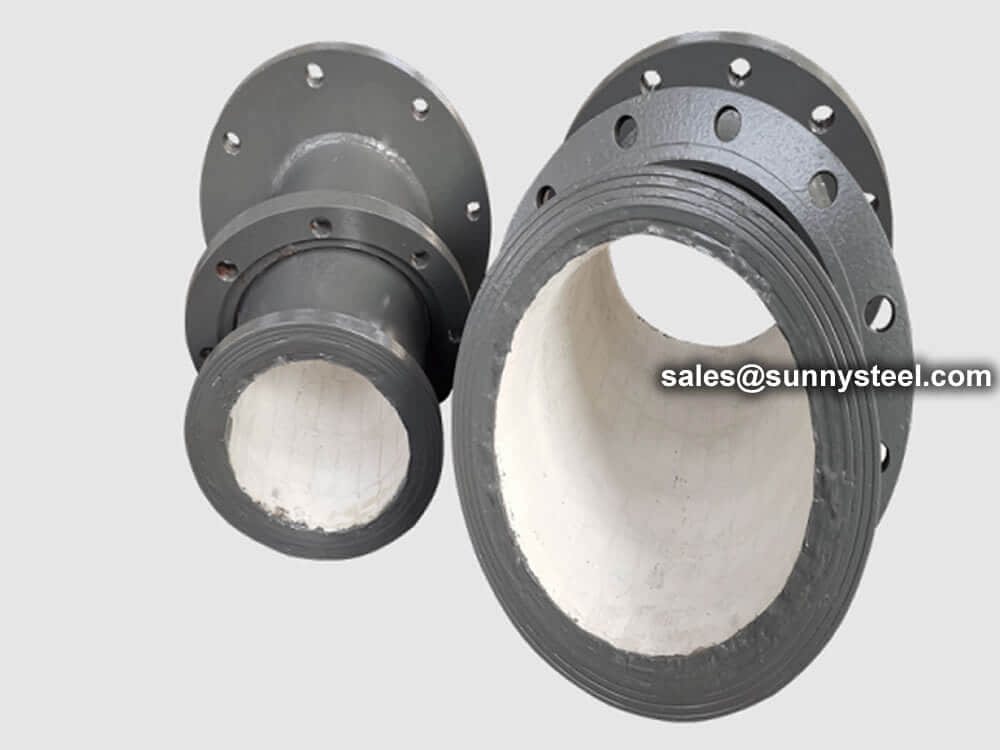
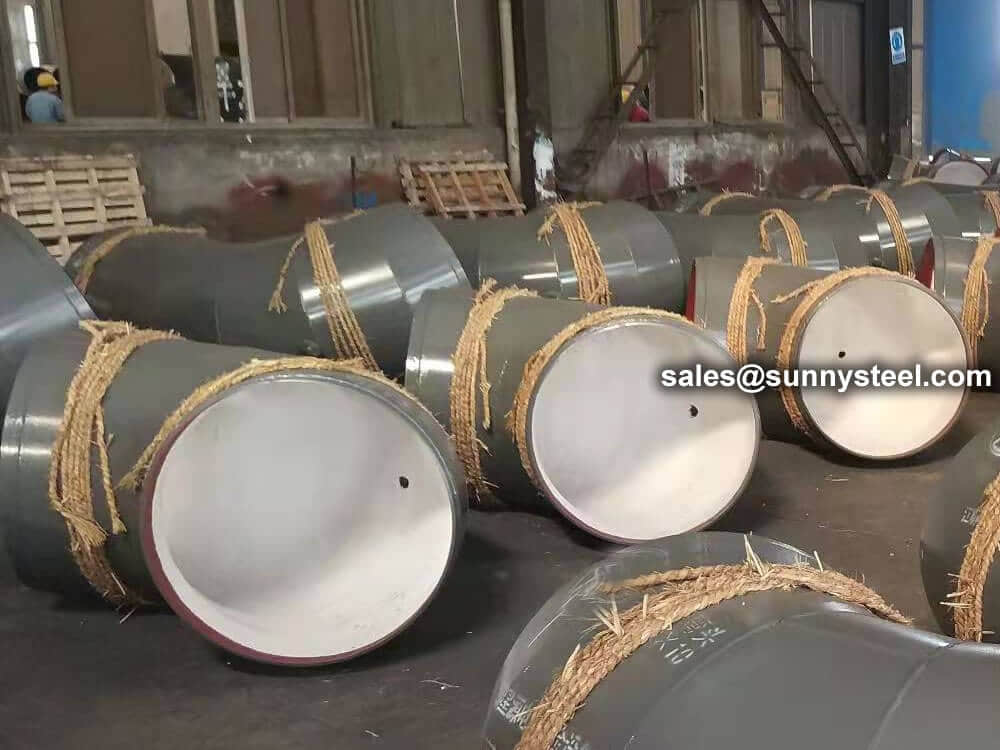
Ceramic tile lined pipe is a composite product consisting of three layers: an outer steel pipe, a high-strength inorganic adhesive layer, and an inner high-alumina ceramic lining. The ceramic layer typically exhibits a white appearance and is manufactured from ≥95% alumina (Al₂O₃) ceramic. Standard service temperature is below 200°C.
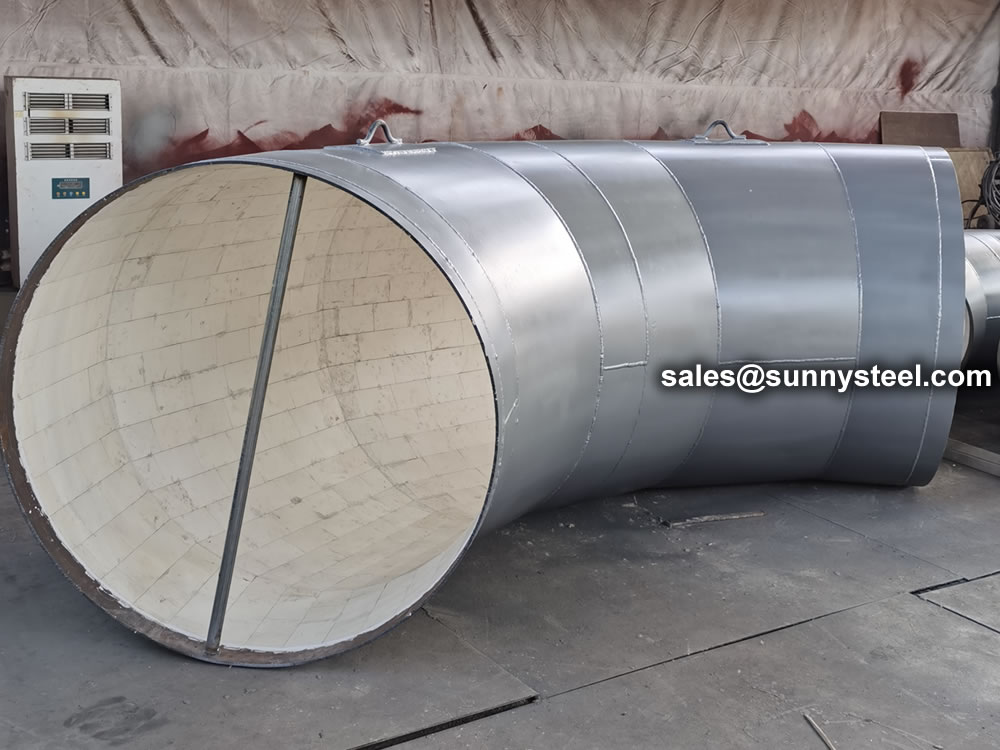
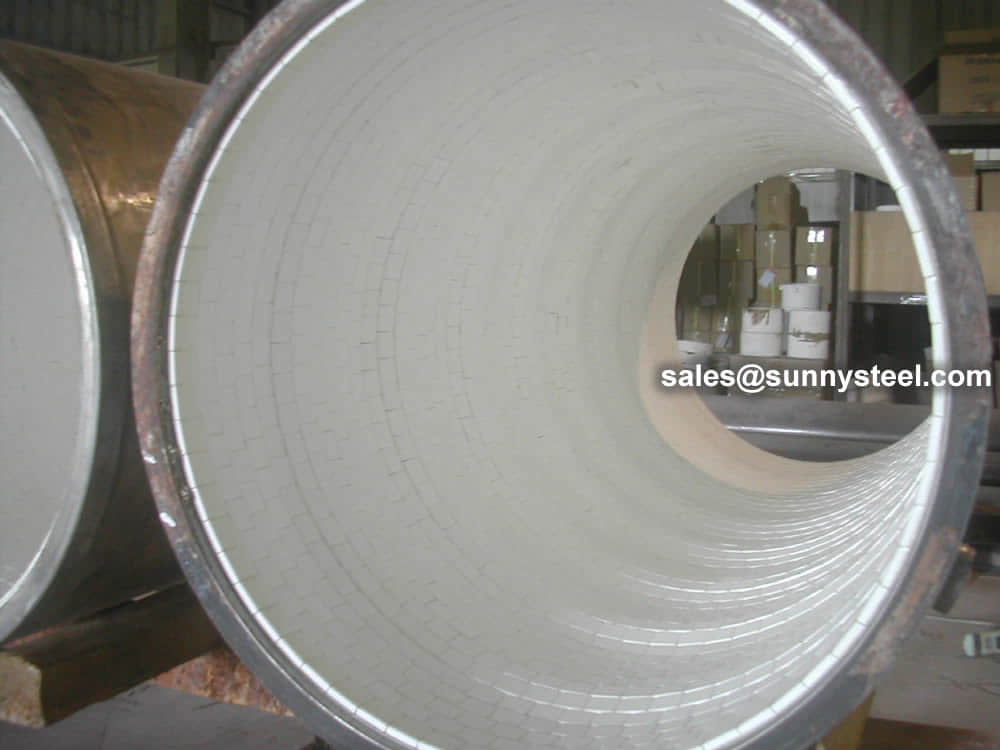
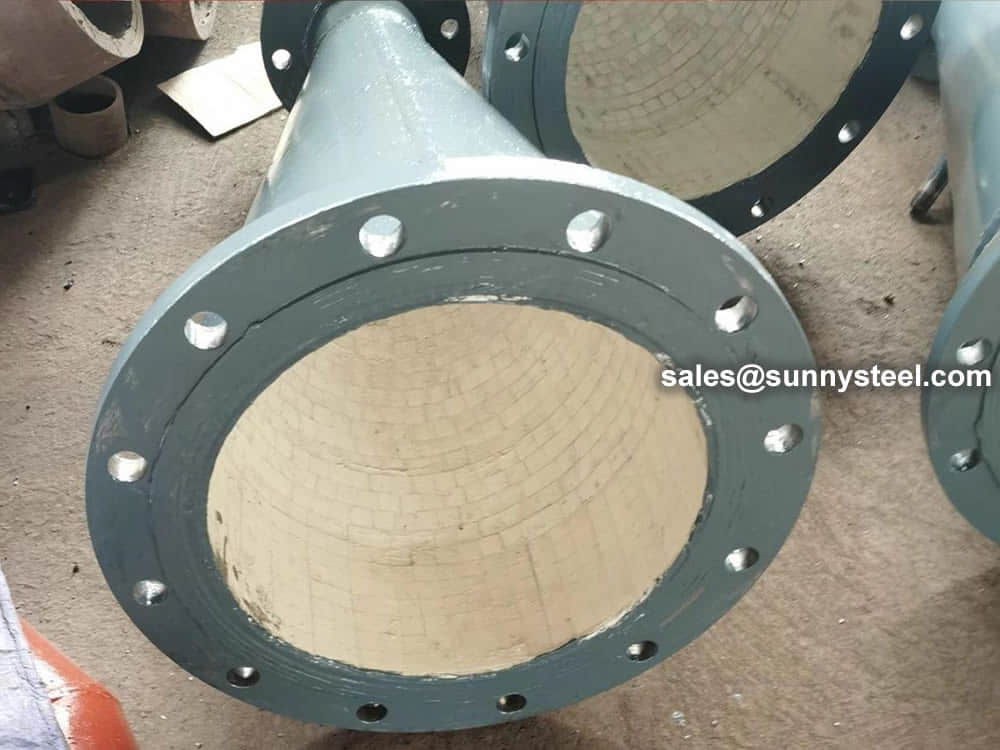
Commonly used ceramic lining configurations include ceramic blocks, dovetail-interlocked tiles, welded-stud-fixed tiles, mosaic layouts and grooved locking systems. These designs deliver excellent wear resistance and significantly extend equipment service life in abrasive environments.
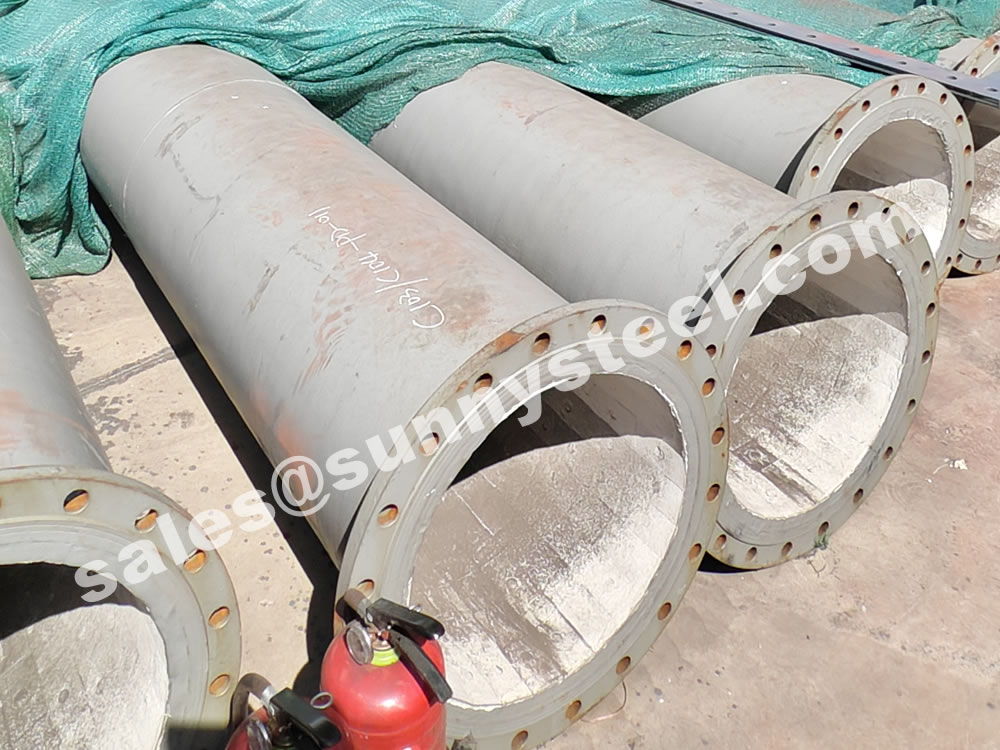
The ceramic tile is pasted on the steel pipe with high temperature wear-resistant glue to play a wear-resistant role, and the pipe is generally white. Generally used for large diameter pipes.
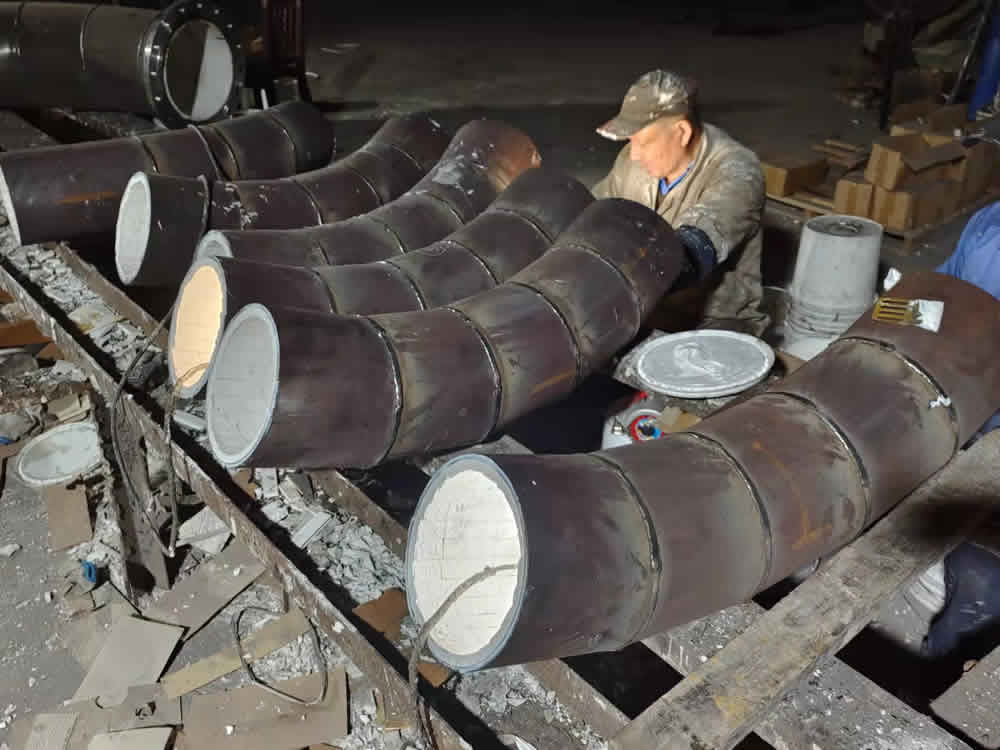
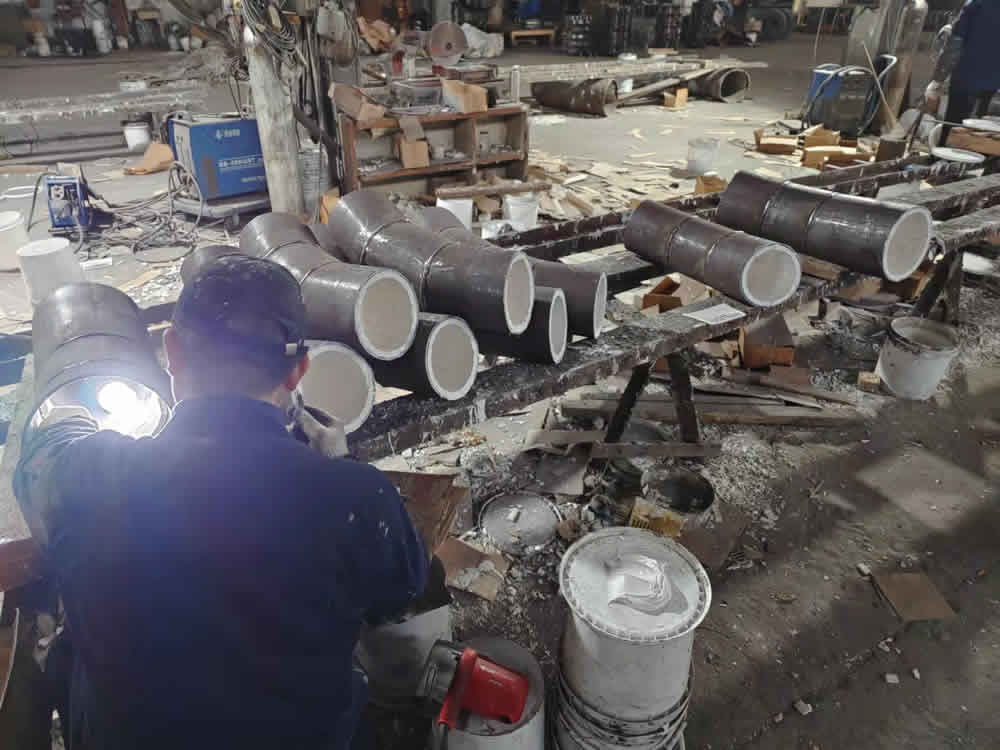
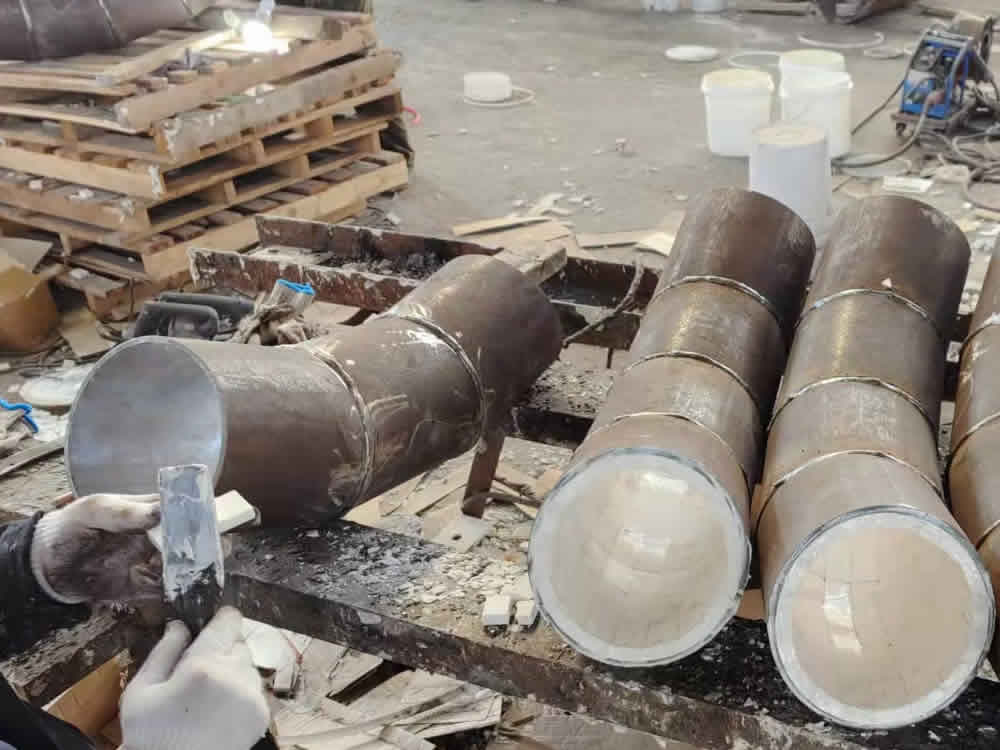
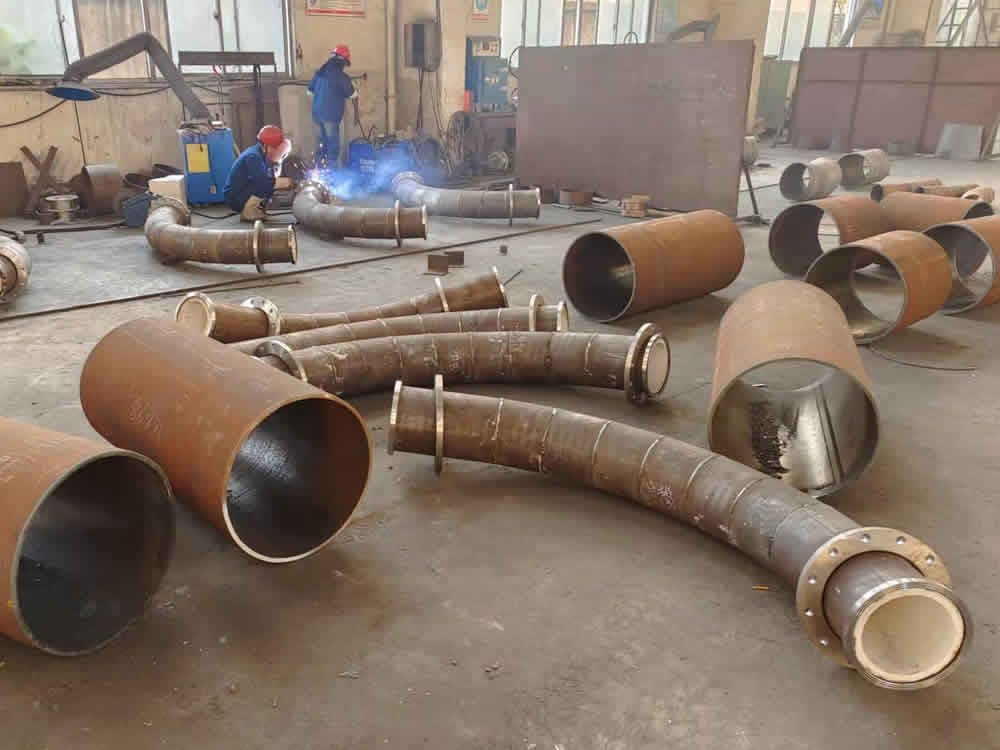
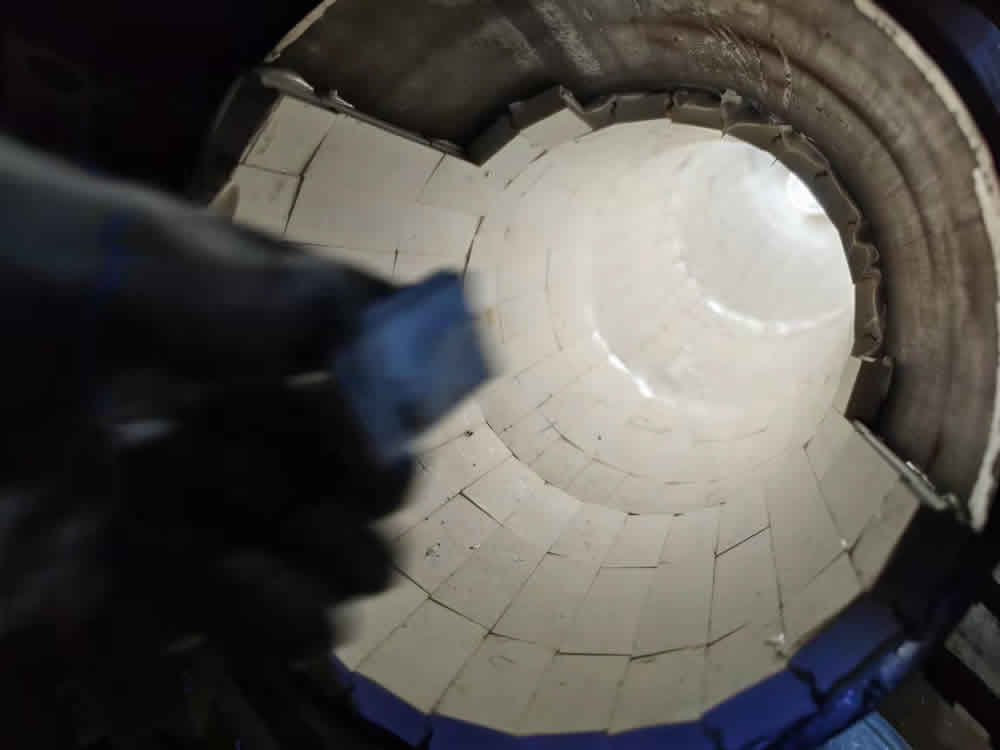
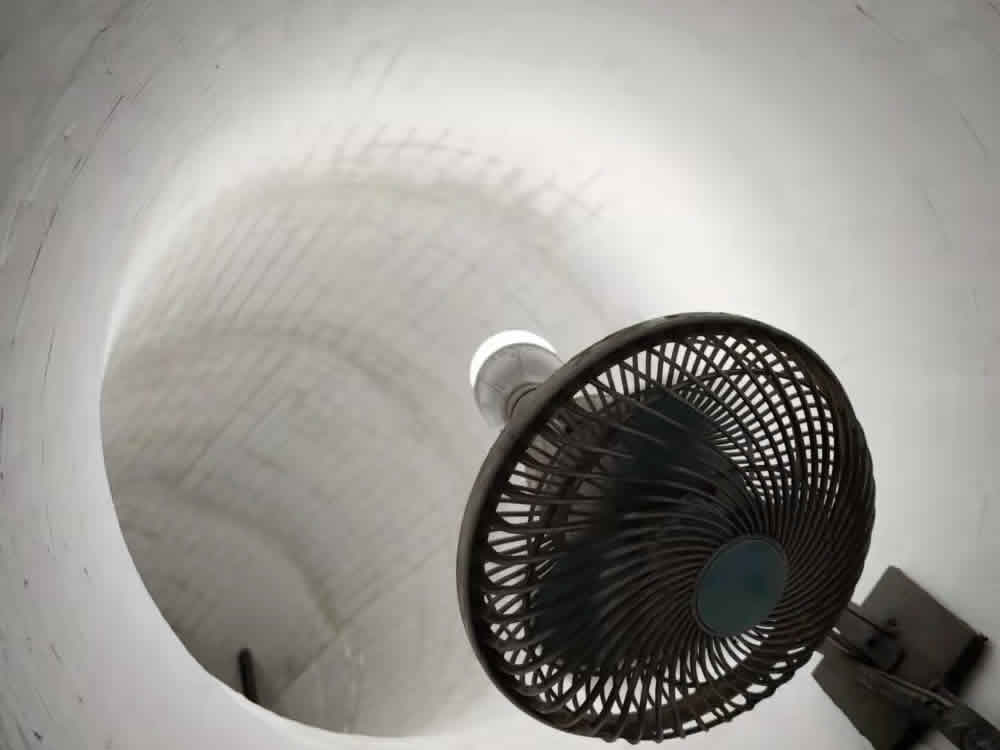
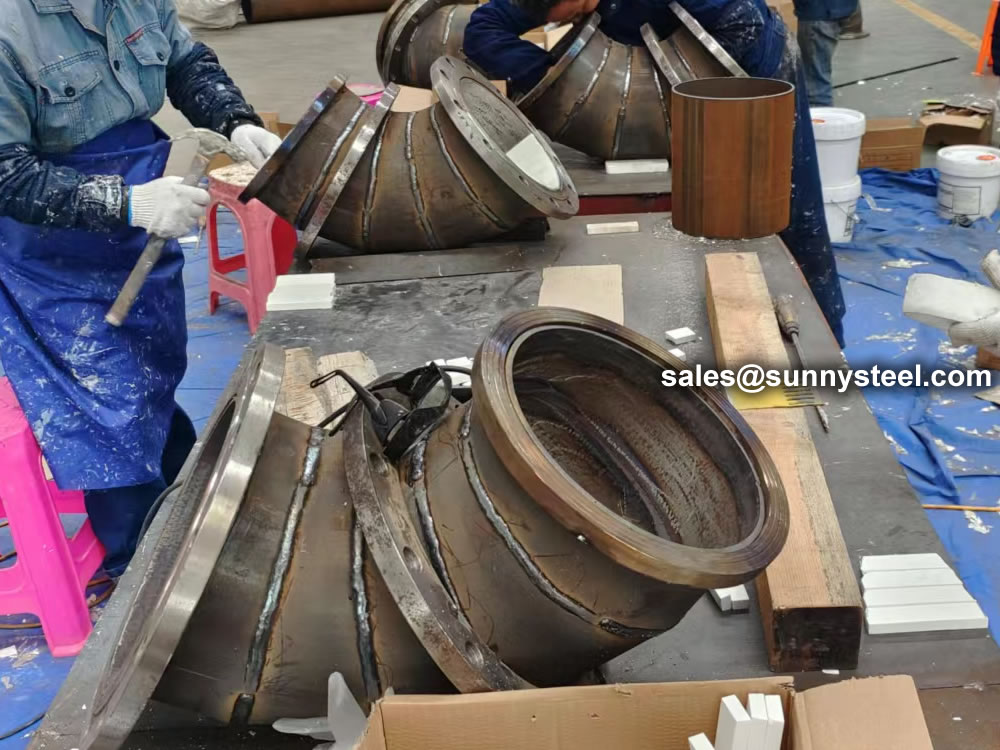
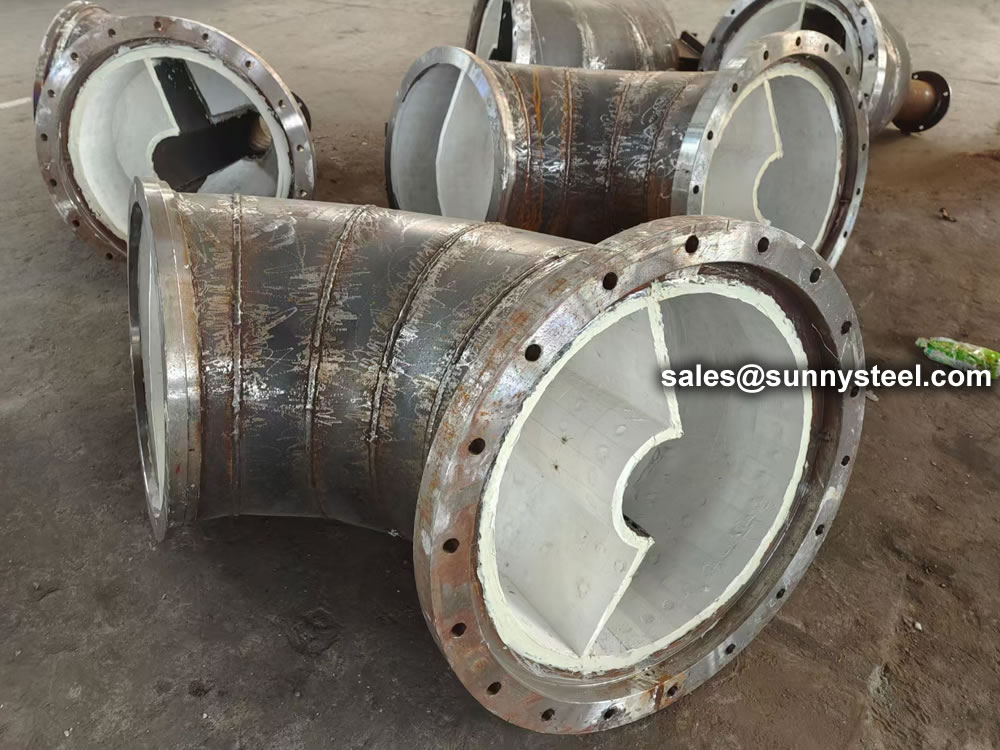
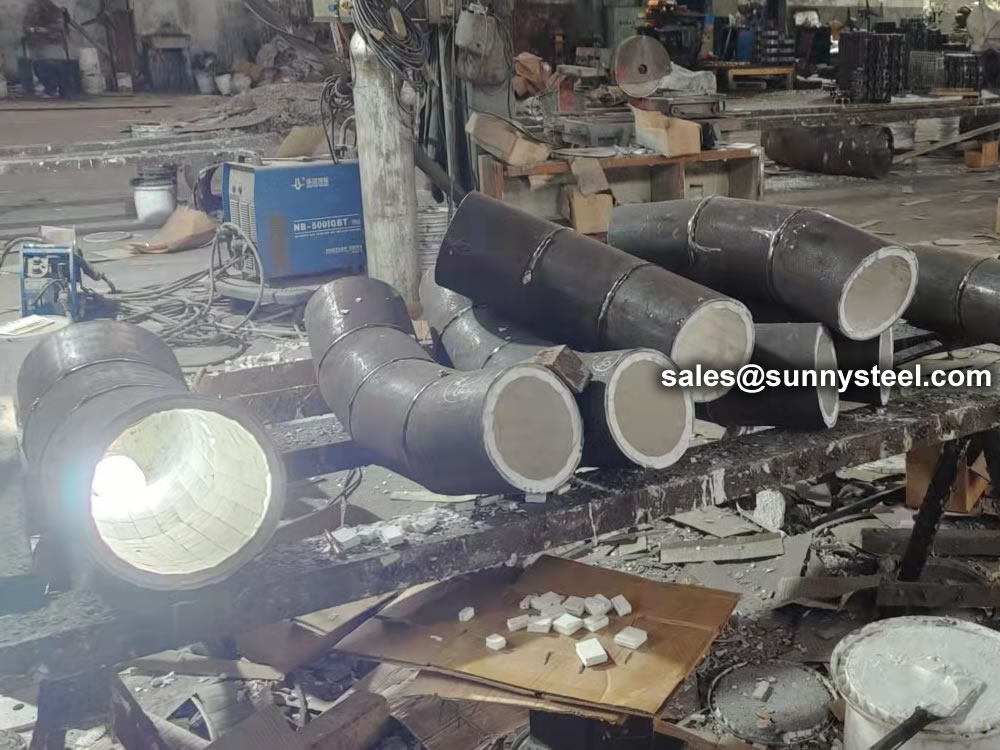
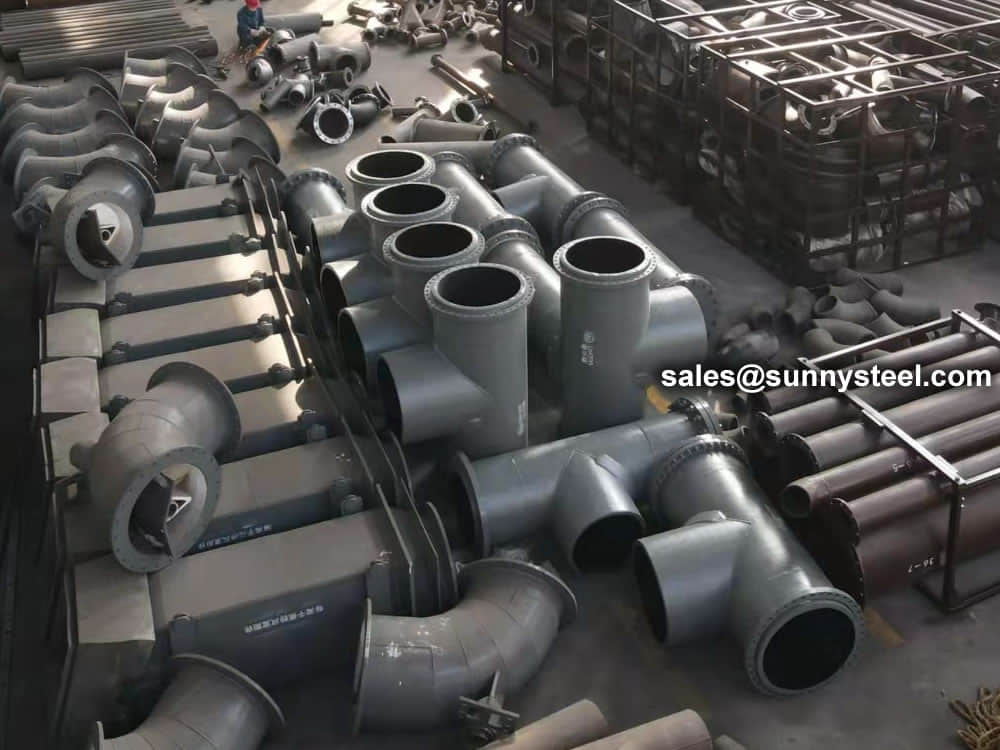
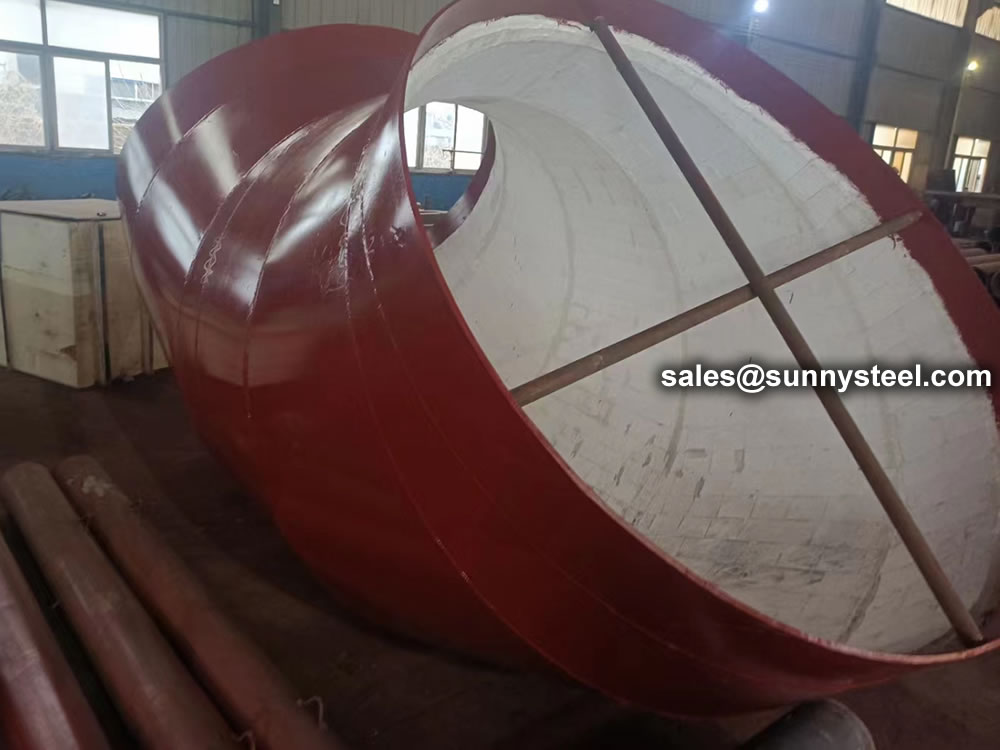
Bends and other profile sections can be clad in whole and this process has changed the traditional practice to fabricate bend and other profile sections by drawing polyline without changing flow pattern of material inside piping, greatly reducing conveyance resistance of material.
The ceramic tiles are pasted to the inner wall of the steel pipe with high temperature wear-resistant glue to play a wear-resistant role.
| No. | Process | Standard | Inspection |
|---|---|---|---|
| 1 | Cleaning the inner surface of the fitting | Clean up all the rubbish and floating ash on the inner surface of construction equipment and pipe fittings. | Checked by the construction supervisor. |
| 2 | Rust removal, oil removal, paint removal | The rust, grease, and paint on the bonding surface must be completely removed without leaving any traces. Use iron sand skin, angle grinder, and soft sand skin to polish to see the metallic luster. After cleaning, wipe the surface with a cloth until there is no trace of dirt. | After the inspection and acceptance by the quality inspector, the construction of the next process can be carried out. |
| 3 | Formulated Adhesives | It must be measured in strict accordance with the prescribed proportion, and how much should be used; it must be stirred evenly, and the overall mixing should not be less than 4 times; if the mixed embedded material is added, the binder must be mixed well before adding the mixture and mixing Not less than 3 times. | Assigned by designated personnel. |
| 4 | Repair of the adhesive surface | If there are potholes on the pasting surface, especially if there are large potholes on the pasting surface of the old equipment, the wear-resistant ceramic sheet must be gradually filled with embedded materials. | After the inspection and acceptance by the quality inspector, the construction of the next process can be carried out. |
| 5 | Paste wear-resistant ceramic tiles | There should be no dust or dirt on the surface of the ceramic tiles. The surface of the repaired inlay material must be leveled. The pasting surface must be wiped again. Scrape the adhesive on the pasting surface for 1-2 times and scrape it flat. Scrape the back of the ceramic sheet for 1 It is necessary to ensure that there is a certain thickness of uniform adhesive available for pasting. | Checked by the person in charge of the construction of the pasted ceramic tiles. |
| 6 | Repair of gaps and corners between ceramic tiles | The gaps exceeding 3 mm must be repaired with wear-resistant and anti-corrosion fillers, the edges and corners must be neat, and the bevels must be trimmed with special ceramic tiles and then filled with fillers. | After the repair, the person in charge of the construction and the quality inspector will conduct a comprehensive quality inspection, and submit it to Party A for acceptance after passing the inspection. |
| 7 | Maintenance time | After construction and repair are completed, it can be put into use after natural maintenance for more than 12 hours after acceptance by Party A. |
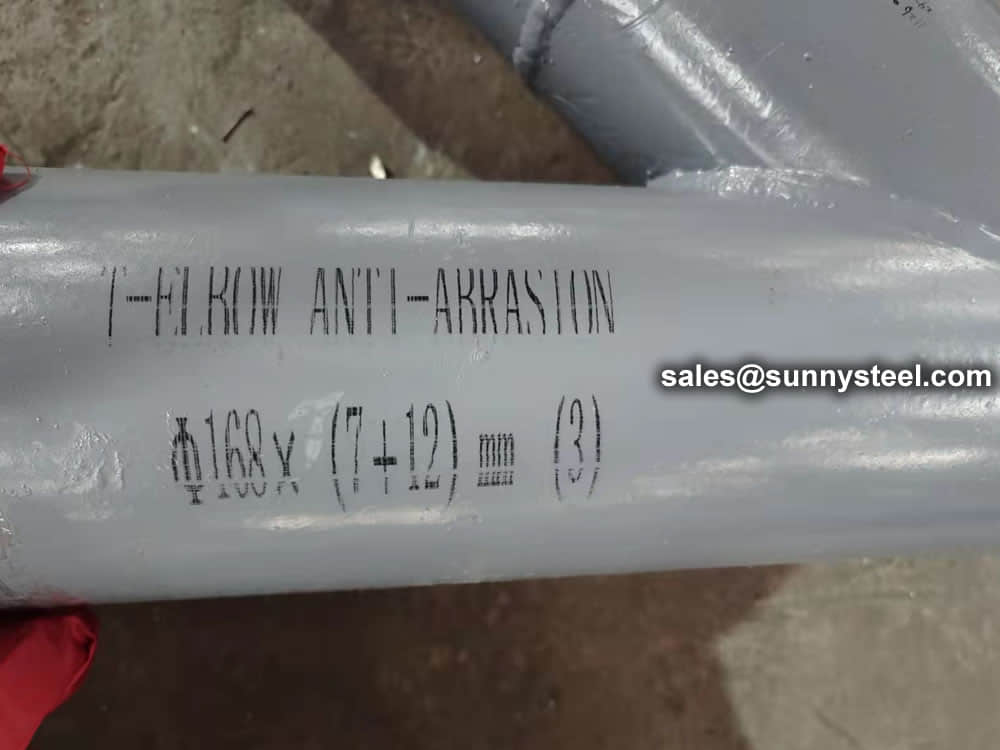
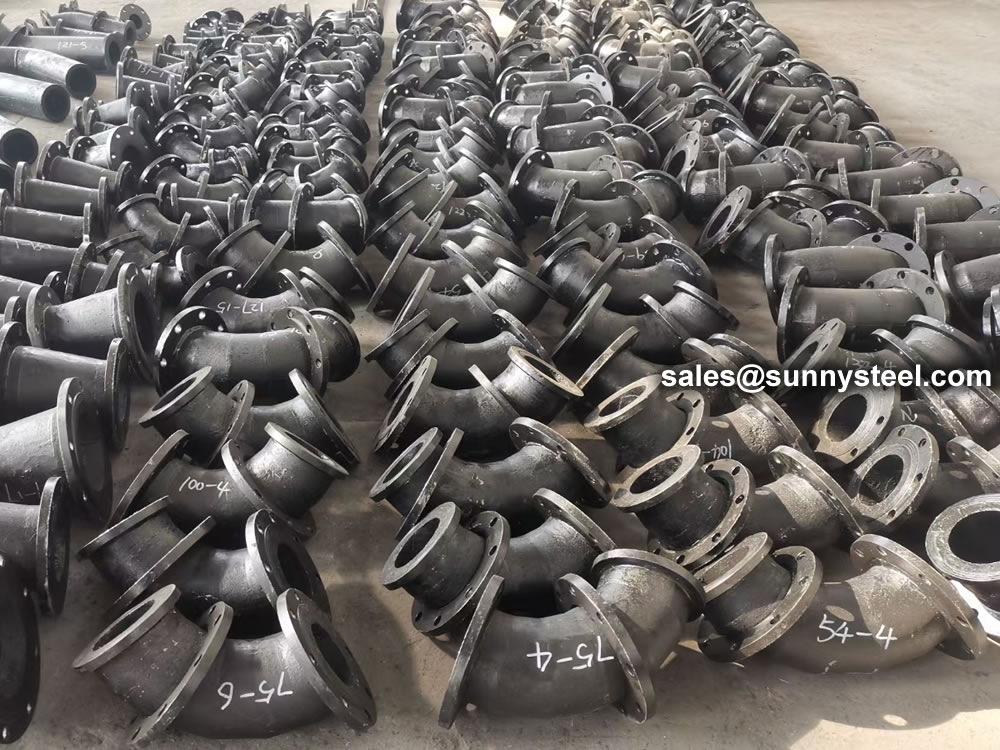
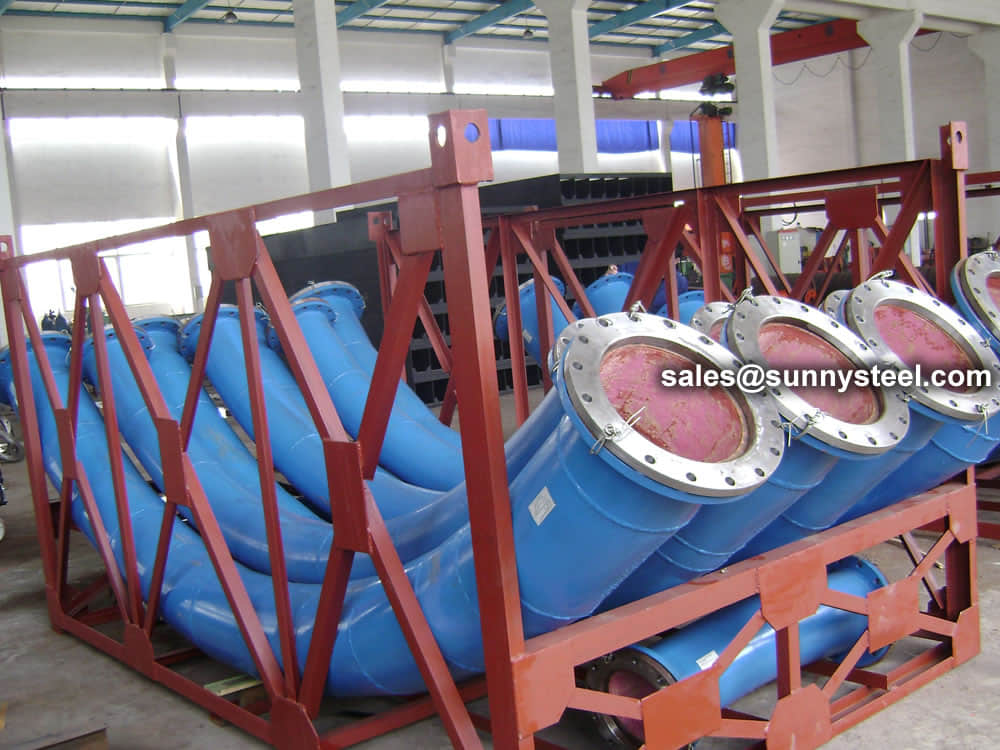
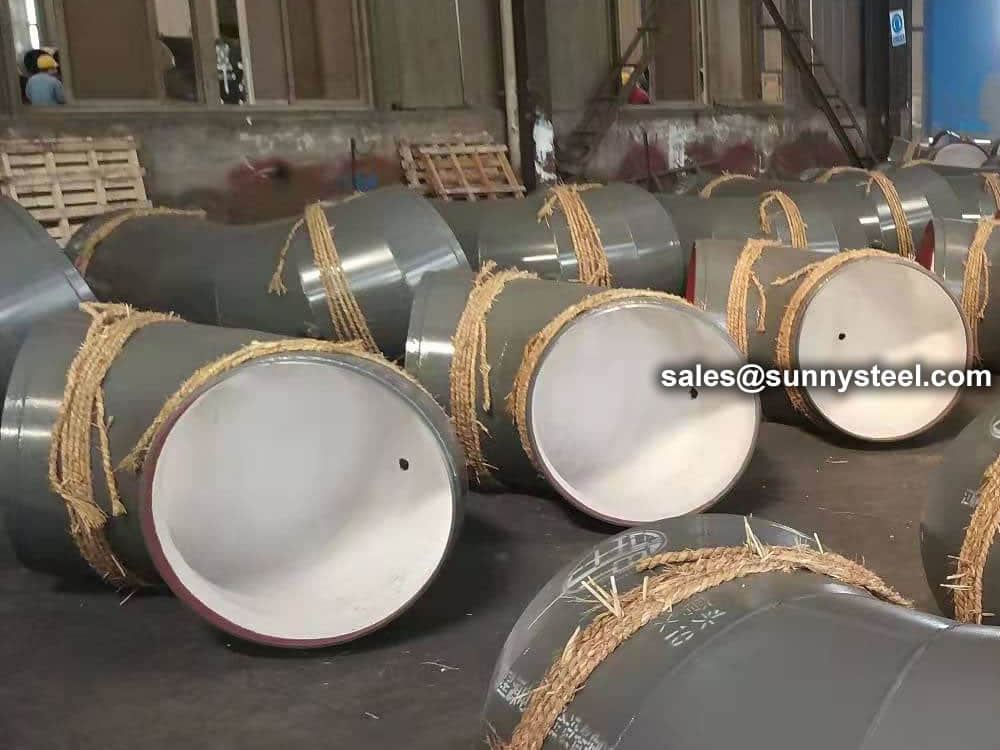
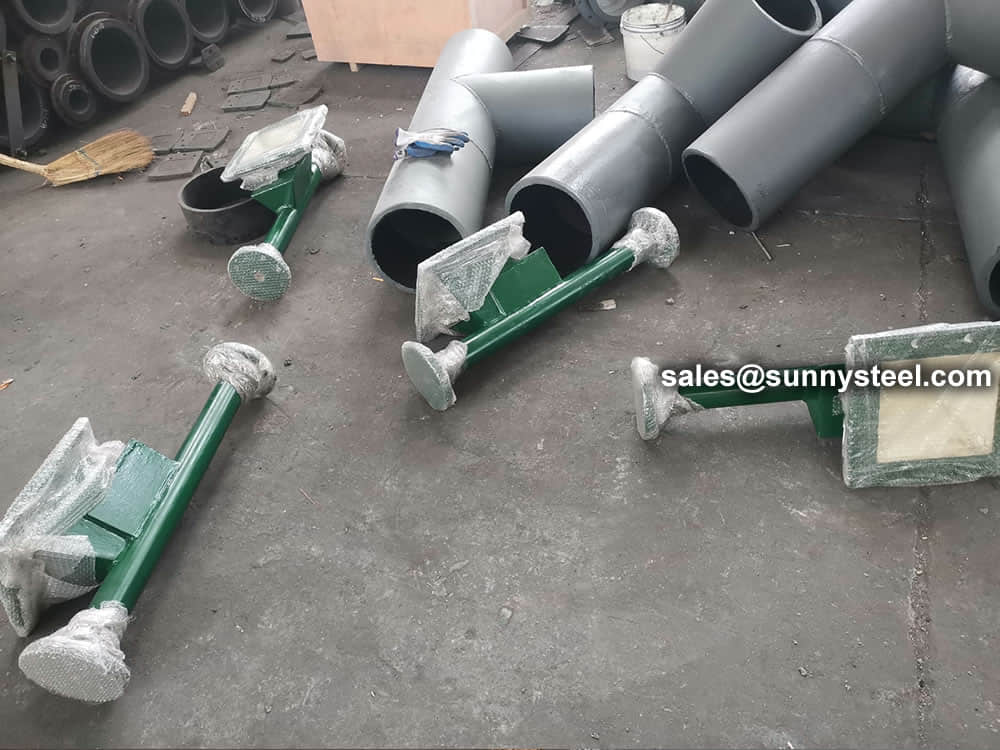
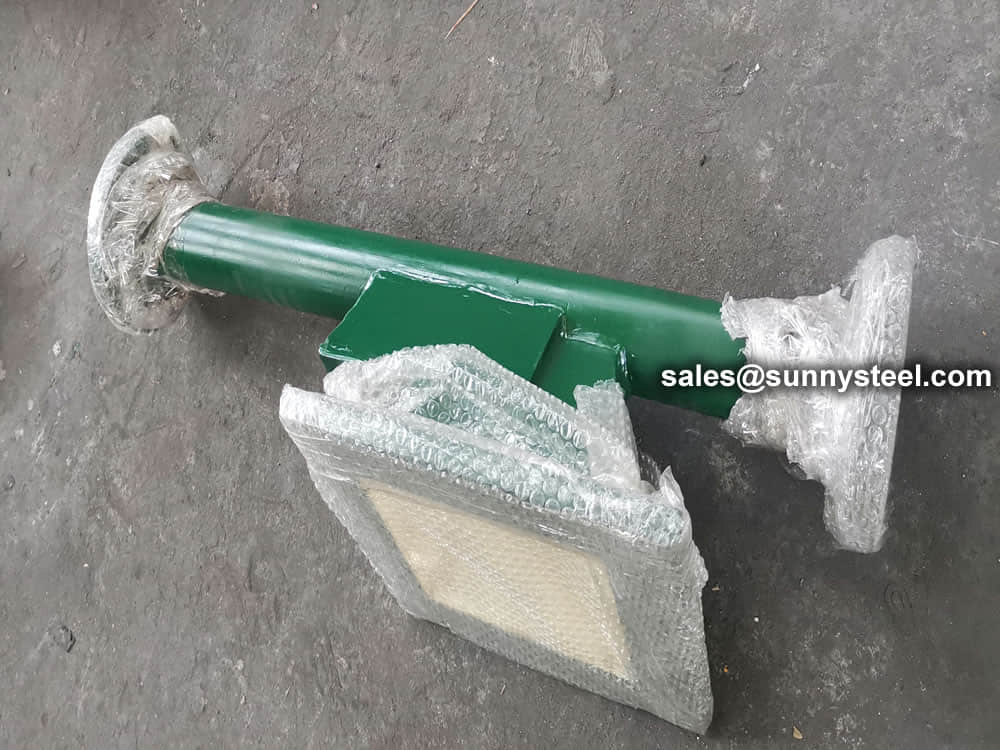
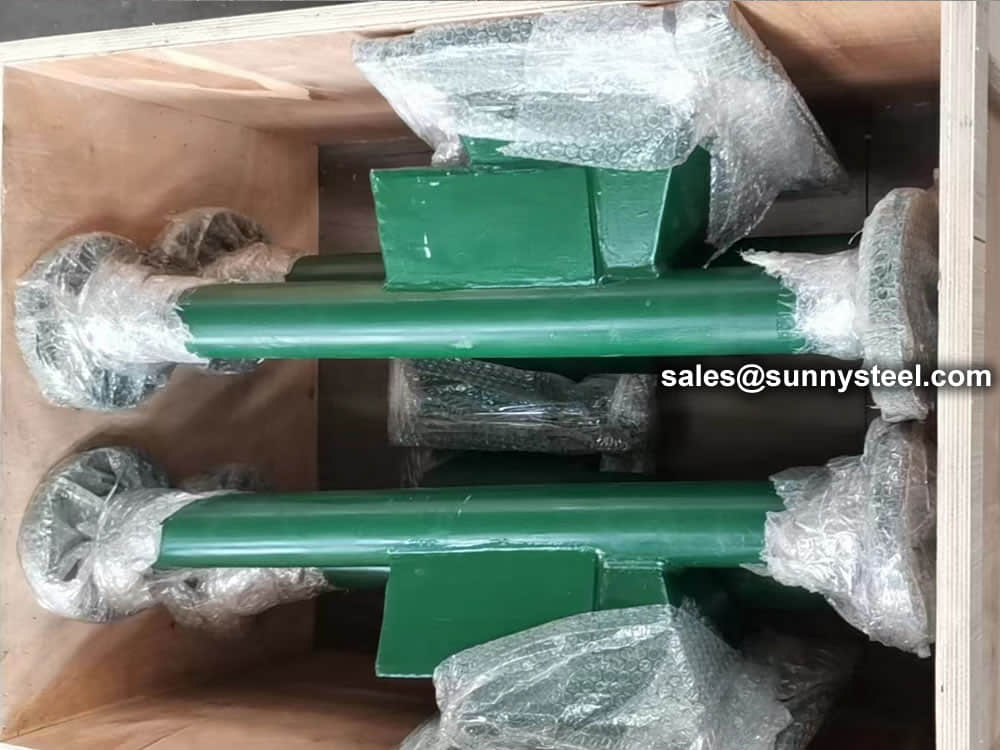
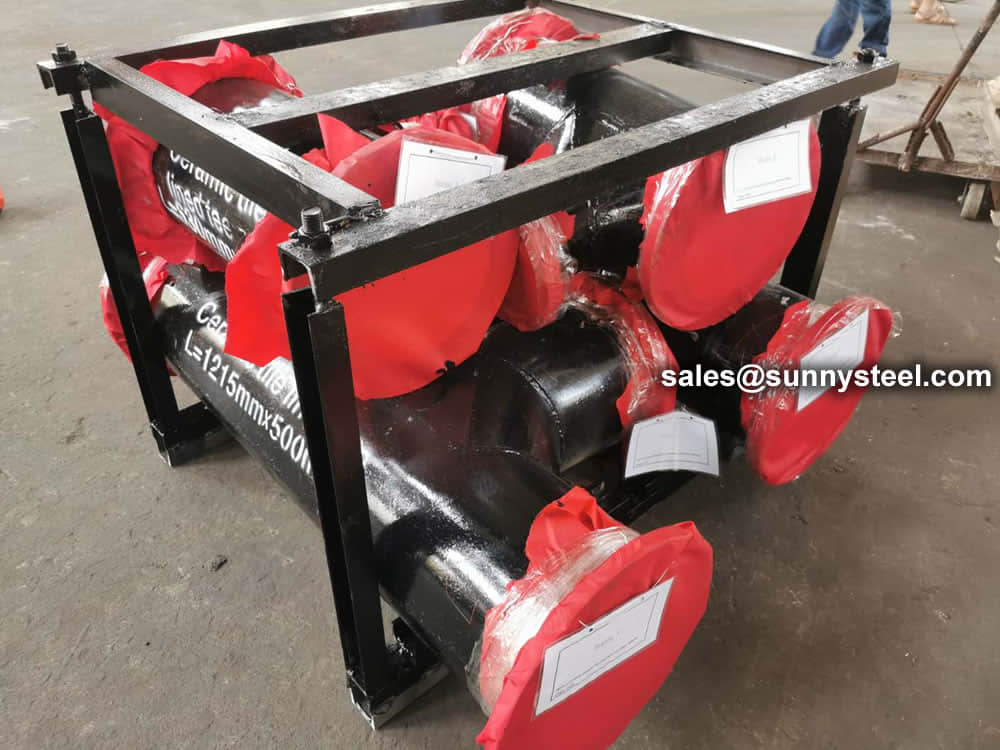
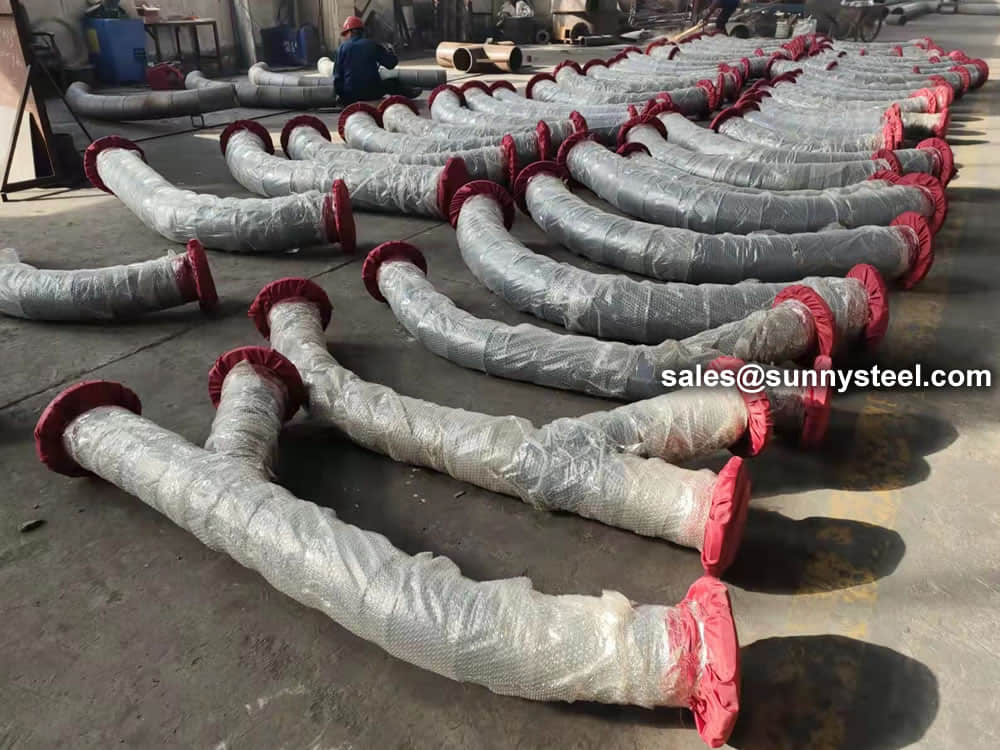
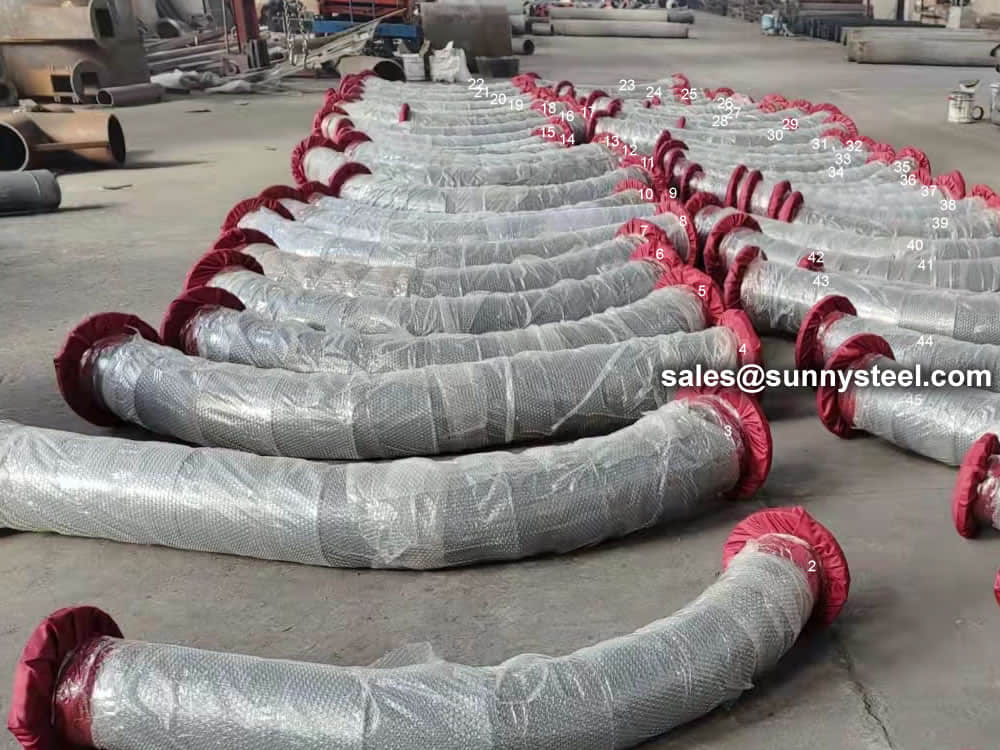
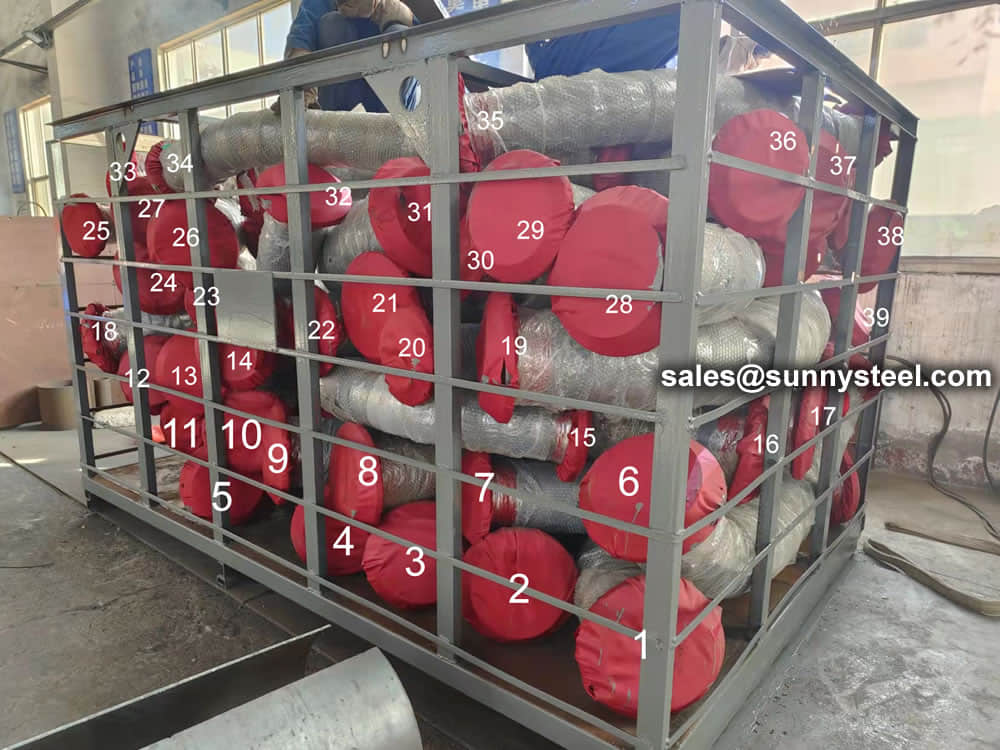
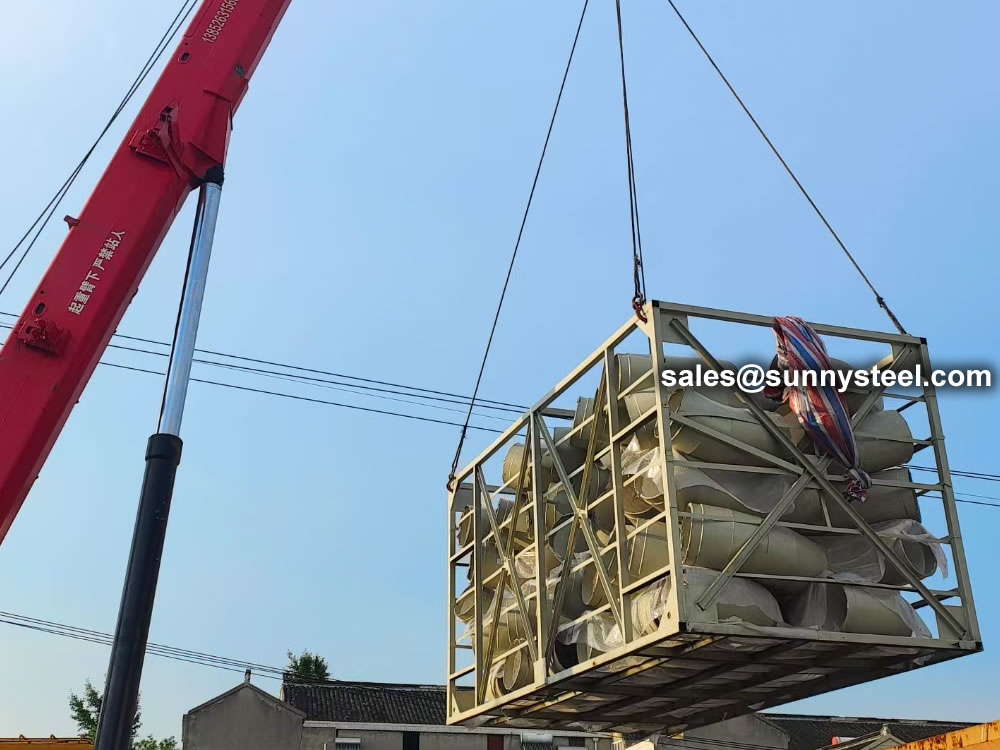
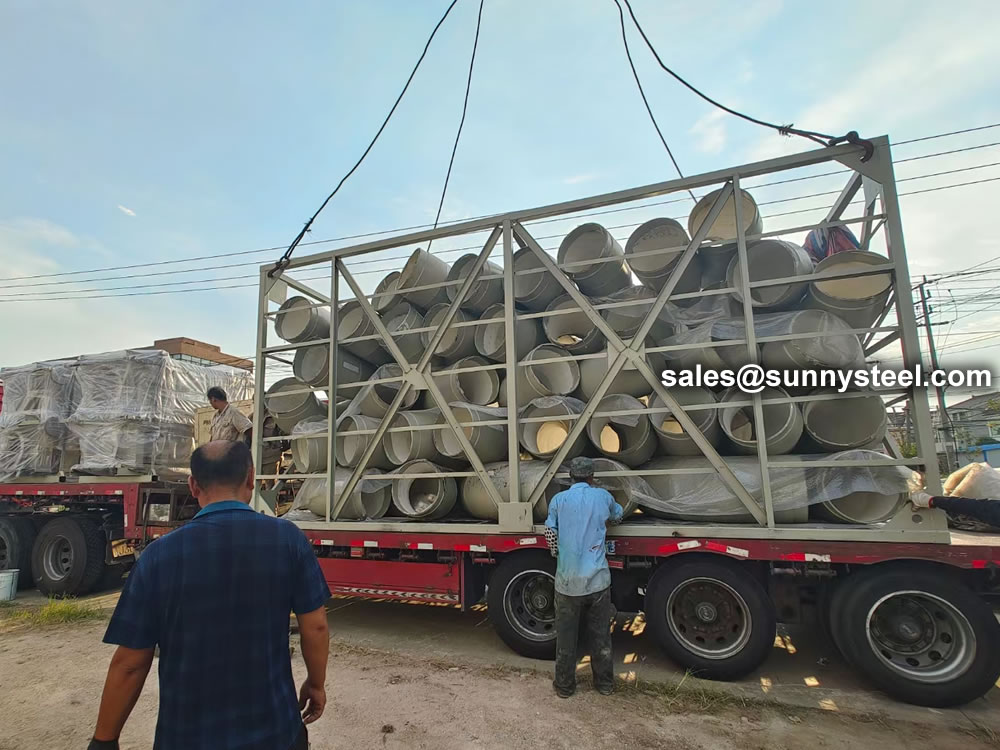
There are probably hundreds of different methods for packing a abrasion resistant pipe and Elbows, and most of them have merit, but there are two principles that are vital for any method to work prevent rusting and Sea transportation security.
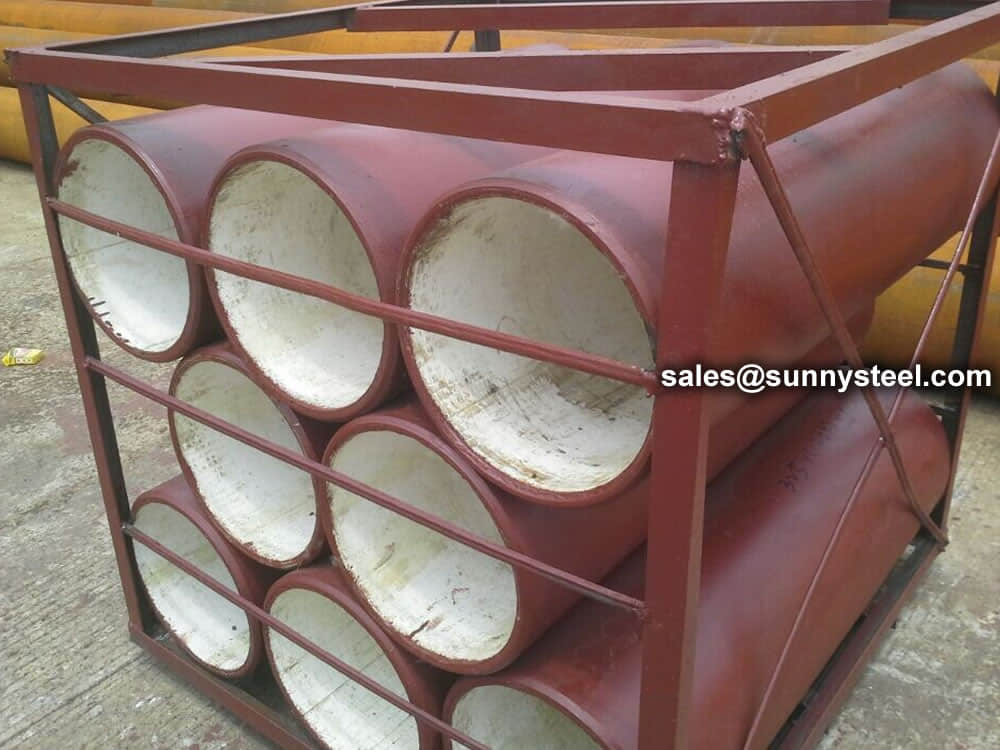
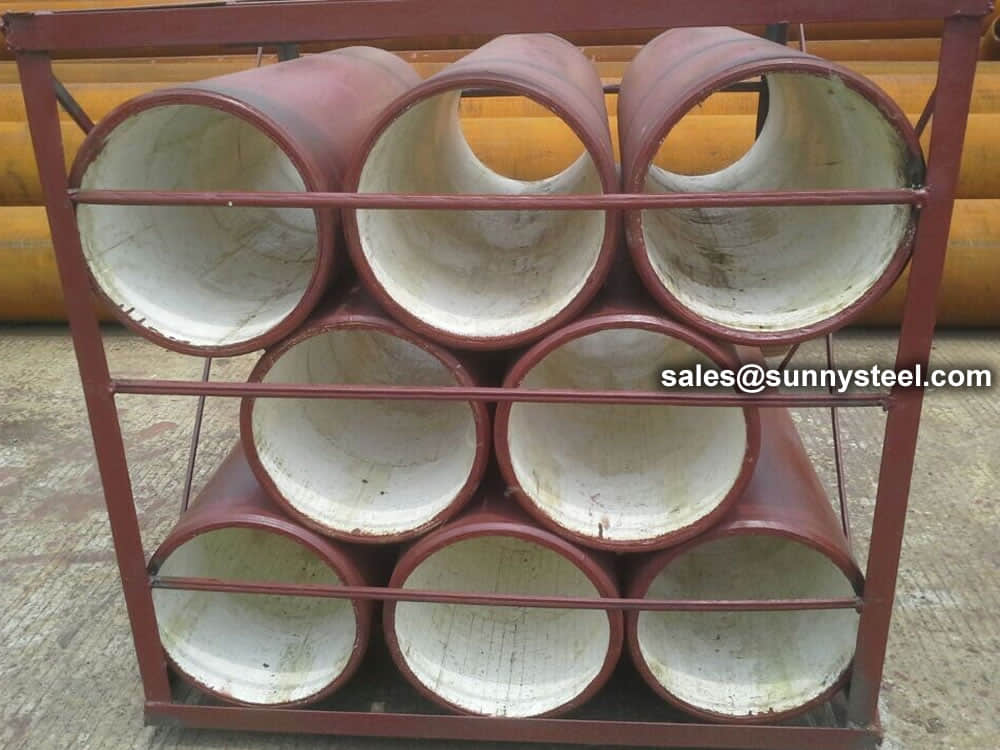
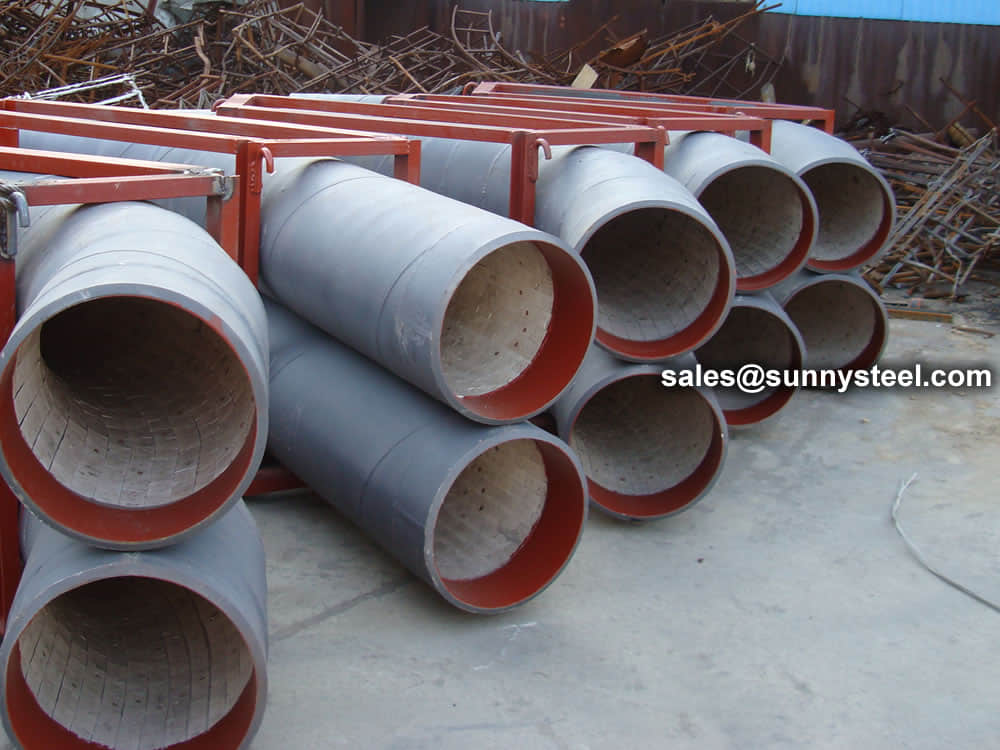

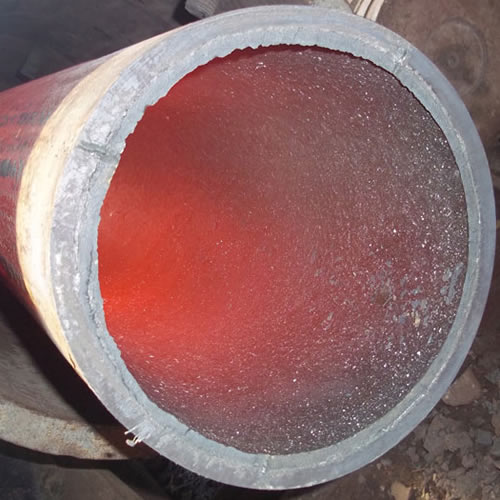
Ceramic lined pipe is made through self-propagating high-temperature synthesis (SHS) technique.
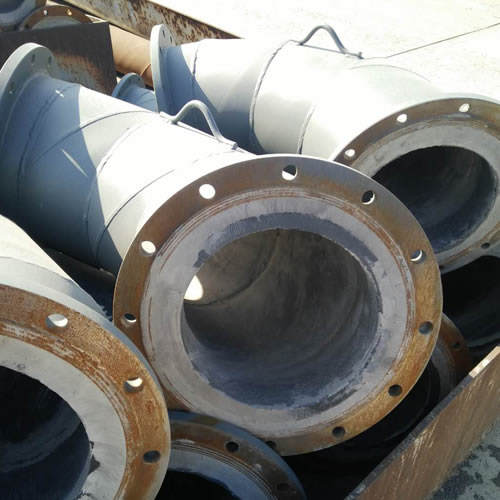
Cast basalt lined steel pipe is composed by lined with cast basalt pipe, outside steel pipe and cement mortar filling between the two layers.
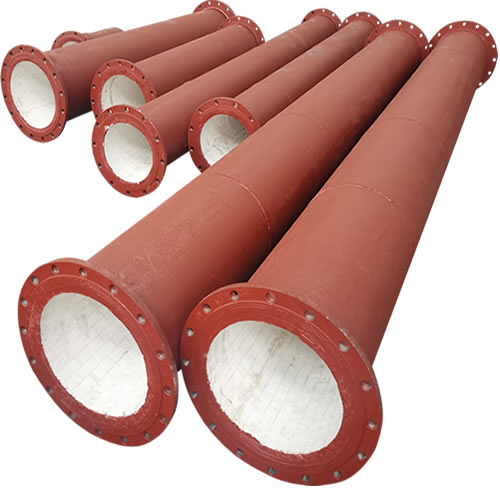
Ceramic tile lined pipes have very uniform coating of specially formulated ceramic material that is affixed to the inner of the pipe.
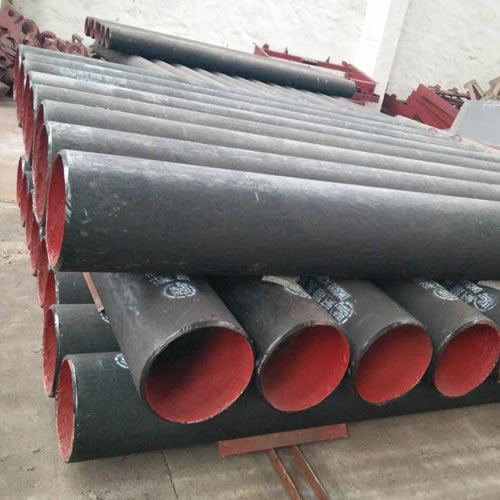
The material of the rare earth alloy wear-resistant pipe is ZG40CrMnMoNiSiRe, which is also the grade of rare earth alloy steel.
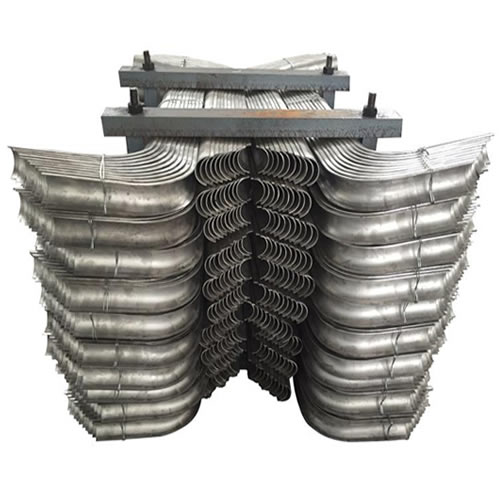
Tubes Erosion Shields are used to protect boiler tubing from the highly erosive effects of high temperatures and pressures thereby greatly extending tube life.
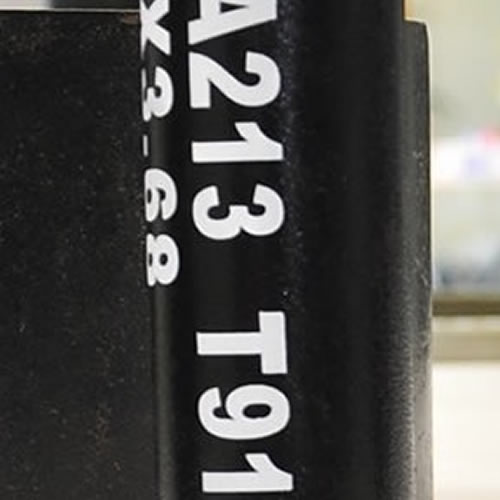
The ASTM A213 T91 seamless tubes are primarily used for boiler, superheater, and heat-exchanger.

When you partner with Sunny Steel, you can stop worrying about meeting deadlines thanks to our responsive and timely service. You'll also say goodbye to unnecessary shopping around. Instead, you'll get white glove service from an expert who understands your needs and can get you the materials you need quickly.