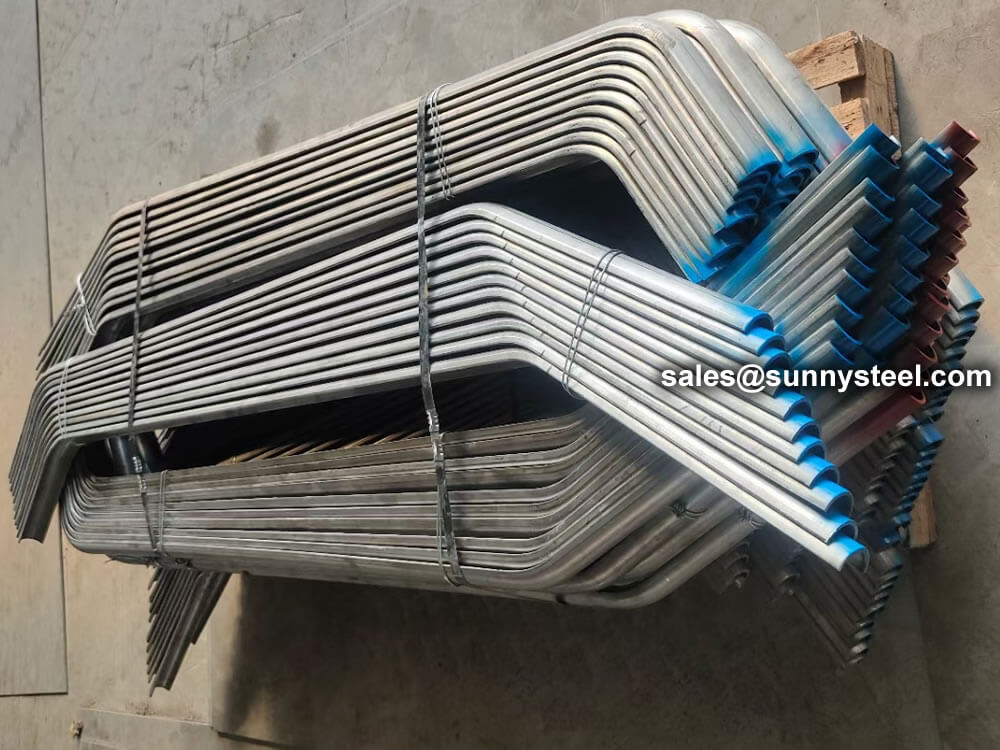
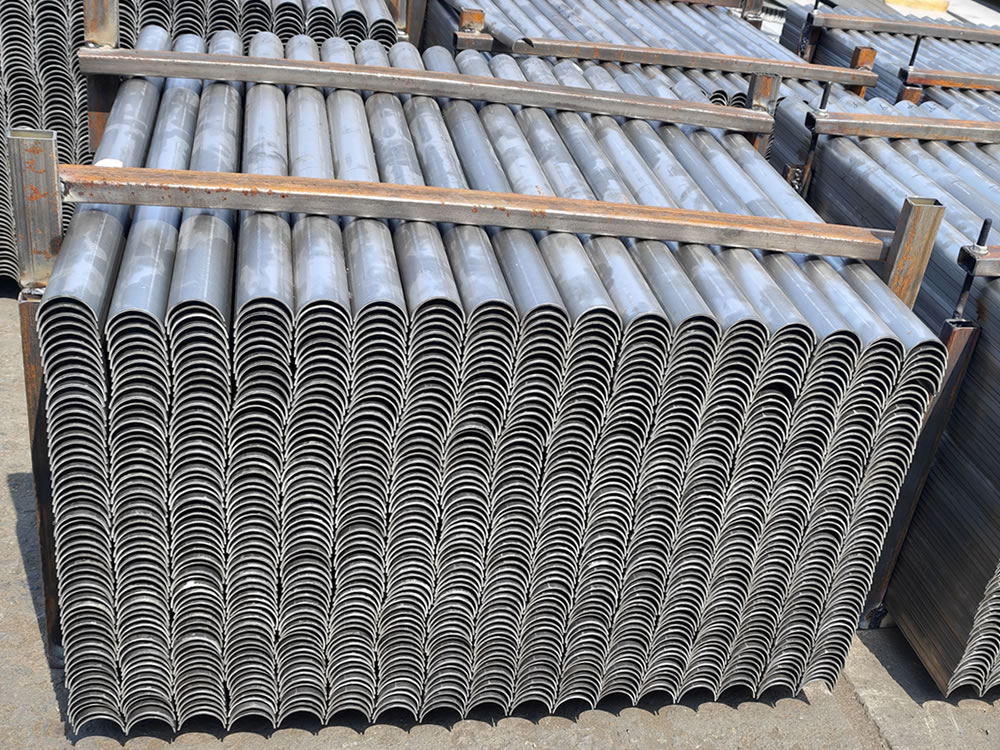
SS430 Tube Shields
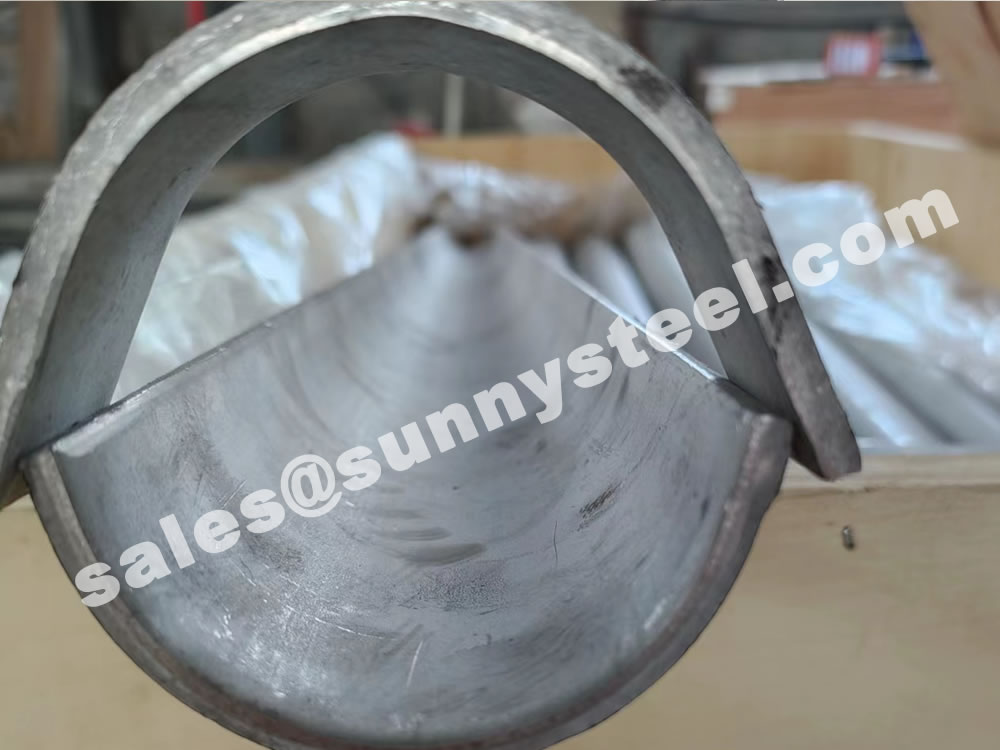
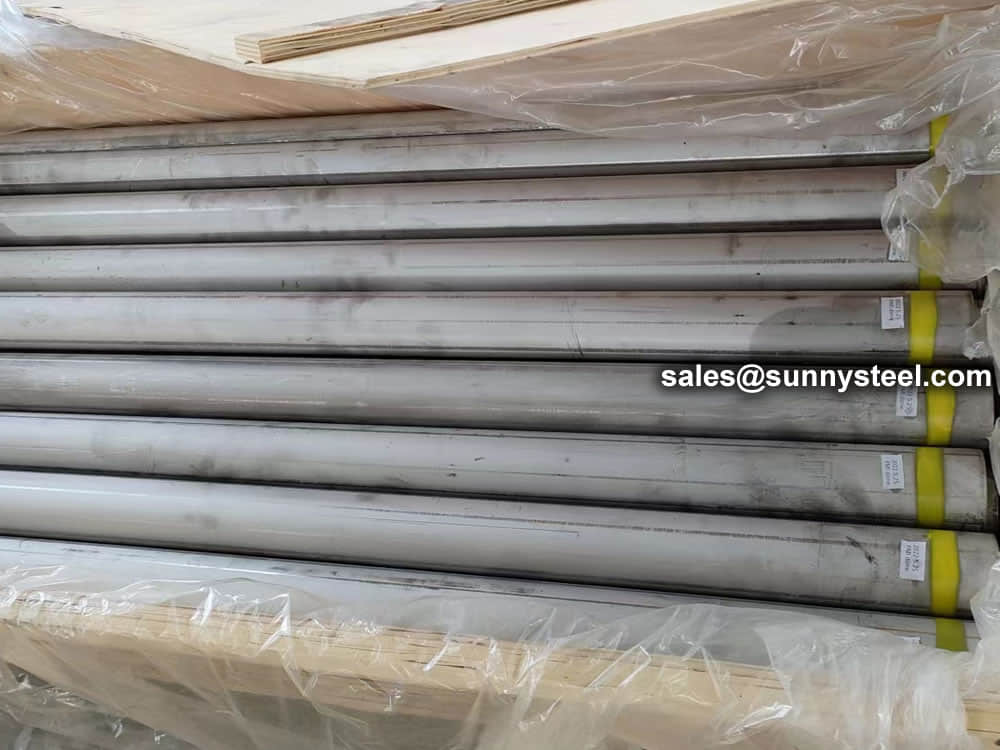
Nickel-free ferritic SS430 half round tube shields, outstanding stress corrosion cracking resistance and high-temperature oxidation performance for clean low-sulfur boiler economizer & low temp superheater protection.
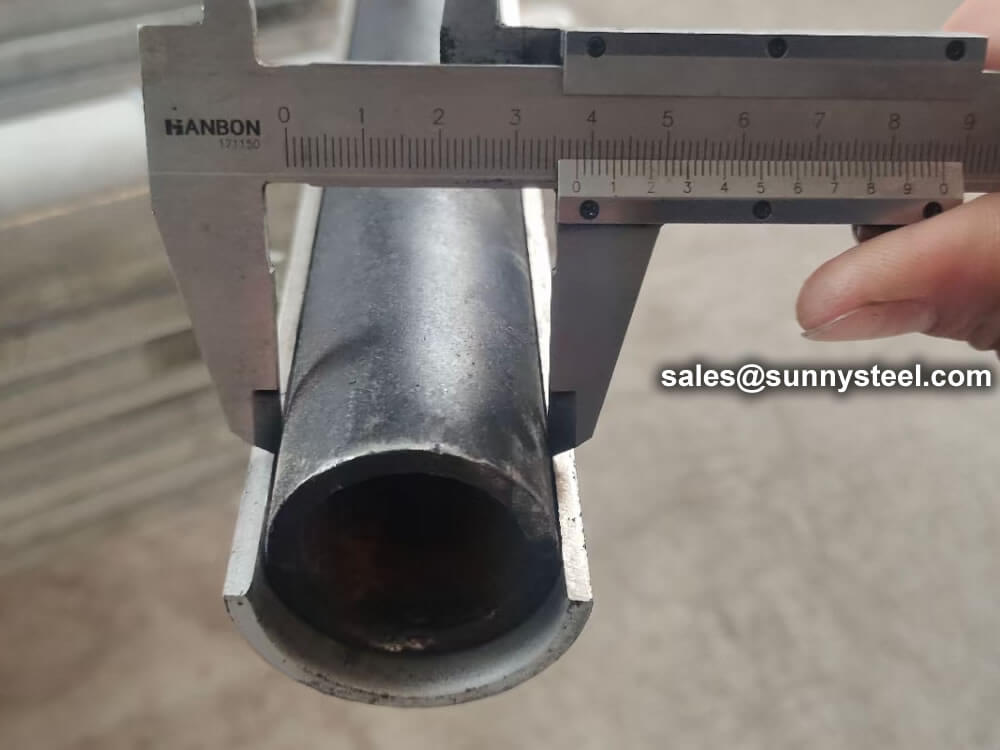
1Cr18Ni9Ti Tube Shields made of stainless steel provide robust protection against erosion and wear for boiler tubes. These shields are customizable and ensure durability in high-temperature environments.
Download PDFStainless steel 1Cr18Ni9Ti is the common stainless steel (SUS321), its structure category for the austenitic body type. In 1Cr18Ni9Ti, 1, 18 and 9 respectively represent the contents of carbon (1/1000), chromium (%) and nickel (%). It is made of stainless steel from China.
GB standard material 1Cr18Ni9Ti belongs to the China, from the steel to the finished product, we have the perfect technology and many years of accumulation of experience, we can now produce products include steel coil, sheet, plate, round bar, square steel, steel wire, steel pipe, forgings, other…
The development of 1Cr18Ni9Ti stems from the issue of intergranular corrosion in stainless steel tubes. Historically, early 304 stainless steel with high carbon content led to severe intergranular corrosion, causing significant accidents, particularly in chemical enterprises. Research revealed that the precipitation of Cr23C6 was the primary cause of this corrosion.
To combat intergranular corrosion, two approaches were employed: reducing carbon content or forming compounds with carbon. During early production, carbon content could not be reduced below 0.08%, so titanium was added to 18-8 steel to prevent Cr23C6 precipitation. This innovation led to the creation of 1Cr18Ni9Ti stainless steel, where titanium forms TiC to prevent corrosion effectively.
However, advancements in smelting technology have made low-carbon and ultra-low-carbon stainless steels (like 0Cr18Ni9 or 304) more accessible. As a result, 1Cr18Ni9Ti has been gradually replaced. While its use is now limited in foreign markets, it remains in specific applications in China, particularly in state-owned enterprises and arsenals.
Stainless steel 1Cr18Ni9Ti is the common stainless steel (SUS321), its structure category for the austenitic body type. In 1Cr18Ni9Ti, 1, 18 and 9 respectively represent the contents of carbon (1/1000), chromium (%) and nickel (%). It is made of stainless steel from China.
| Element | Content (%) |
|---|---|
| Carbon (C) | ≤ 0.12 |
| Silicon (Si) | ≤ 1.00 |
| Manganese (Mn) | ≤ 2.00 |
| Phosphorus (P) | ≤ 0.035 |
| Sulfur (S) | ≤ 0.030 |
| Chromium (Cr) | 17.00–19.00 |
| Nickel (Ni) | 9.00–12.00 |
| Titanium (Ti) | ≥ 5 × C |
| Property | Value | Unit |
|---|---|---|
| Tensile Strength | ≥ 520 | MPa |
| Yield Strength | ≥ 205 | MPa |
| Elongation | ≥ 40 | % |
| Hardness | ≤ 187 | HB |
Stainless steel grades 1Cr18Ni9Ti (321) and 0Cr18Ni9 (304) are both austenitic stainless steels with similar compositions but notable differences in performance and applications due to their alloying elements and properties.
| Property | 1Cr18Ni9Ti (321) | 0Cr18Ni9 (304) |
|---|---|---|
| Stabilizer | Titanium (Ti) | None |
| Corrosion Resistance | High (Intergranular) | Excellent (General) |
| High-Temperature Use | Superior | Moderate |
| Applications | Specialized, High-Temp | General Purpose |
| Cost | Higher | Lower |
| Aspect | 321 Stainless Steel | 304 Stainless Steel |
|---|---|---|
| Chemical Composition | Up to 0.08% Carbon, 17-19% Chromium, 9-12% Nickel, Titanium: 5*(C%-0.02) to 0.8% | Up to 0.08% Carbon, 18-20% Chromium, 8-10.5% Nickel, No Titanium |
| Tensile Strength | ≥520 MN/m² | ≥520 MN/m² |
| Yield Strength | ≥205 MN/m² | ≥205 MN/m² |
| Elongation | ≥40% | ≥40% |
| Shrinkage | ≥55% | ≥55% |
| Heat Resistance | Withstands temperatures up to 900°C | Withstands temperatures up to 800°C |
| Corrosion Resistance | Good, slightly lower than 304 due to titanium | Excellent |
| Weldability | Good, requires post-weld heat treatment to avoid cracking | Excellent, no additional treatment required |
| Applications | High-temperature environments such as aerospace and automotive | General-purpose applications in chemical and food industries |
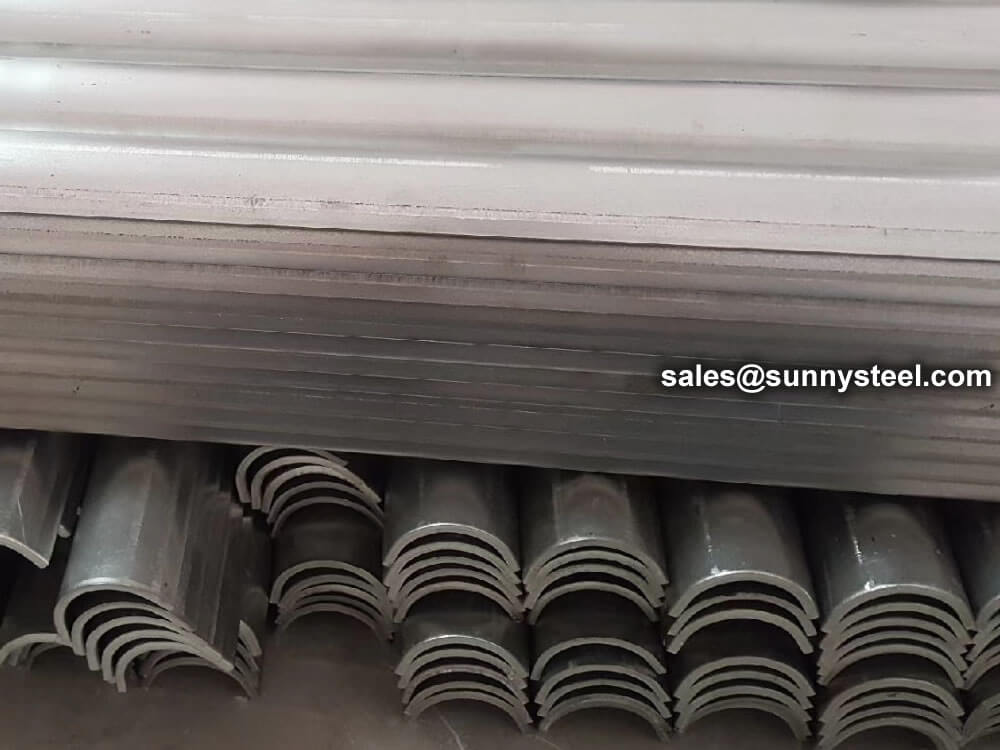
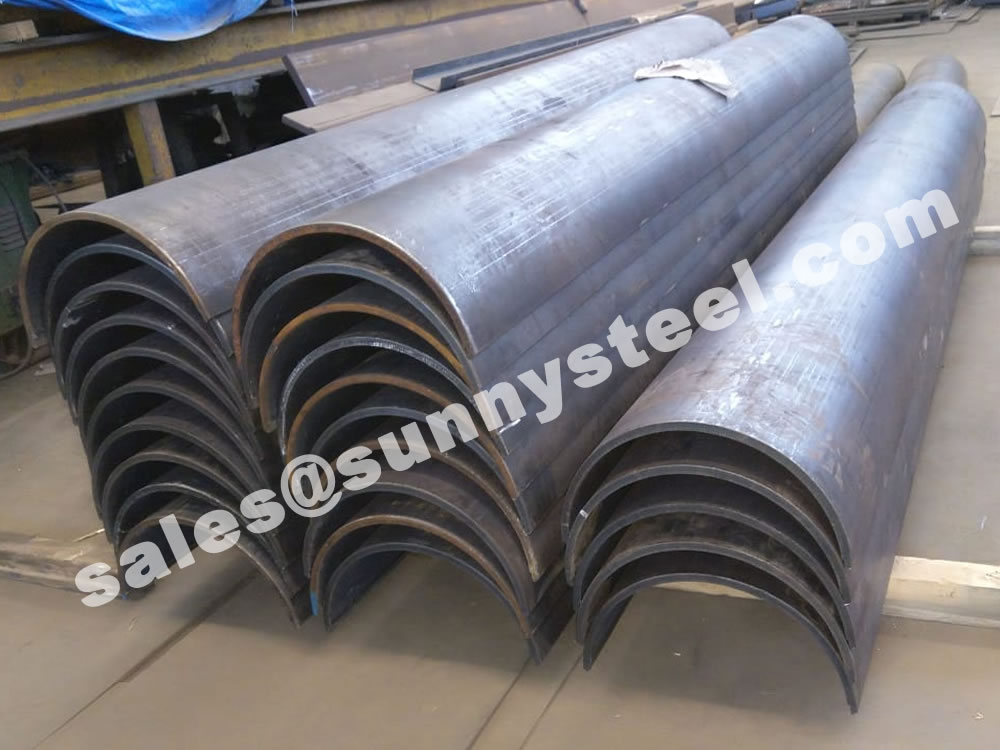
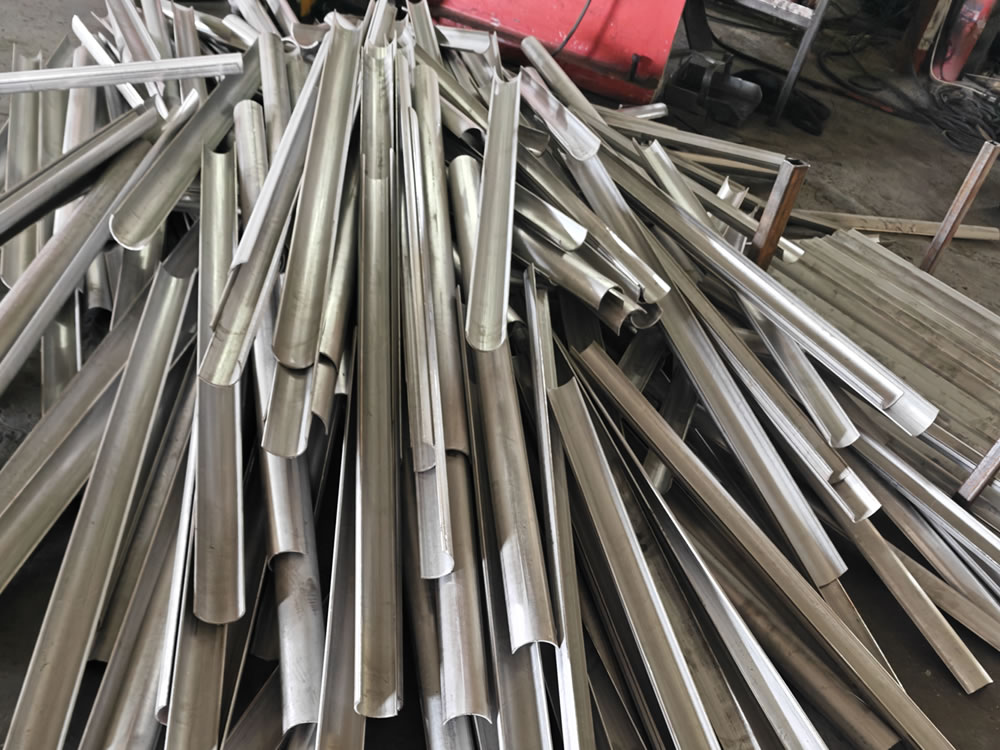
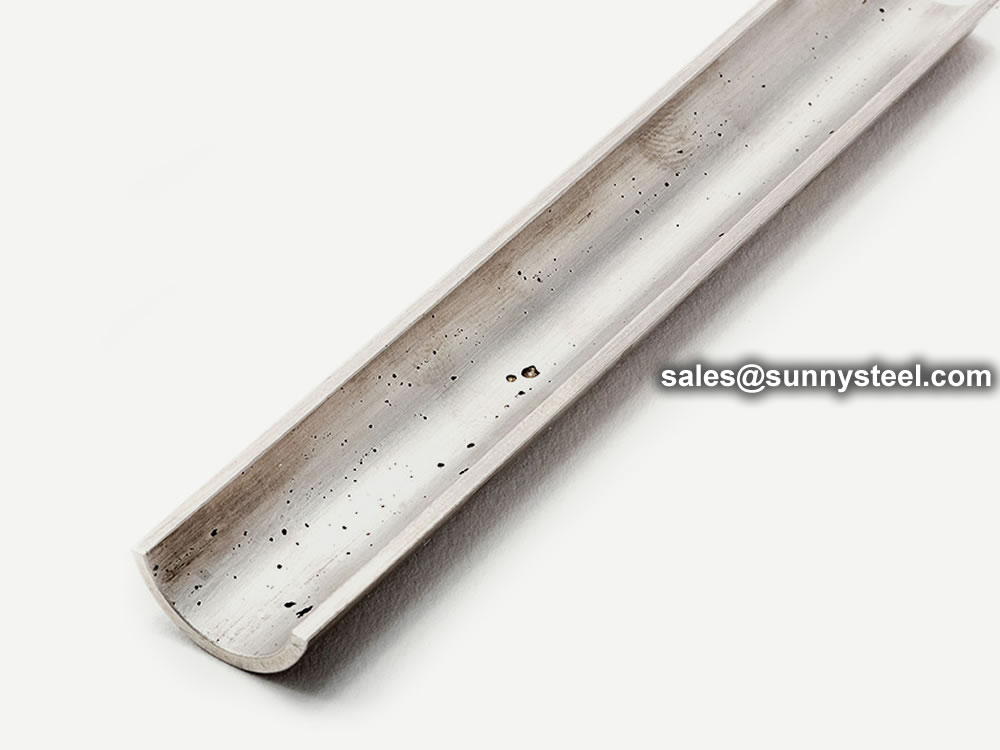
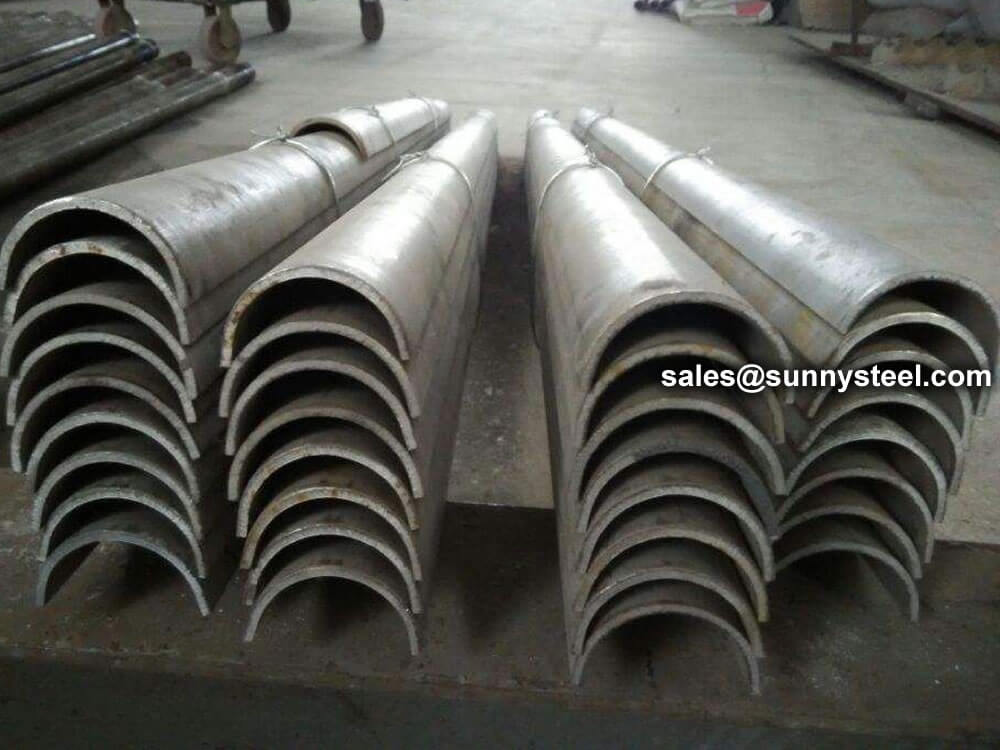
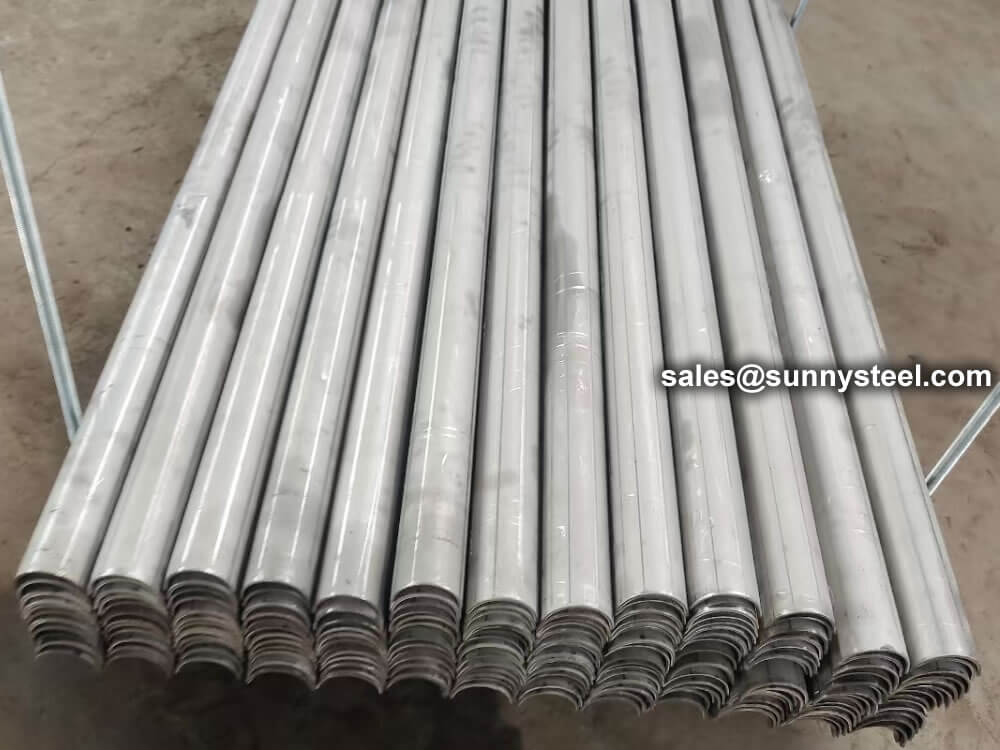
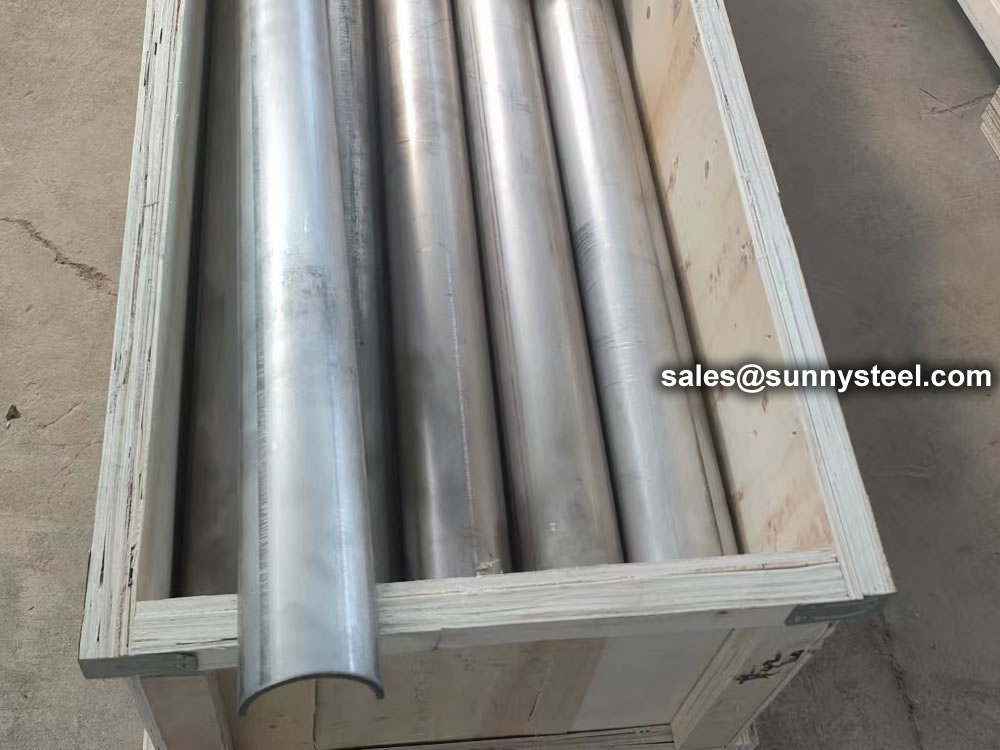
The cross-sectional shape of boiler tubes shields is mostly semi-circular (180 degrees), and there are also 120-160 degrees.
It is mainly used on finned tubes (water-cooled walls); boiler tube erosion shields are divided into direct wear-resistant shields, in-curve, anti-wear shields, outer-curve, anti-wear shields, side-curve anti-wear shields, s-curve anti-wear shields, etc.
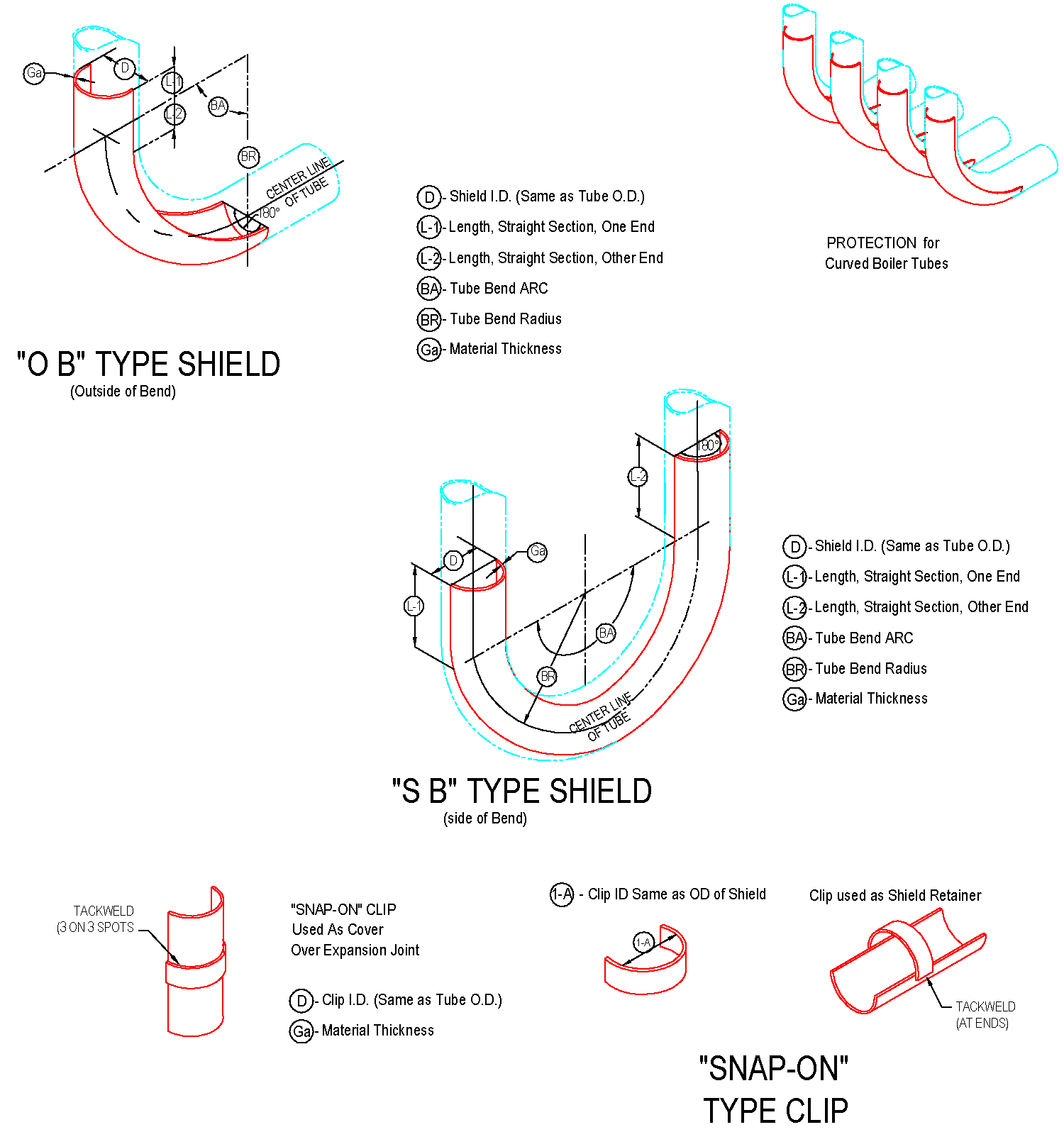
The length of the straight anti-wear shields ranges from 20mm to 3000mm, and the general length of 1000-2000mm is commonly used. The anti-wear shields with bends generally requires a processing drawing and the following parameters should be on the drawing: outer diameter of the pipe used, bending of the pipe Radius R (to the center of the pipe), the degree of bending angle, and the length of the straight sections on both sides of the arc segment of the wear-resistant shields.
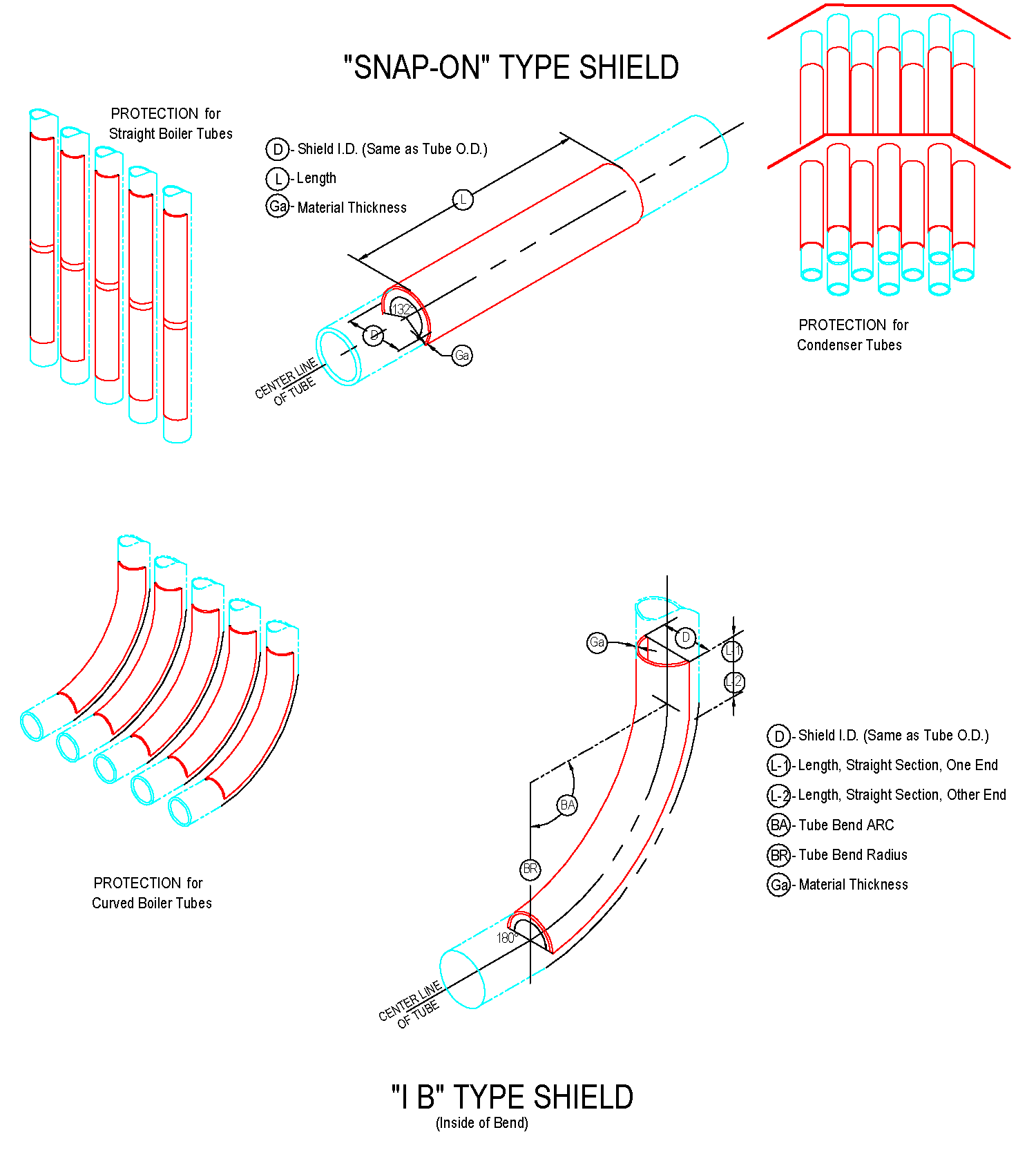
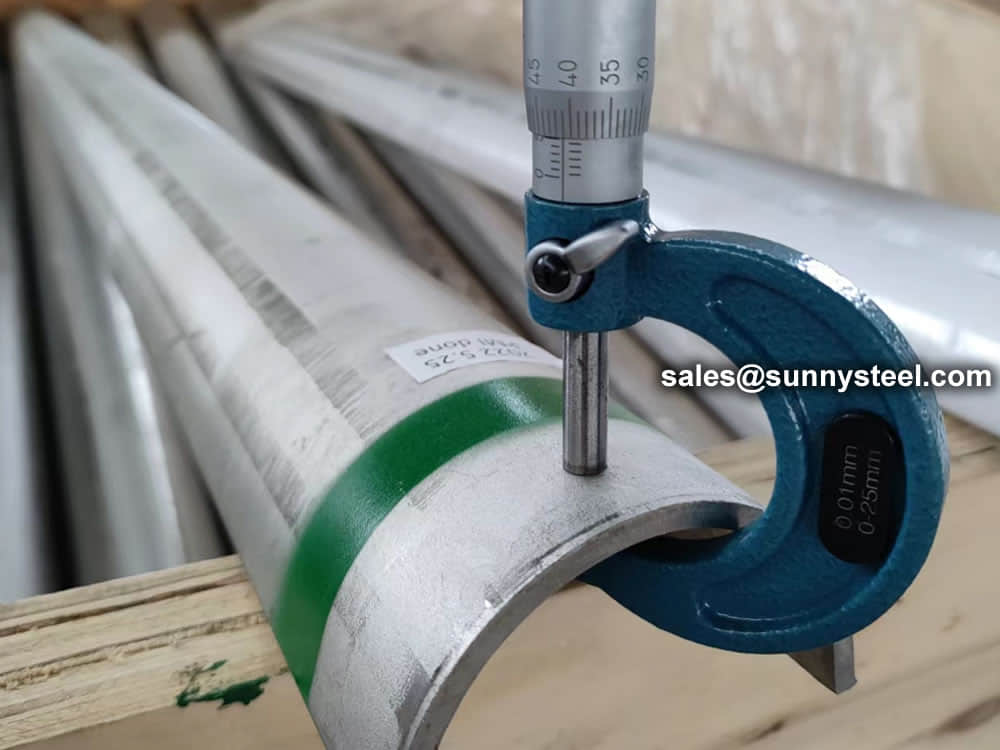
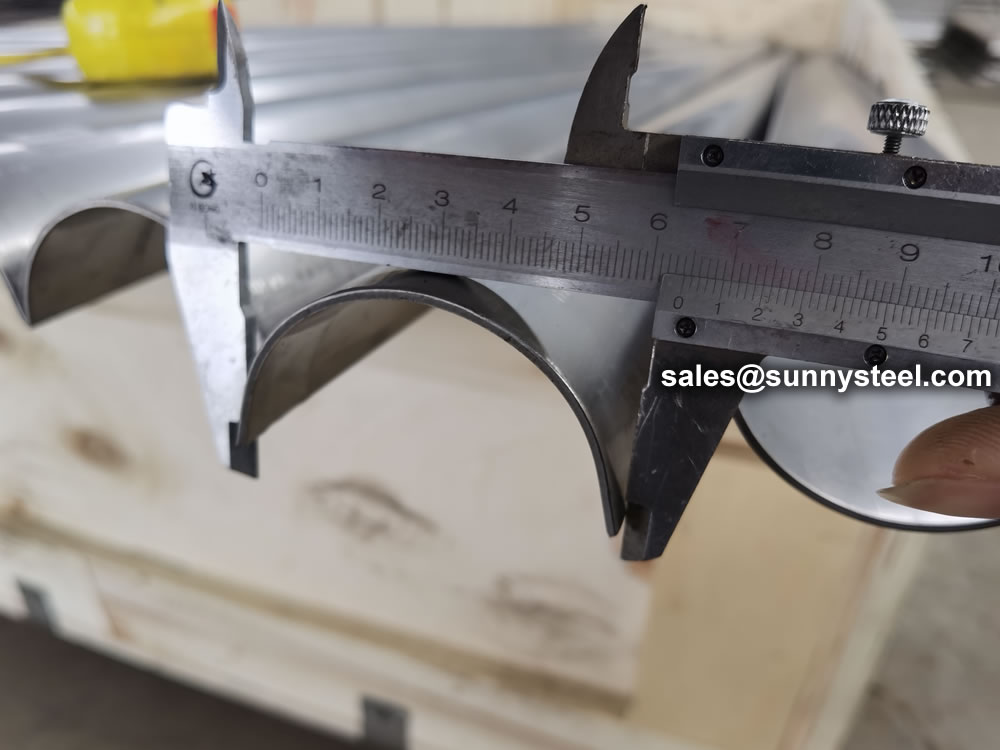
The most basic parameter of boiler tubes shields is the outer diameter of the tube used (that is, the inner diameter of boiler tubes erosion shields). The main specifications of the tube are: 32, 38, 42, 44.5, 48, 51, 57, 60, 63.5 , 76, 89mm, etc . the inner diameter of the boiler tubes erosion shields is usually 1-3mm larger than the outer diameter of the tube used, depending on the actual requirements.
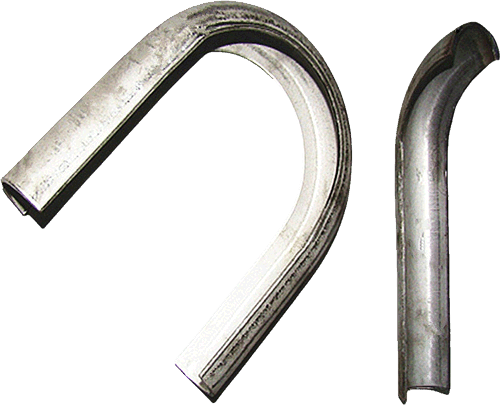
The current production process for tube shields is to use high-pressure presses and professional moulds for pressing.
Tube shields from us are manufactured to exacting standards. Advanced equipment and material handling capabilities permit us to offer the fastest turnaround times anywhere.
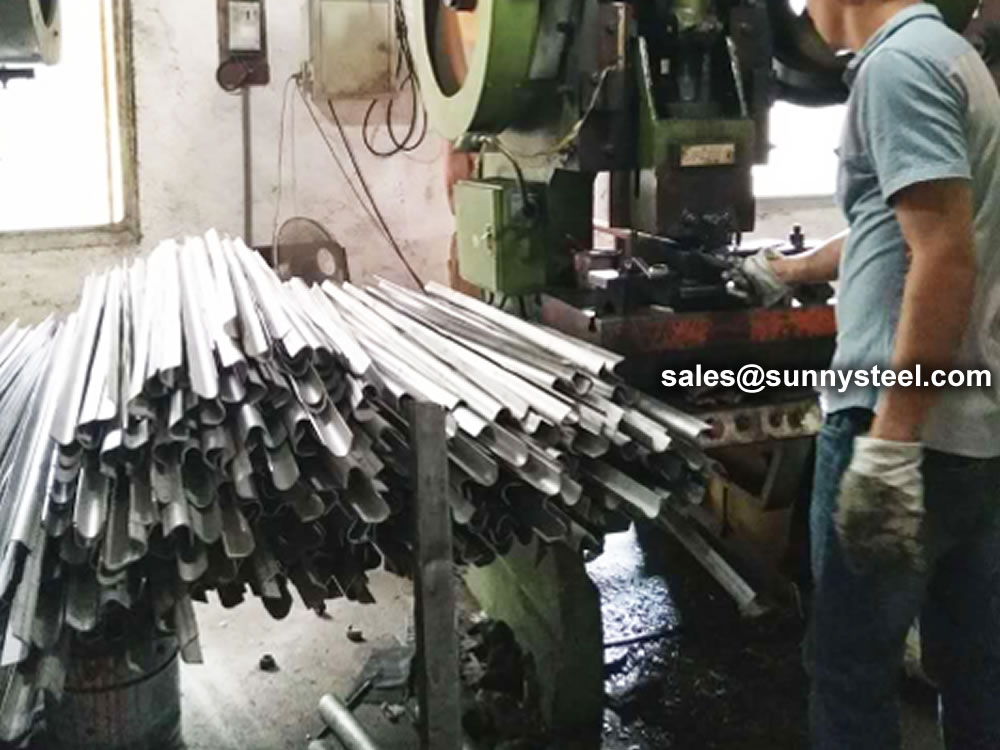
The current production process for tube shields is to use high-pressure presses and professional moulds for pressing.
The production time is short, the welding performance is good, the welding seam does not fall off, the surface is smooth and the appearance is beautiful. The arc-shaped wear-resistant tile is pressed on a press or bent on a pipe bender with a special mould.
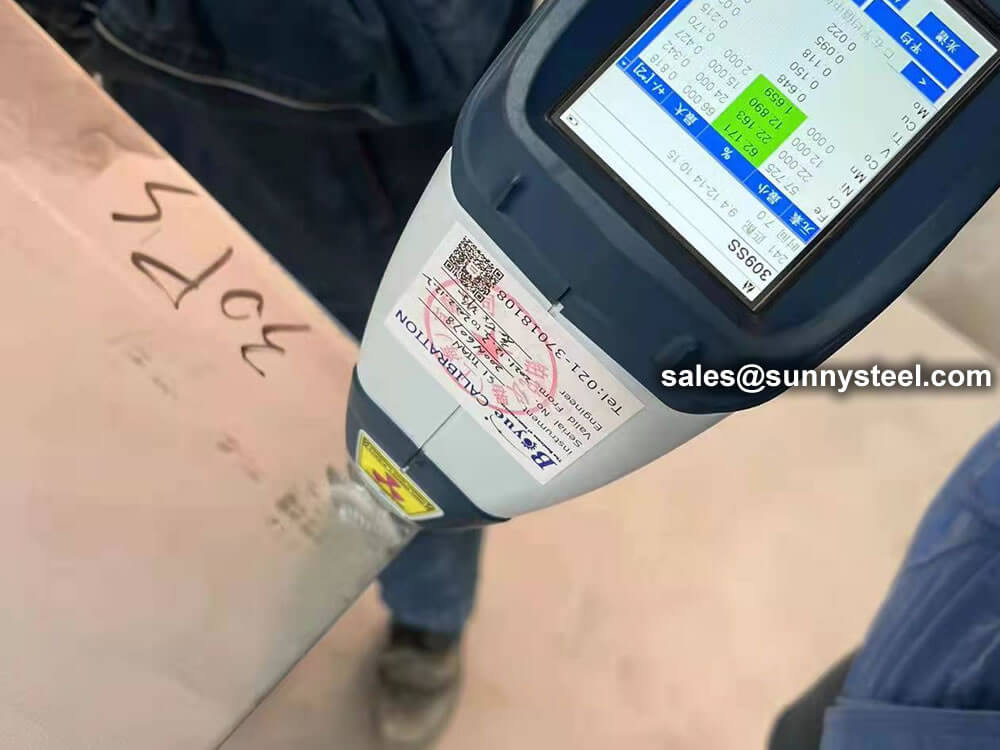
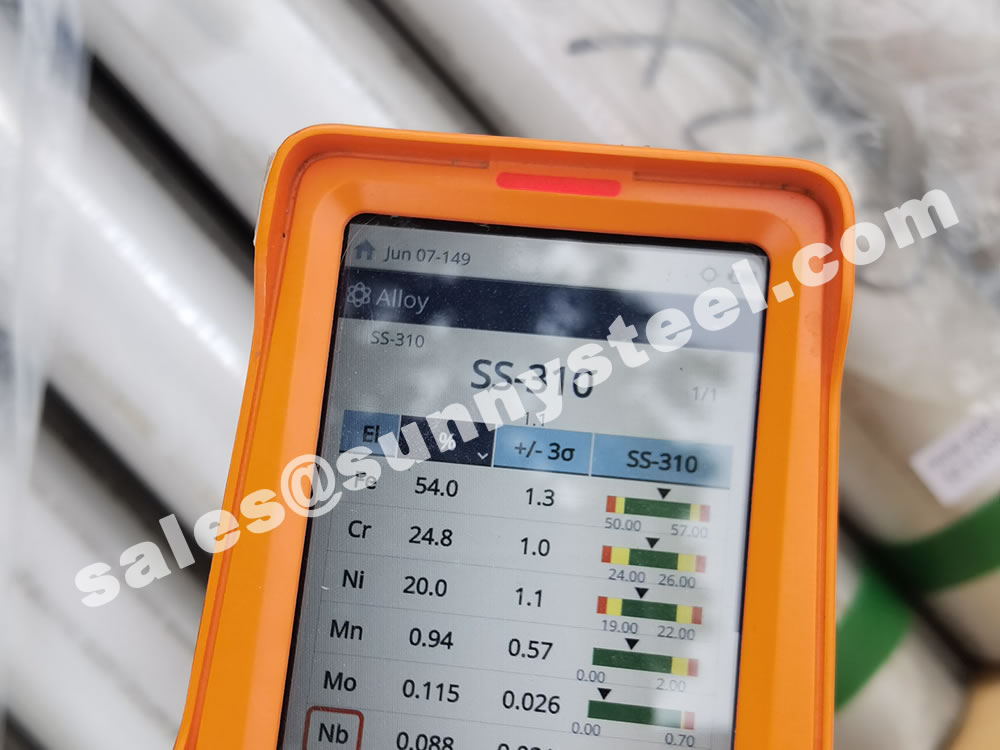
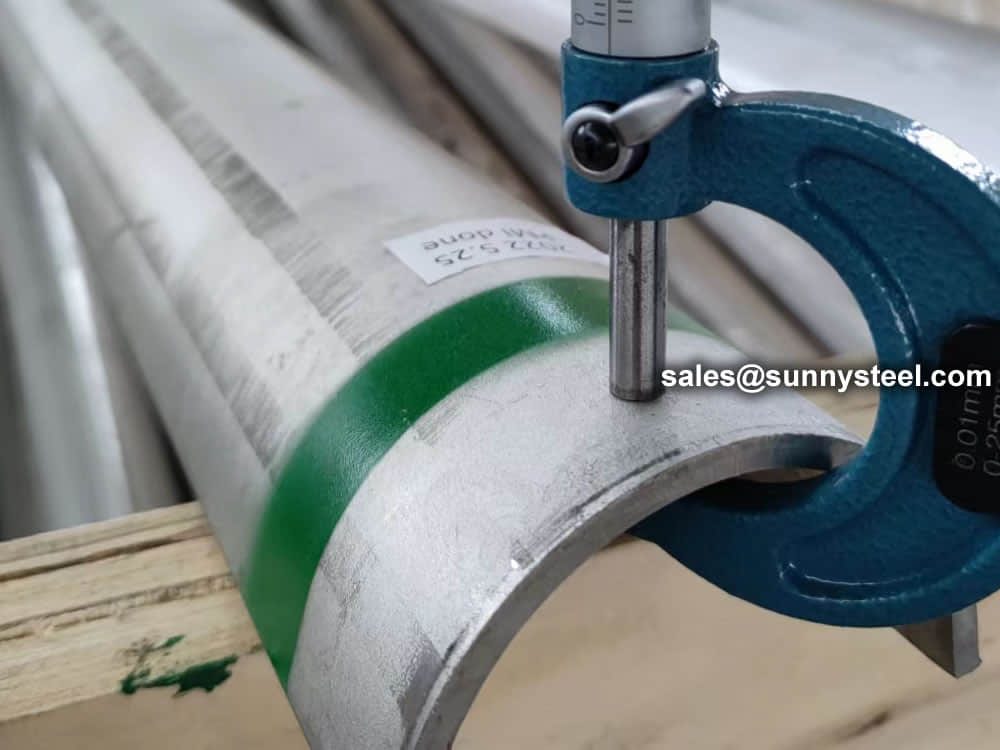
To ensure the accuracy of the material. Positive Material Identification (PMI) of stainless steel sheets for tube shields is critical to verifying the grade and composition of stainless steel before it goes into production.
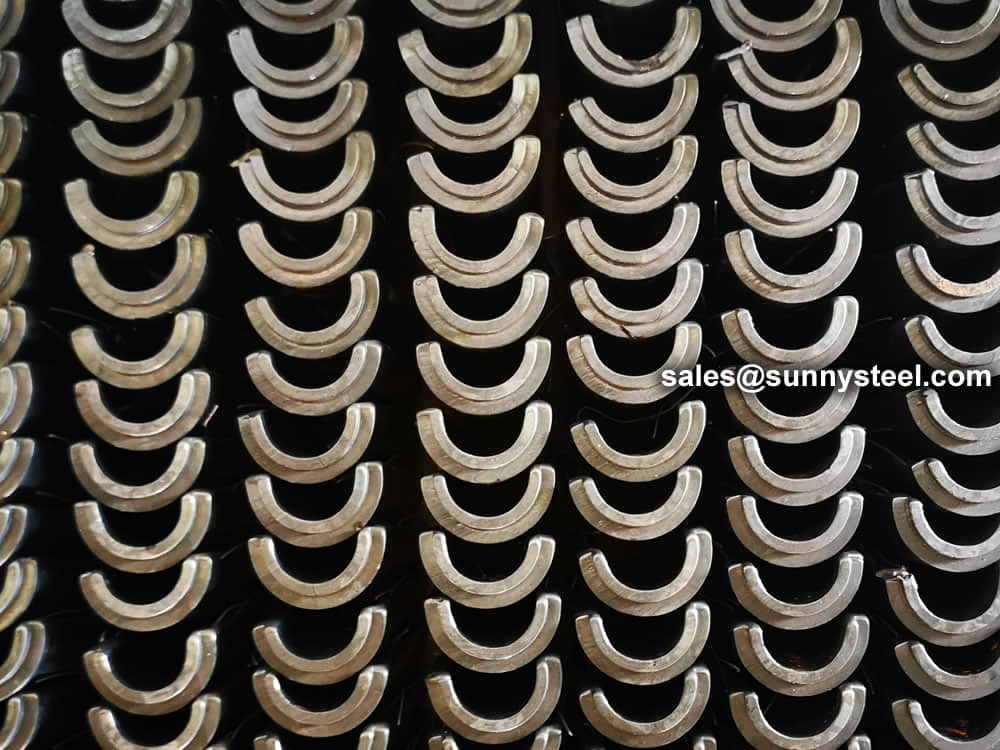
The raw materials for the production of tube shields are generally purchased directly from standard steel mills, and each batch has an MTC. Due to the sharpe limitations of raw materials, it is inevitable that excess materials will be produced. We can use the excess material to make a smaller size snap ring.
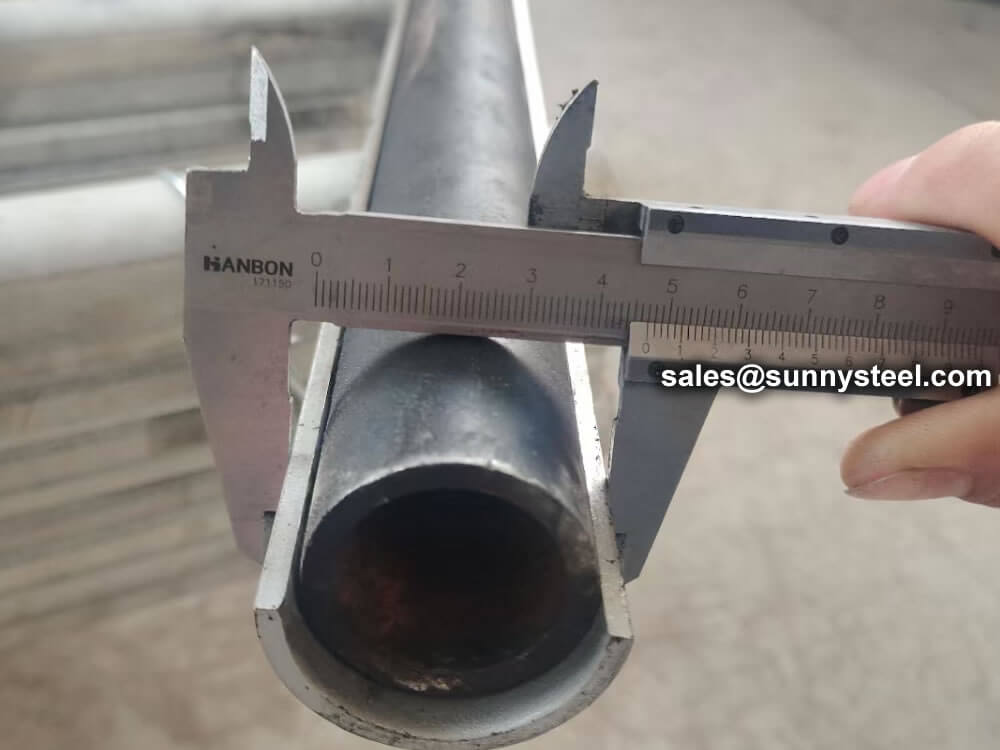
Tube erosion shields are precision-engineered to fit straight, curved, finned and specialty tubing, providing continuous protection against fly ash erosion and high-temperature corrosion.
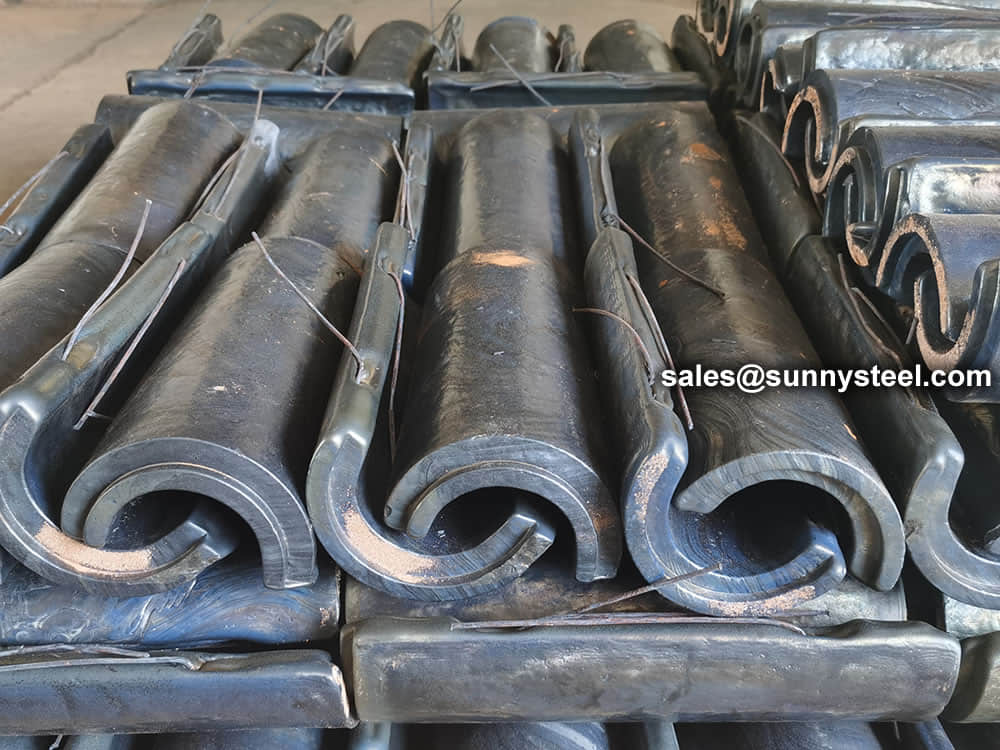
Also known as anti-wear plates or boiler climbing shields. Installed with retaining snap rings to ensure long-term stability on heating surfaces.
Manufactured by high-pressure die forming with dedicated tooling. Bent profiles use press forming or precision mandrel bending for close tube contour conformity.
Robust, weld-friendly assemblies with smooth aerodynamic surfaces. Mitigate tube wall thinning, reduce unplanned maintenance and extend boiler availability.
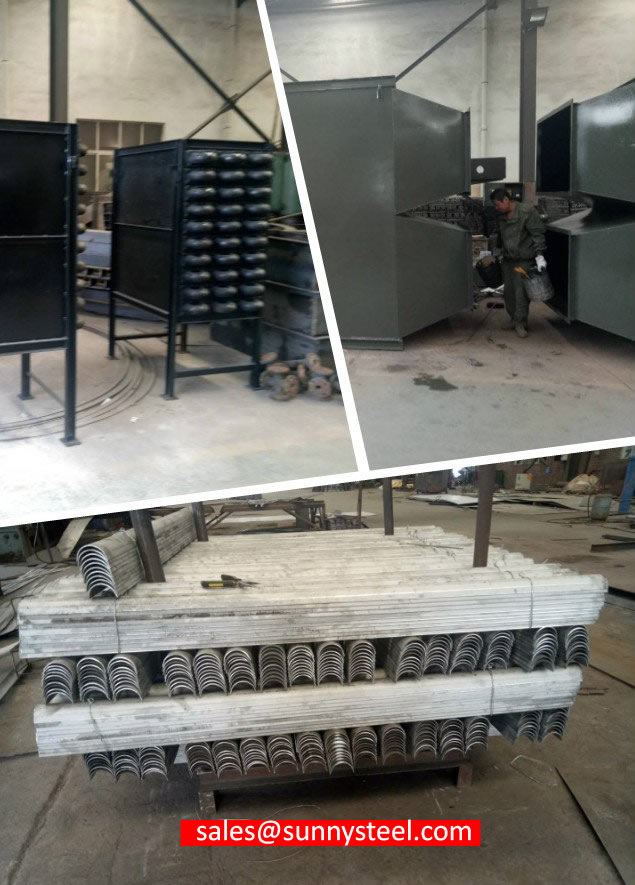
The service life of boiler tubes erosion shields is different in different types of boilers and different use parts.
The normal service life is a period of overhaul (3-5 years) for the boiler. Generally, some boilers will be replaced or retrofitted every time the boiler is overhauled. The main replacements are those of the Boiler Tubes Erosion Shields that are severely thinned and exceeded the standard; those that were not firmly detached during the boiler operation during the previous installation. According to the wear of the Boiler Tubes Erosion Shields during replacement, if the thickness is severely reduced, it needs to be replaced, the deformation is severe, and those that cannot protect the tube also need to be replaced. In addition, some boiler tubes are not equipped with Boiler Tubes Erosion Shields, but during the boiler inspection, it is found that the tubes have a tendency of wear and thinning. Generally, Boiler Tubes Erosion Shields are also installed to prevent further wear of the tubes and cause serious consequences such as boiler explosion.
On the heating surface of superheater and economizer tube bundle of the boiler, in order to prevent the pipe from being worn by high temperature flue gas washing, boiler tubes erosion shields are mostly arranged on the outer side of the pipe in the direction of flue gas flow. The elbow erosion shields solves the abrasion problems of water wall tubes, superheater tubes, economizer tubes and reheater tubes in the furnace, and provides guarantee for the long-term and reliable operation of CFB boiler. With the increase of CFB boiler products, the type and quantity of The elbow erosion shields will increase.
Tube erosion shields are installed on the windward side of boiler heating surfaces, including superheaters, reheaters, economizers and water-wall tubes.
Erosion shields protect boiler tubes from high-temperature, high-velocity flue gas and fly ash, significantly extending tube service life.
We supply shields for straight, bent and finned tubes, complete with retaining clips for secure installation.
By minimizing tube wall thinning and leakage risks, erosion shields reduce unscheduled downtime and lifecycle maintenance costs.
These components—often referred to as wear-resistant tiles or cover plates—are widely used in utility boilers and coal-chemical plants.
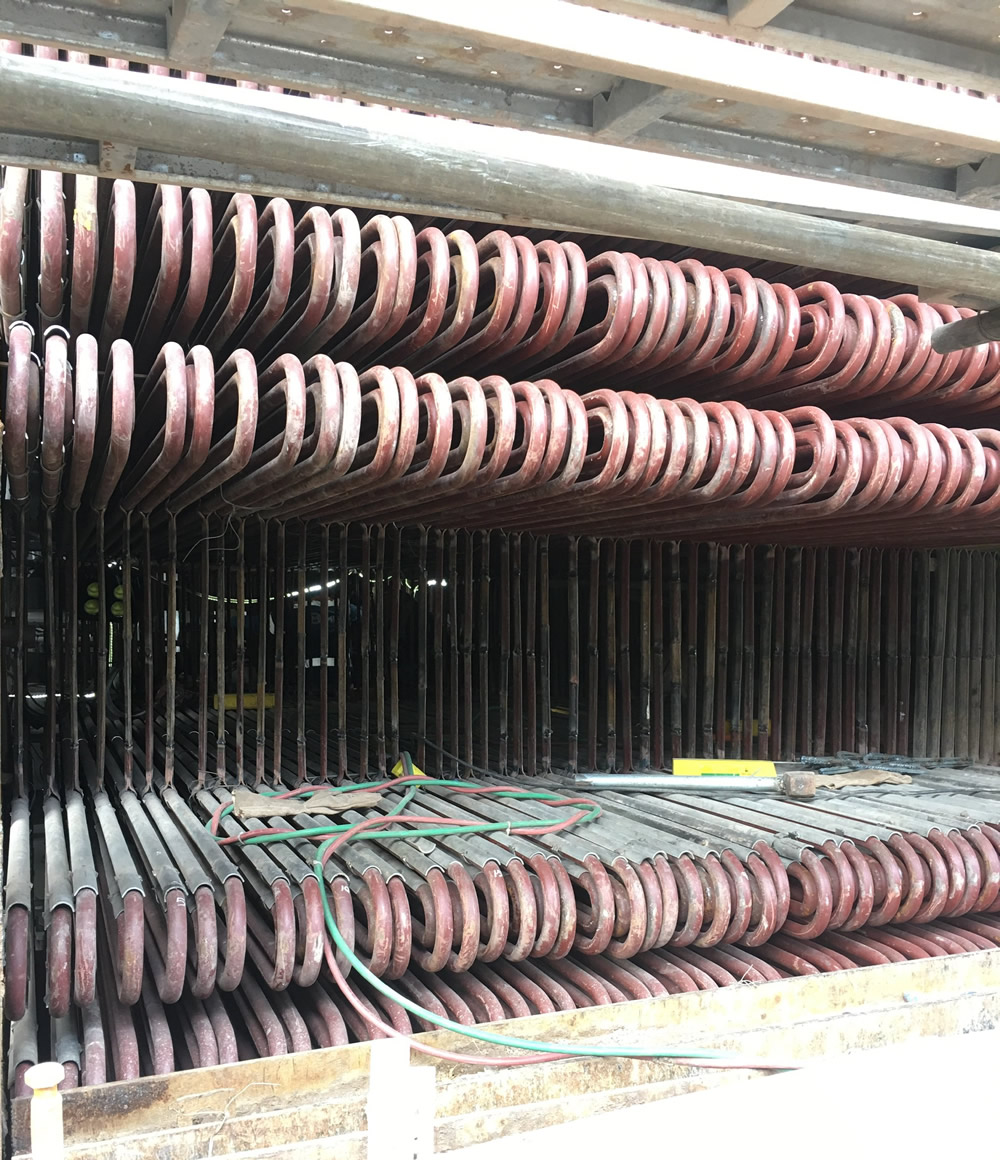
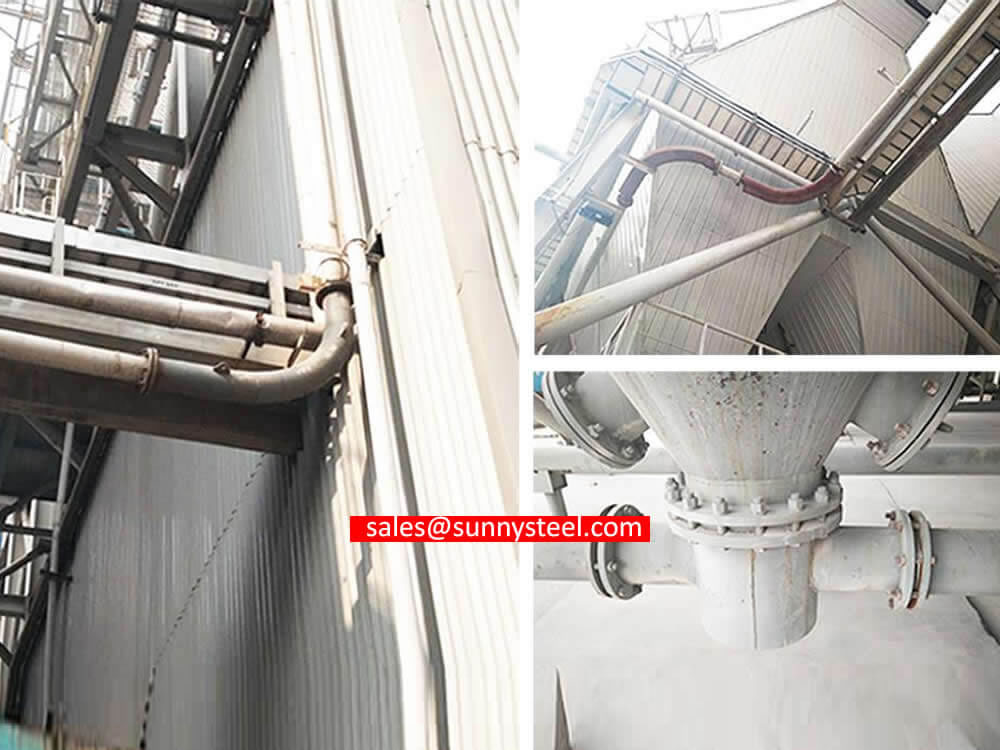
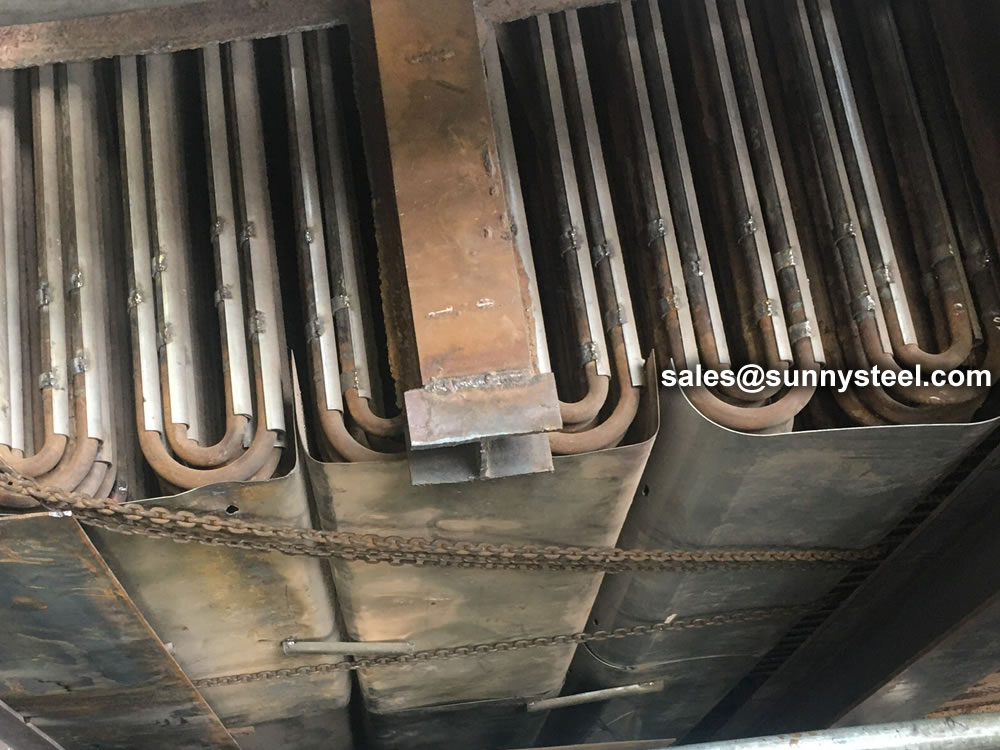
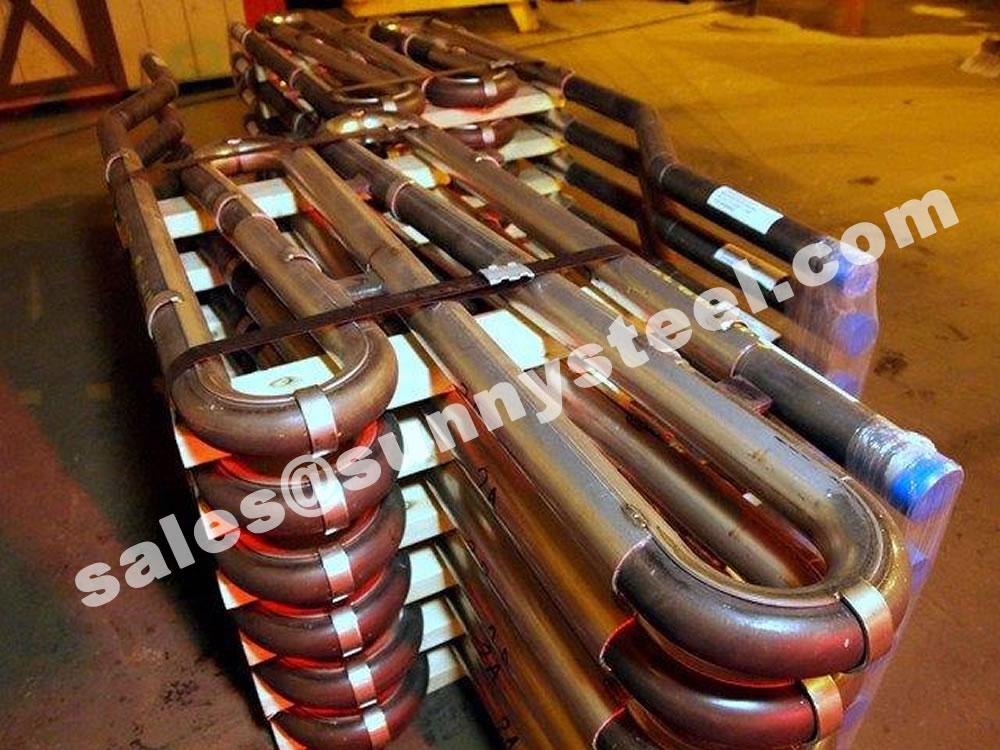
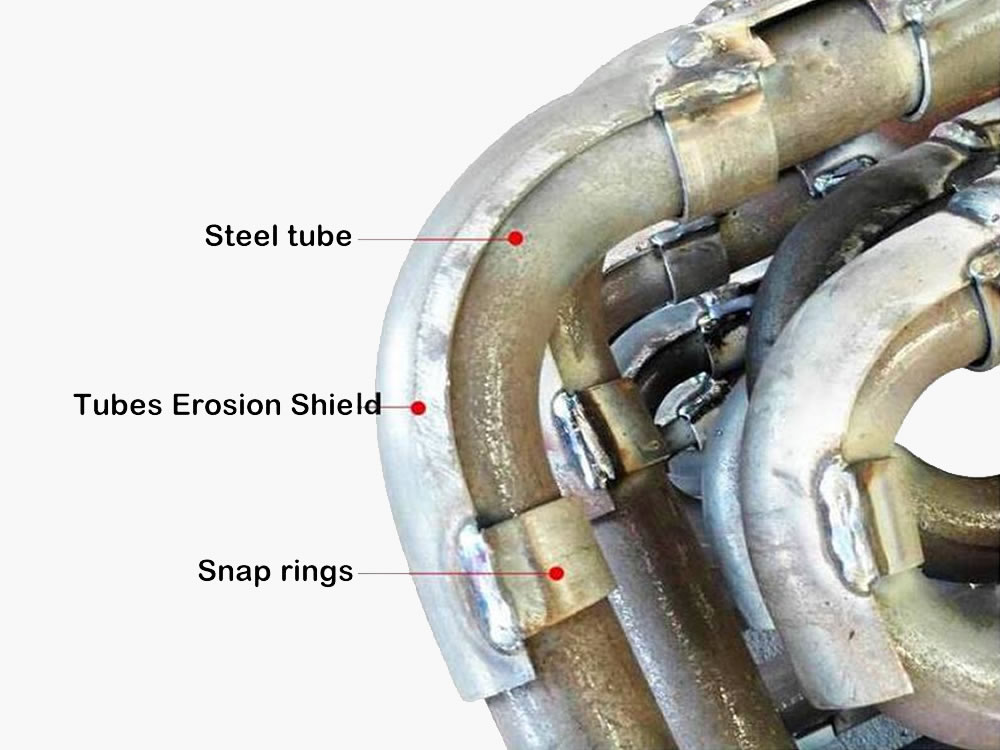
Generally, boiler tubes erosion shields are also installed to prevent further wear of the tubes and cause serious consequences such as boiler explosion.
The main role is to protect the heating surface of the boiler pipes, reduce pipeline wear, and increase the heating surface of the pipes.
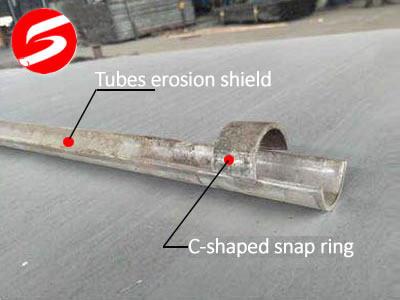
The snap ring is a short section that is installed on the pipe in conjunction with the wear-resistant tile. Generally, it is welded to the wear-resistant tile by lap welding, that is, to cover the wear-resistant tile slightly, so it is larger than the wear-resistant tile. The opening arc is around 190-200 degrees, the welding position needs to be set aside to facilitate welding and fixing. The width of the snap ring must not be less than 20mm.
The installation requirements of anti-friction tiles of different shapes are slightly different. Basically, each anti-friction tile is installed with not less than 2-4 snap rings. The snap ring and the anti-friction tile are welded together to prevent expansion due to heat. The tiles fall off, and the joints are required to be fully welded.
Generally, boiler tubes erosion shields are also installed to prevent further wear of the tubes and cause serious consequences such as boiler explosion.
The main role is to protect the heating surface of the boiler pipes, reduce pipeline wear, and increase the heating surface of the pipes.

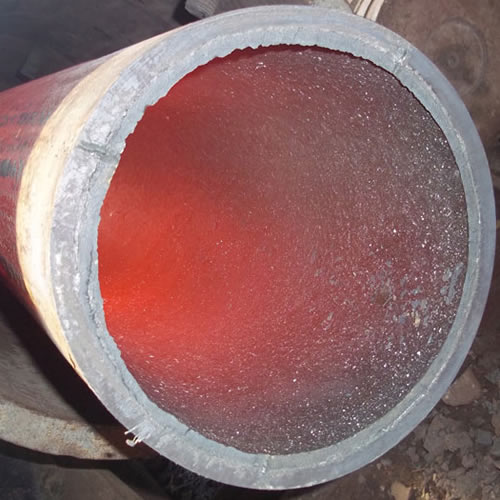
Ceramic lined pipe is made through self-propagating high-temperature synthesis (SHS) technique.
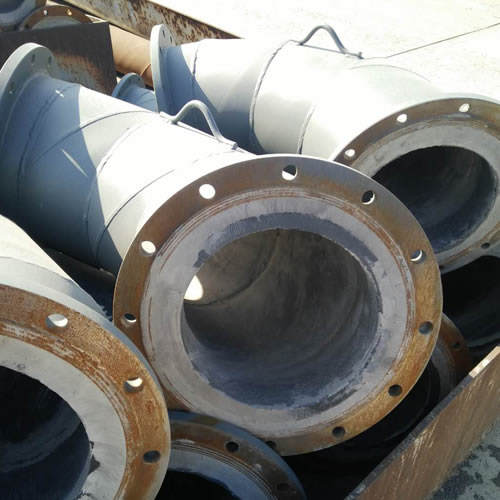
Cast basalt lined steel pipe is composed by lined with cast basalt pipe, outside steel pipe and cement mortar filling between the two layers.
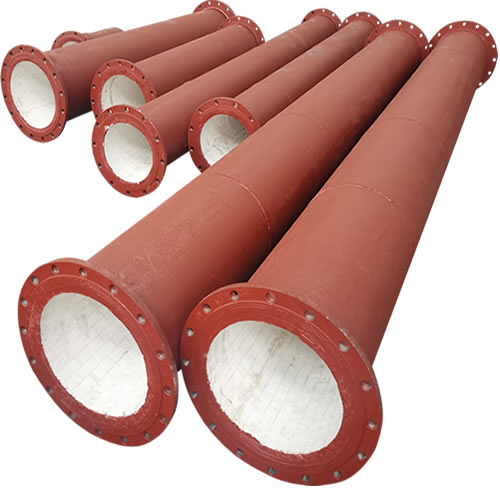
Ceramic tile lined pipes have very uniform coating of specially formulated ceramic material that is affixed to the inner of the pipe.
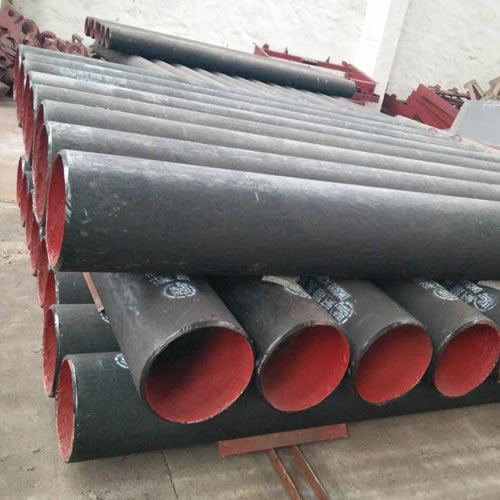
The material of the rare earth alloy wear-resistant pipe is ZG40CrMnMoNiSiRe, which is also the grade of rare earth alloy steel.
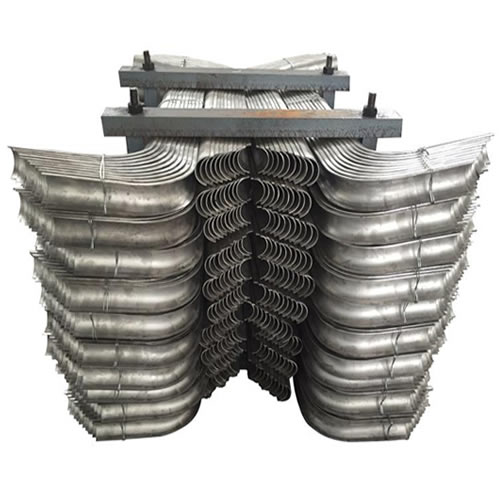
Tubes Erosion Shields are used to protect boiler tubing from the highly erosive effects of high temperatures and pressures thereby greatly extending tube life.
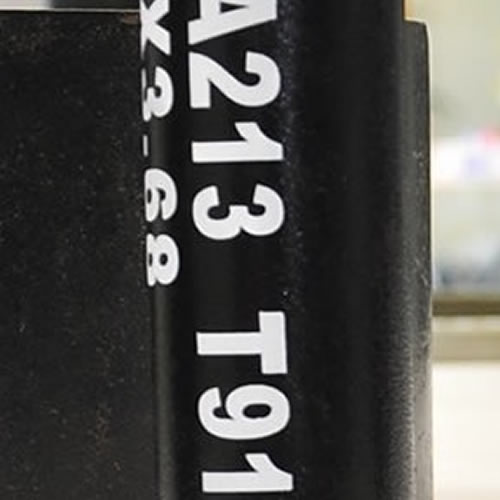
The ASTM A213 T91 seamless tubes are primarily used for boiler, superheater, and heat-exchanger.

When you partner with Sunny Steel, you can stop worrying about meeting deadlines thanks to our responsive and timely service. You'll also say goodbye to unnecessary shopping around. Instead, you'll get white glove service from an expert who understands your needs and can get you the materials you need quickly.